

Every civilization eventually dies — it’s inevitable.
This might sound harsh, but given the long march of time, it’s an unfortunate reality that every great civilization must wrestle with. And for the citizens who must endure that collapse, it’s not a question of if or even when, but rather: what can be done about it?
What’s the gameplan when there’s no turning things back around?
Well according to the 20th-century British historian Arnold Toynbee, there are precisely 3 options — and only one of them leads to survival…
Reminder: You can support us by unlocking our members-only content:
✔️ Full articles every Tuesday
✔️ The entire archive of content: Western history, literature, and culture
✔️ The Great Books lists (Hundreds of titles that influenced Western thought)
Join to start reading and support the mission today 👇
Filling the Void of What Was Lost
Toynbee was an English historian who published the 12 volume work A Study of History, which traced the life cycle of about two dozen world civilizations. Importantly, he attributed the growth and flourishing of civilizations to the creative energies of their leaders. When leaders of a culture are practical, innovative, and adaptable, they can easily solve the challenges that confront the culture.
But over time, leadership decays, and becomes what Toynbee calls the “dominant minority” — a leadership class that occupies positions of power yet is wholly inadequate to solve the problems society faces. They lose their creativity amidst their decadence. And once this creative energy is lost, disintegration and schism follow. A civilization then frantically looks for new ways to recover its lost spark.
Toynbee posited that during this phase citizens adopt new mentalities unlike the one that helped the civilization flourish in the first place. He writes:
“Individual souls which have lost the opportunity…for initiating the creative actions by which the growth of a society is sustained are apt to take refuge in a series of alternative reactions to the pressures of disintegration…”
So what are these “alternative reactions” to societal decay? There are broadly 3 sentiments which are adopted by the proletariat in declining civilizations:
Detachment
Utopianism
Transcendence
Let’s explore each — and discover how to save civilization in the process…
Detaching From Reality
The first reaction is detachment, or abandonment, where an individual dissociates from the difficult reality of the situation, and adopts either 1) ascetic self-discipline or 2) a hedonistic abandoning of morality.
A classic example of these contrasting mindsets can be found in Hellenic Greece, where the popularity of Stoicism and Epicureanism increased while Greek civilization declined. Stoics adopted a life of self denial, believing a firm internal disposition could help them weather the storms of life. Meanwhile the Epicureans embraced hedonism where the pursuit of pleasure and avoidance of pain was prioritized.
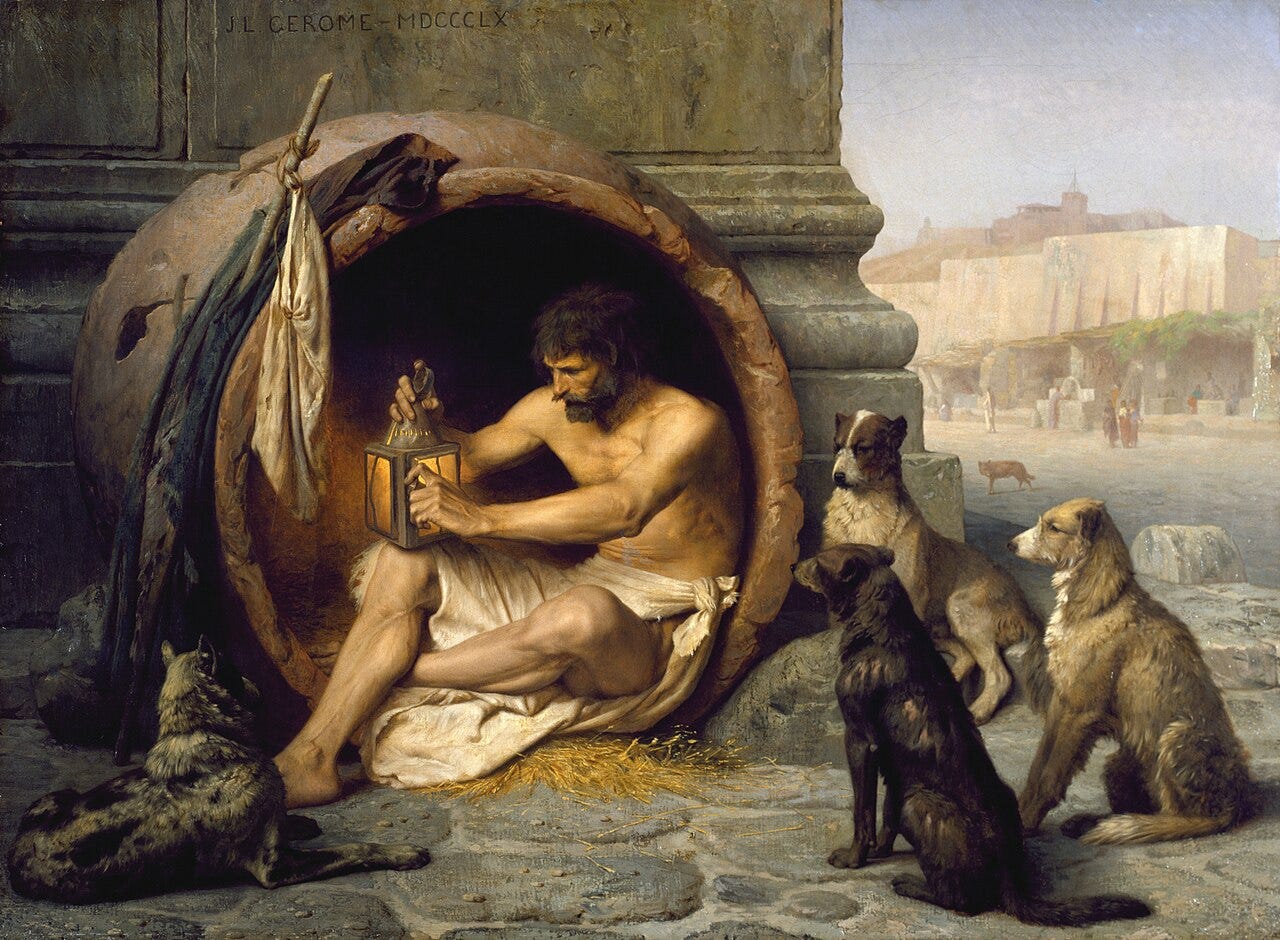
Though seemingly opposite mindsets, Stoicism and Epicureanism both involve a detachment from the realities of the disintegrating civilization. They are two sides of the same coin which focuses on internal states of being while allowing fate to run its course in the world.
Utopian Dreams
The next reaction that individuals have amidst a declining civilization is utopianism: the embrace of an idealistic vision that ignores the difficulties of their situation. Like detachment, this reaction comes in two contrasting forms:
1. Archaism - idealization of the past
2. Futurism - idealization of the future
Archaism
Toynbee describes archaism as a mimesis (imitation) of past ancestors and ways of life:
“The cult of the past — archaism — offers escape from a deadly present to the myth-memory of an idealized past.”
Think the Romantics of the late 1800’s — they idealized the Middle Ages rather than tackling the pressing cultural issues of their day. The fears of industrialization drove many to seek solace in the daydreams of an imagined golden age.
Though it’s healthy to celebrate a culture’s past, the danger of archaism is that it can stall a society’s growth. Toynbee warns that archaism actually mirrors the mindset of pre-civilizational cultures, leading to stagnation:
“[Archaism] comes near to being a lapse from the dynamic movement of civilization to the virtually static situation of a pre-civilizational Mankind. Alternatively, it may…arrest a society at a given stage, or forestall a threatening change, by immobilizing the dynamic factors of social growth…”
Toynbee pointed to extreme nationalism as a sign of archaism in the 20th century. He claimed that during imperial Germany, an attempt was made to link political movements with Germany’s medieval heritage. Kaiser Wilhelm I, for example, was often depicted as a Teutonic knight in propaganda pieces.
Futurism
The flip side of archaism is futurism, a utopian vision that heralds a coming political or social revolution that will solve all of a society’s ills. Instead of looking backward to a past golden age, futurists imagine that progress for progress’ sake is the highest societal aim.
The problem with futurism, according to Toynbee, is that it tries to “leap-frog” the struggles of society by a single massive stride.Instead of growing organically, building upon wisdom obtained via hardship, futurism provides the myth that utopia can be achieved immediately.
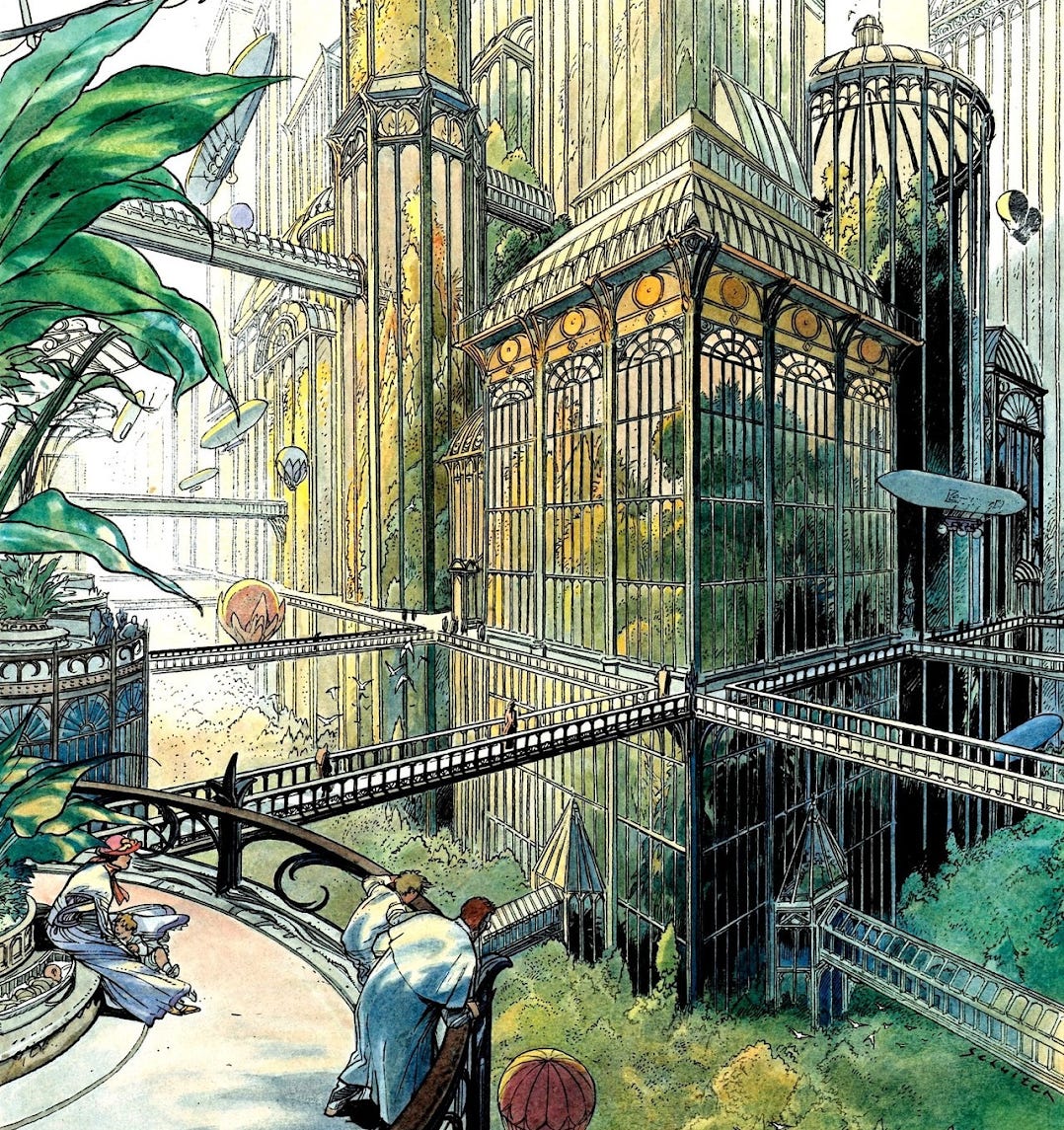
And because of this, futurists’ solutions are often shallow and fleeting. Toynbee writes that futurism is ultimately a palliative solution that fails to solve any real problems:
“The revolutionary cry for immediate release from oppression becomes a meaningless slogan: a cathartic outburst is no substitute for hard-won wisdom.”
Worse, futurism often leads to tyrannical regimes — promises of a perfect society lure the masses into supporting despotic leaders. The 20th century was fraught with ideologies that promised utopianism but only delivered misery — communism and fascism chief among them. Society, then, ends up looking very different from the utopia the people were sold.
Toynbee writes that the two sides of utopianism, archaism and futurism, are ultimately attempts to distract oneself from the harsh realities of decline:
“…the modes of life which we have called ‘archaism’ and ‘futurism’ are both attempts to escape from a crushing present, which has become manifestly unserviceable as a medium for growth, by pointing to an alternative goal.”
Since detachment and utopianism both fail, what options are left for an individual caught up in a crumbling society? Toynbee points to a third option that allows one to rise above the darkness of the present moment…
