

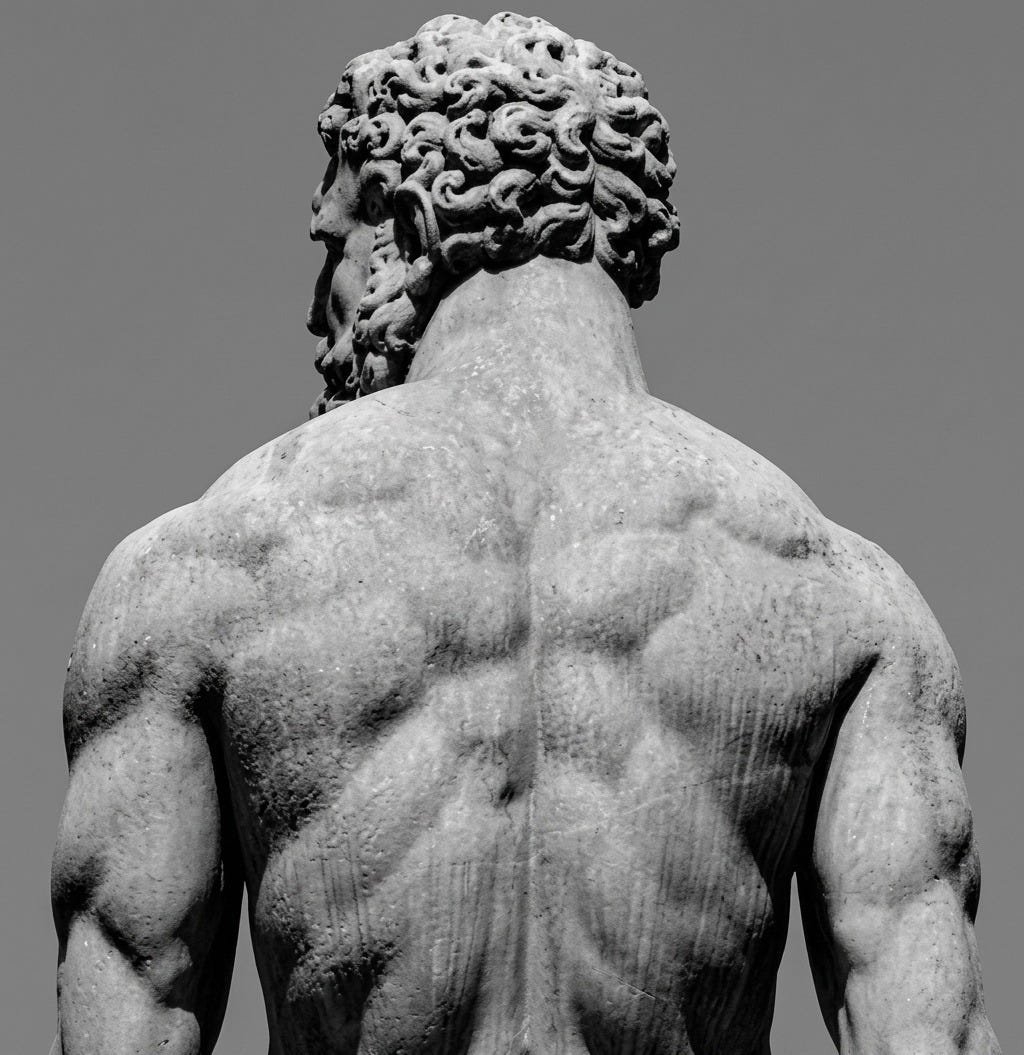
The modern world has fractured the human experience into two separate pieces. We’ve been conditioned to believe that the mind and the body are unconnected — that thinking and doing are fundamentally opposed.
This is how we ended up with the “nerd vs. jock” myth: the smart weakling who can’t protect himself, bullied by the strong blockhead who can’t think for himself. It’s been a trope in almost every Hollywood movie for decades.
But historically, this dichotomy would have been completely alien to the people who built our civilization. In fact, some of the greatest philosophers in history were also supreme athletes. They understood a mind-body connection — a synergistic relationship between intellectual and physical activity.
So let’s explore why the ancients believed that physical training was essential for even the most studious soul. They knew that you could not reach your final form — physically, mentally, or even morally — until you hit the gym…
Reminder: You can support us in forming minds and rebuilding the West by unlocking our members-only content:
✔️ Full premium articles every Tuesday
✔️ The entire archive: Western history, literature, and culture
✔️ The Great Books lists (Hundreds of titles that influenced Western thought)
Join to start reading and support the mission today 👇
Duty to Family and Community
Socrates, the father of Western philosophy, had this to say about training the body:
“No man has the right to be an amateur in the matter of physical training. It is a shame for a man to grow old without seeing the beauty and strength of which his body is capable.”
What’s really interesting is the context in which Socrates says these lines. It comes from Xenophon’s work Memorabilia, and Socrates is actually pointing out that physical training is a duty one has to the larger community.
In Xenophon’s work, Socrates approaches a weak young man and scolds him for neglecting his physique, explaining that each man has a duty to his city to become a capable warrior in case of attack. Socrates claims the man’s weak physical state is what has led many men to their deaths or a lifetime of slavery. They were not fit enough to fight well when the time came.
Socrates says:
“…they are not a few who, owing to a bad habit of body, either perish outright in the perils of war, or are ignobly saved. Many are they who….are taken prisoners, and being taken must…endure the pains of slavery for the rest of their days…”
During Socrates’ time, military service was an obligation that all male citizens had to be prepared for. There were few professional armies in ancient Greece, so when war came, every male citizen, regardless of occupation, was required to join the ranks.
And Socrates’ experienced this in his own life. He trained and fought as a hoplite — the Greek infantry — and is recorded to have fought in at least three battles. He was even praised for his physical courage by Alcibiades at the Battle of Potidaea in 432 BC. Alcibiades said that Socrates singlehandedly saved his life during the battle, and took the hardships of military life better than anyone else in the whole army.
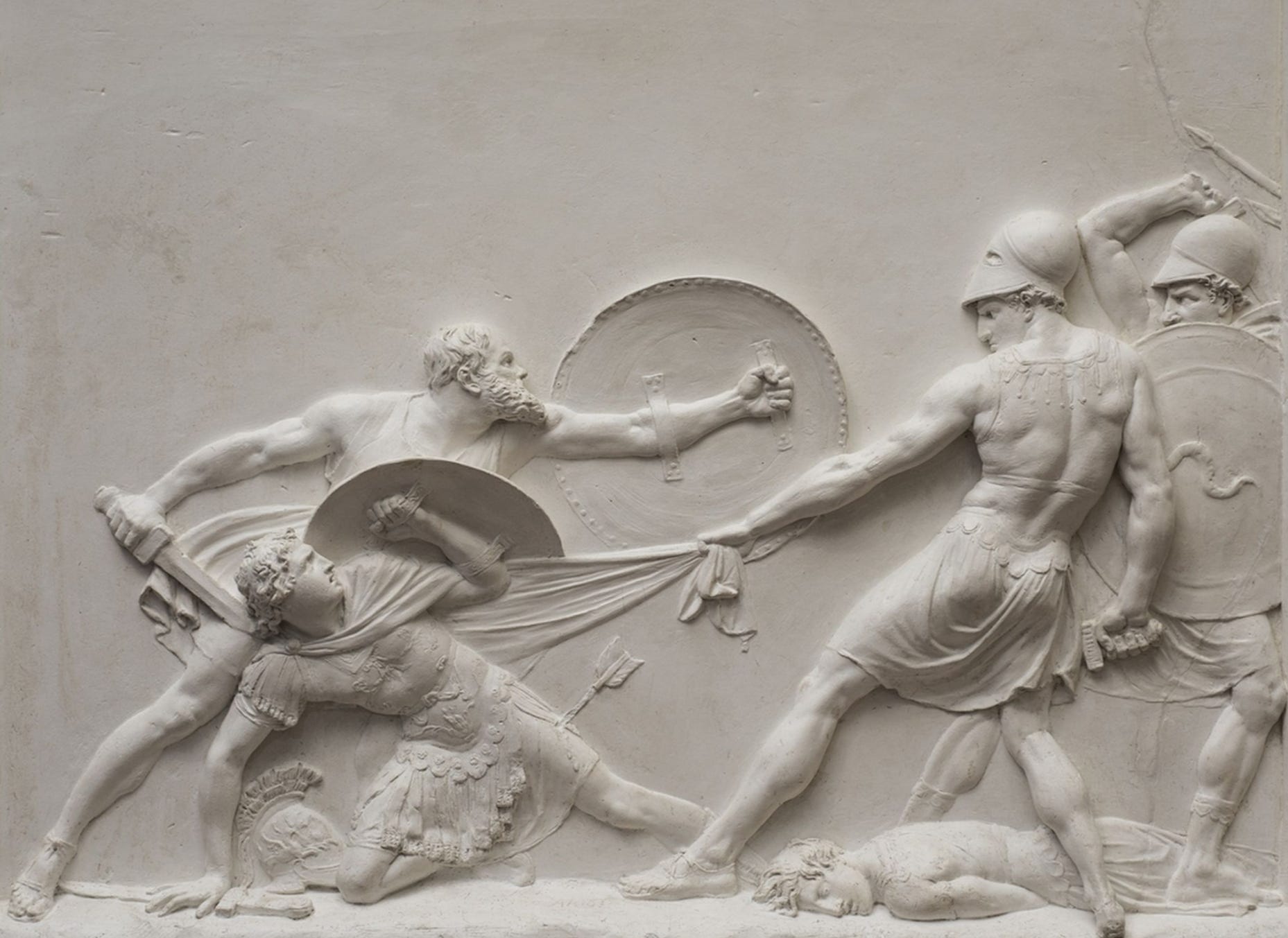
So for Socrates, we see a great thinker who did not relegate himself strictly to books and debates, but believed that physical readiness was a duty to the larger community. After all, minds like his could not be free to contemplate if not for the strong bodies of soldiers that provided physical safety.
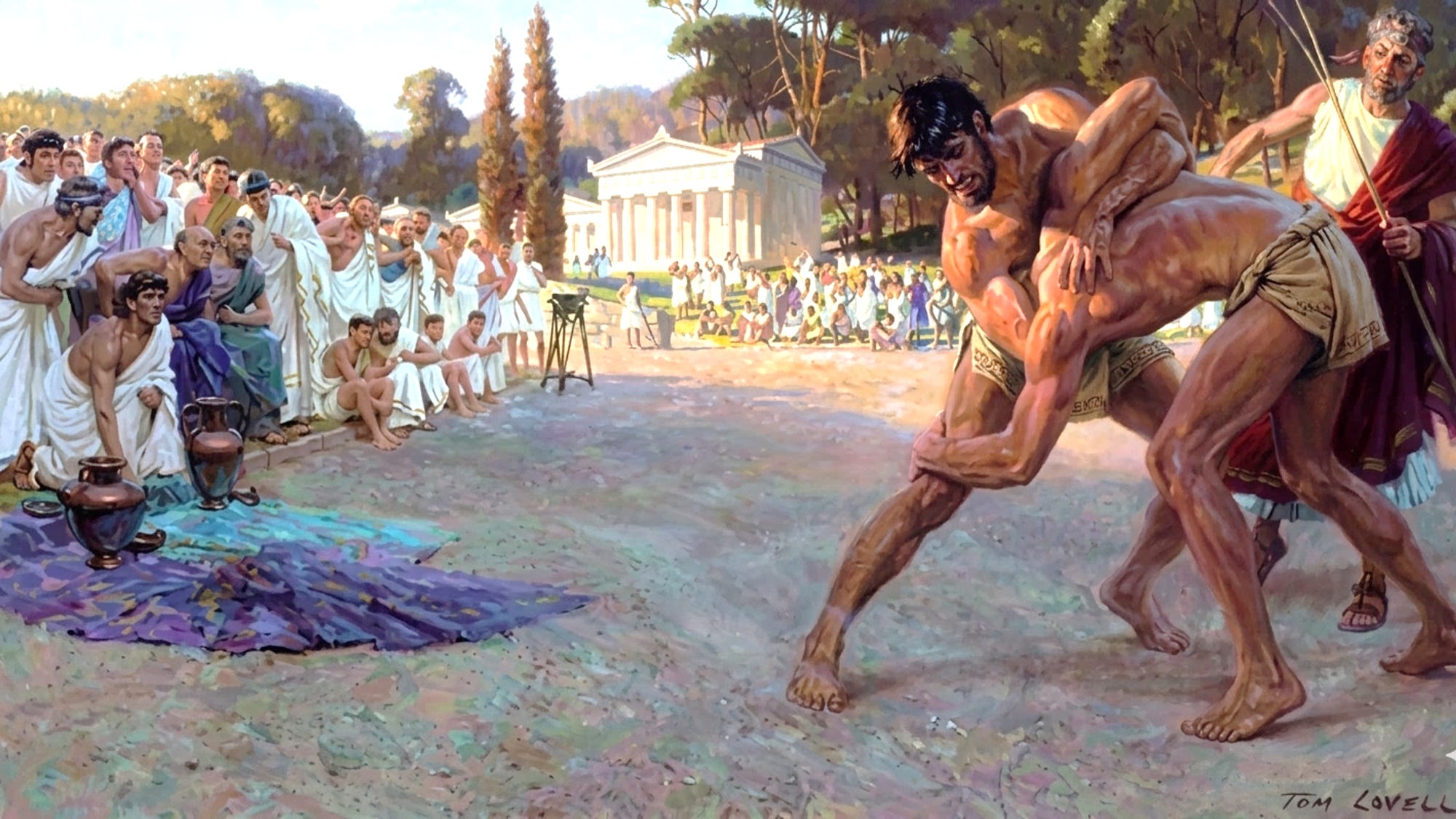
Socrates’ student Plato understood this too. Plato was actually a well respected wrestler, who even competed at the Isthmian Games — one of the four major Athletic Games alongside the Olympics.
Like Socrates, Plato believed one needed to be strong to be a good member of the community. When he envisioned the ideal state in his work, The Republic, Plato noted that the leaders of the community, whom he called ‘guardians’, must be strong in order to protect others:
Plato writes:
“Anyone who is going to be a truly good guardian of our community, then, will have a philosopher’s love of knowledge, and will be passionate, quick on his feet, and strong…..And our guardians are, in fact, both warriors and philosophers.”
Socrates and Plato connected physical fitness to the need to be battle-ready. Though physical combat is far less likely for your average person today, this does not mean that physical readiness is not a duty anymore. There are still dangers lurking about. There are still aggressors who can harm you or your family.
Though getting into a fight is usually the last thing you ever want to — or should — do, often simple physical presence is a deterrent against those who want to prey on the vulnerable. You should be fit enough so that, at the very least, you can escape a dangerous situation and lead others out of that situation quickly.
It’s not just about immediate physical danger, though. It’s also a duty to remain healthy for your family and community so that you can continue to be useful. You need to be an asset to them rather than a burden. If you have those who depend on you, then you have an obligation to remain in good health so that you can continue to provide for them and be there when needed.
We don’t like to hear the word “duty” in the modern world, and our society has done almost everything it can to absolve us from our duties, but ultimately I do think it is your duty to remain physically capable as long as you can. God did not give you a body so that you can abuse it, but to use it to its fullest.
But the next reason to train actually goes beyond the mere physical, and proves how our mental faculties are shaped by our bodily habits….
