

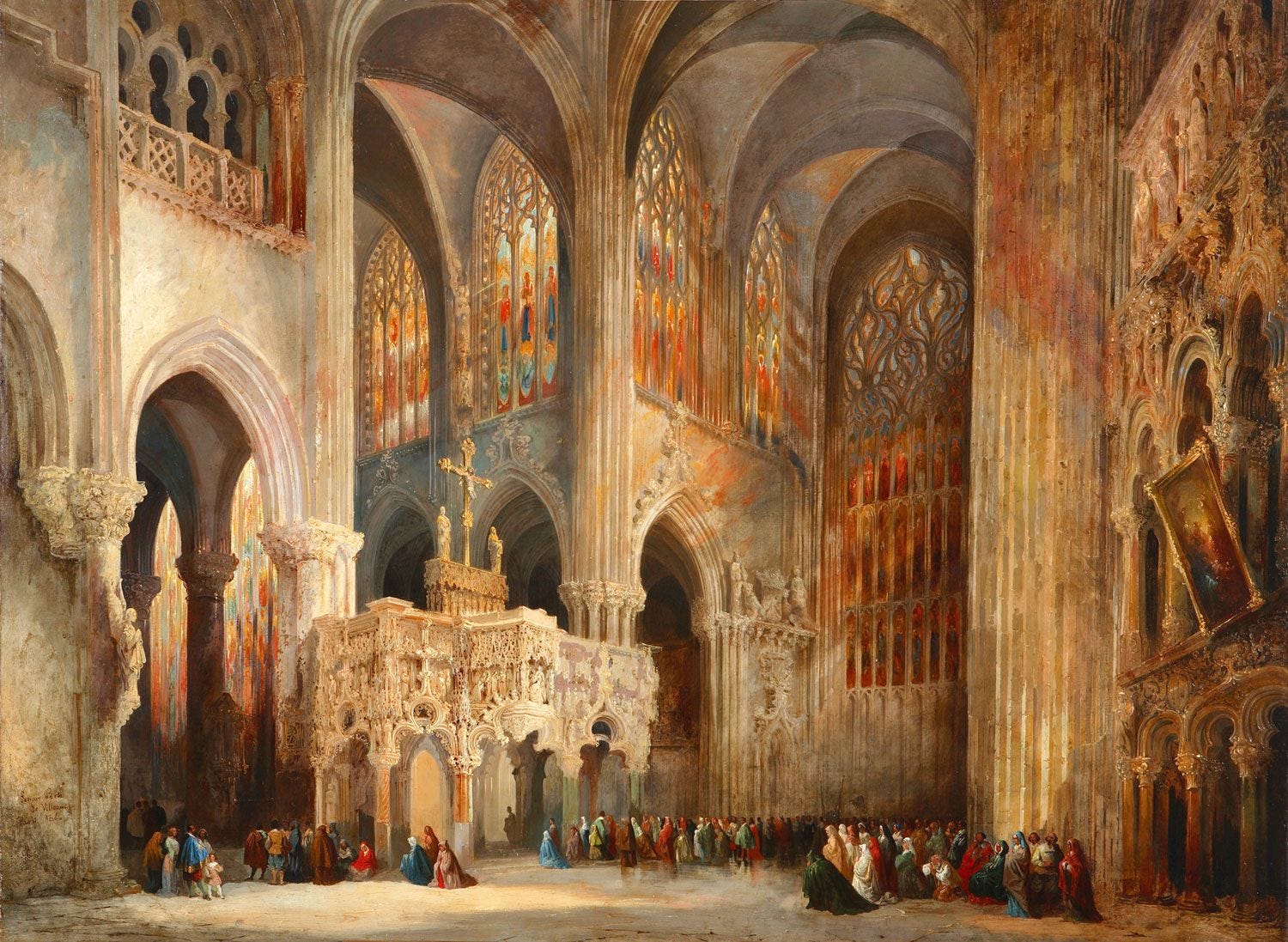
The towering spires, intricate masonry, and ornate stained-glass windows of a gothic cathedral attest to the vast sums of money and human labor required to construct it. The sheer opulence of such a building reflects a bygone society obsessed with power, authority, and beauty. The smallest details were painstakingly etched into stone, wood, and glass despite the strong probability that the artisans working on such a masterpiece would never live to see it completed. The intricate planning and careful execution of these cathedrals demonstrates that the builders saw them not merely as temporary gathering spaces for the faithful, but conduits for the divine. Within these vaulted ceilings the heavenly host would descend to earth and join with the faithful to worship together as one.
Today, modern church buildings do little to remind believers of the glory of heaven. Contemporary styles often use cheap materials, boring architectural designs, and uninspiring artwork. There’s certainly nothing wrong with a humbly constructed church if that’s all that is attainable for a struggling parish community. However, often the decision to build a bland church building isn’t merely based on monetary considerations, but rather theological understanding (or lack thereof).
Here’s why a community with the means should always choose traditional architecture over modern styles when constructing a house of worship.
Reminder: You can support us by unlocking our members-only content:
✔️ Full articles every Tuesday
✔️ The entire archive of content: Western history, literature, and culture
✔️ The Great Books lists (Hundreds of titles that influenced Western thought)
Join to start reading and support the mission today 👇
A Church Building Should Reflect the Nature of its Congregants
One reason that church buildings should return to traditional architectural styles is in order to better reflect the nature of Christ’s Body – the Church. The Church is 1) eternal and 2) alive both in heaven and on earth.
The Church is not temporary – it will last forever since it is not bound to our physical universe. It transcends the boundaries of space and time and has members both living and dead. It contains those believers who presently live here on earth, the Church Militant, and those who enjoy the beatific vision in heaven, the Church Triumphant. Eventually, all of the Church will be united in heaven with God after the Final Judgement. Until then, the Body of Christ exists in these distinct realms.
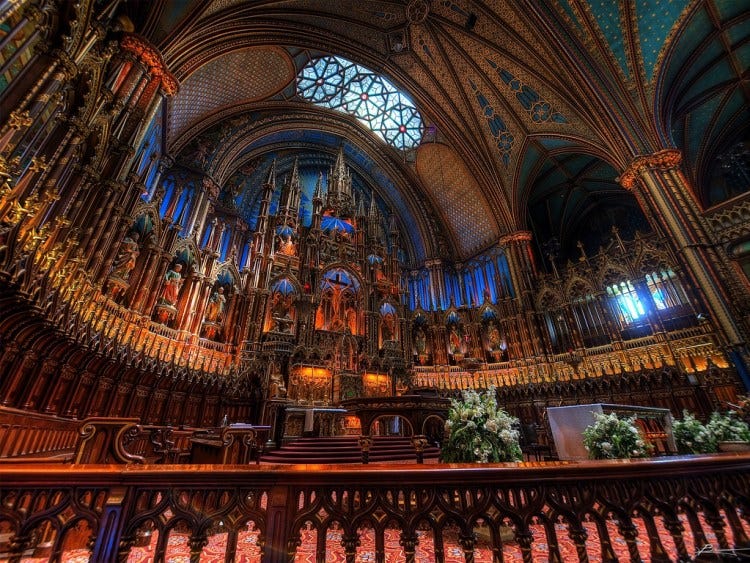
Since Christ’s Body is eternal and transcends space and time, it makes sense that houses of worship should reflect these qualities. The architectural style and material selection of the structure should elicit contemplation of eternity and heaven, our final destination. For example, a stone structure with high, vaulted ceilings and a steeple extending upward parallels the eternal and transcendental nature of the Church. The stone symbolizes eternity, and the high ceilings and steeple represent a “reach” toward heaven. Contrarily, an ordinary cube-shaped building using cheap building materials or a “cutting edge” modern design evokes little scrutiny of the divine realities taking place within its walls. The building could be an office space, a convention center, or concert hall. It looks similar to any other gathering space or venue despite its connection to everlasting and transcendental truths.
Traditional Architecture is Instructive in the Faith
Another reason to return to traditional architectural styles is that the traditional design of a church is theologically-based and instructive in the faith. A conventional cathedral’s beautiful design is not arbitrary. It wasn’t arranged simply to look pretty. The overall layout, stained glass windows, statues, and artwork all serve an edifying purpose.
Let’s review the classic design of a cathedral to discover its theological underpinnings….
