

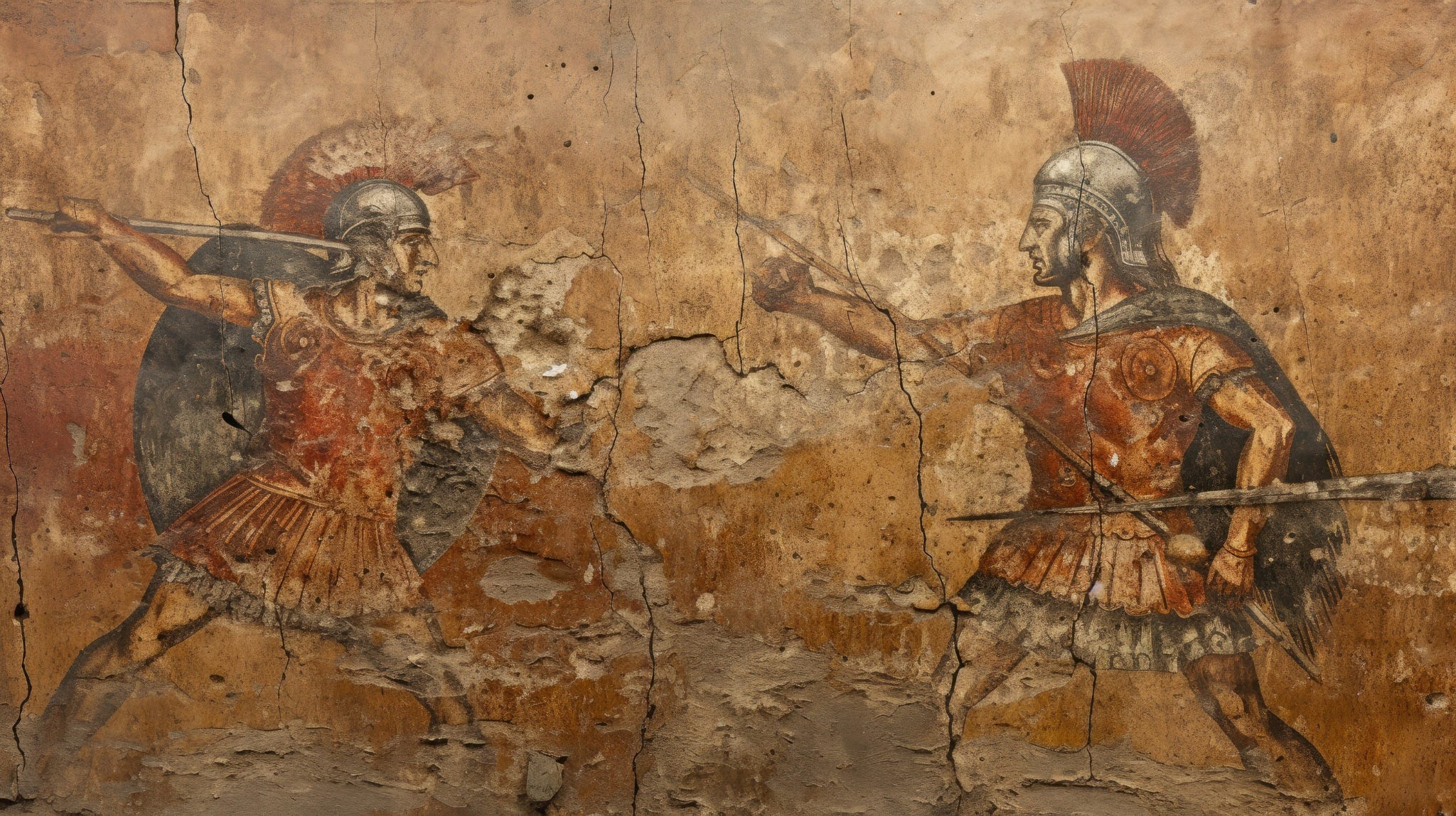
Imagine the unthinkable: The United States, after a brutal, exhausting war with China, suffers the single worst defeat in American history.
Just a few miles outside Washington D.C., the final remnant of the US armed forces — tens of thousands soldiers — are wiped out in a single afternoon. But it gets worse. The President, the Vice President, and hundreds of congressmen are all killed in the chaos, too.
The military is gone. The government is completely decapitated. There is no resistance left, and no logical way to keep fighting. Faced with total annihilation, the only rational choice left is to surrender, finally putting a stop to the bloodshed to save civilian lives, right?
Well, this exact apocalyptic scenario actually did happen. But not in America — it happened to ancient Rome. Their response shocked the known world, and forces us to contemplate how our modern society might respond to a similar situation.
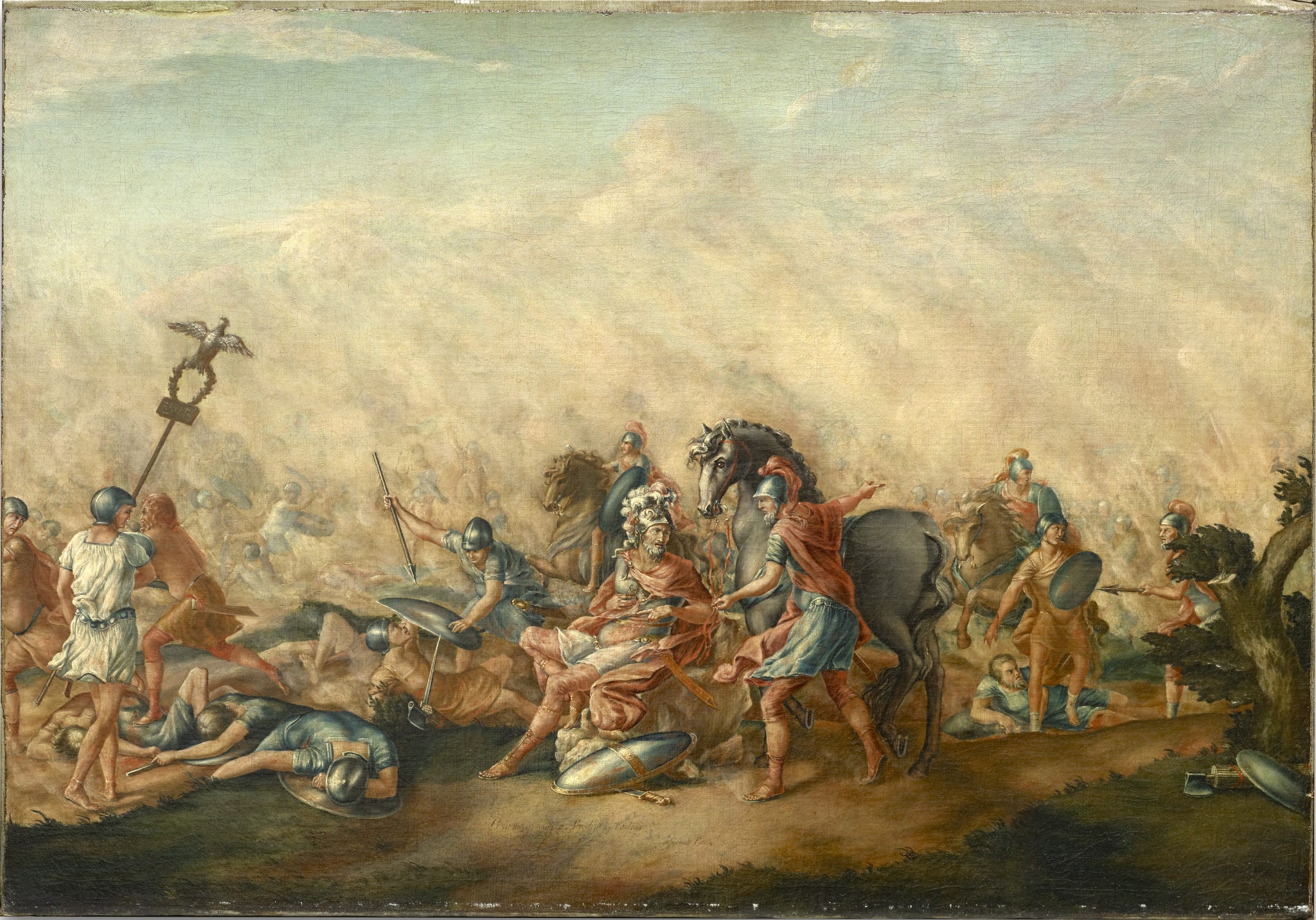
In 216 BC, Rome faced its own ultimate doomsday scenario: The Battle of Cannae. Hannibal, one of history’s greatest generals and sworn enemy of Rome, encircled and slaughtered 50,000 Roman soldiers in a single day. Rome also lost its leaders — a third of its entire governing senate as well as a consul were killed.
Hannibal soon sent a delegation to Rome offering terms. Rome would surely surrender right? But Rome refused to play ball.
Instead of negotiating, Rome did something that seemed to defy logic. They banned the idea of peace. They made it illegal to ransom prisoners. And with no military left, they looked at their most formidable enemy and said: We are going to fight you to the absolute death.
To us in the modern West, this level of raw grit feels completely alien. We live in comfort, sheltered from existential threats, never forced to choose between total surrender or fighting to the last man.
But Rome’s example forces an unsettling question: How does a society develop that kind of unbreakable willpower? Why was surrender a psychological impossibility for a Roman?
The answer lies in a rare cultural code that made Rome entirely unique — and it reveals a powerful truth about our own declining collective willpower today….
When the Unthinkable Happened
After the Battle of Cannae, the general state of Rome can only be described as chaotic: Rome’s major armies were destroyed, and their only surviving consul was completely discredited because of his poor decision making and failure to fight to the death alongside his men.
The people of Rome were horrified since so many of their countrymen had been killed. A national day of mourning was declared as there was apparently not a single person not either related to or acquainted with a soldier who had died. Some estimates show Rome lost one-fifth of its male citizens over the age of 17 during the few years of fighting the Carthaginians.
General panic flooded the city, and the population was desperate. Some blamed the gods, while others blamed a lack of piety on Rome’s part. There were even some gruesome attempts to get right with the gods, such as human sacrifice, where two Gauls were buried alive at the Forum Boarium. On another occasion, a baby was abandoned in the Adriatic Sea.
Politically, Rome’s allies jumped ship. To them, the once powerful city was now a lost cause. Portions of southern Italy even switched sides, like the Hellenic provinces of Arpi, Salapia, and Uzentum. These non-Latin regions pledged their loyalty to Hannibal and the Carthaginians instead.
The historian Livy sums up the conditions of Rome at the time, and shows his amazement that Rome did not give up, as any other nation surely would have:
“Never when the city was in safety was there so great a panic and confusion within the walls of Rome. I shall therefore shrink from the task, and not attempt to relate what in describing I must make less than the reality. The consul and his army having been lost at the Trasimenus the year before, it was not one wound upon another which was announced, but a multiplied disaster, the loss of two consular armies, together with the two consuls: and that now there was neither any Roman camp, nor general nor soldiery: that Apulia and Samnium, and now almost the whole of Italy, were in the possession of Hannibal. No other nation surely would not have been overwhelmed by such an accumulation of misfortune.”
As Livy indicated, Rome never considered formal surrender despite the turmoil. There are some practical reasons why they didn’t that we will touch on, but these are downstream from two more fundamental characteristics of Rome at the time.
These two reasons were crucially intertwined, and they created a social, political, and military framework that made waving the white flag unthinkable to Romans.
The Unwritten Code That Built Rome
The first reason has to do with Roman civic duty, and the cultural traditions that governed its citizenry. Rome was famous for its legal code — the 12 tables which served as the formal body of laws for the city — but at the root of these was an unwritten code that was imprinted upon every Roman child from a young age.
This unwritten code was ancient, and can only be described as an ancestral memory that the people of Rome shared — it was part of their DNA. This deep-seated memory was known as the mos maiorum, or “way of the ancestors.” It was the time-honoured principles and social practices that influenced everything from how Romans interacted with each other in the Forum to how military decisions were made.
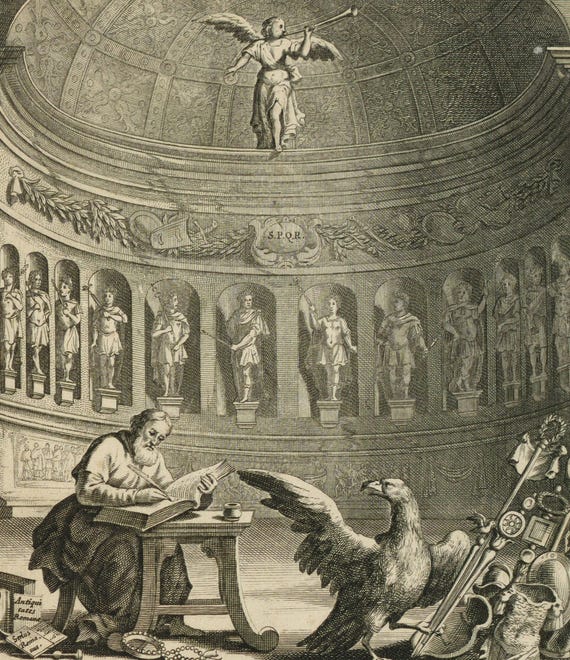
Breaking of tradition was greatly frowned upon, and attempted changes to the “code” were generally met with resistance. Suetonius wrote in the 2nd century that:
“All new that is done contrary to the usage and customs of our ancestors, seems not to be right.”
So what were the ways of the ancestors? How did they contribute to a cultural ethos that rejected surrender?
The mos mairoum encompassed several virtues. Some of them dealt with piety toward the gods and faithfulness toward others in a legal and social sense, but there were a few that specifically impacted the upbringing of military and political leaders — the very men who had to make tough decisions in the aftermath of Cannae.
For example the virtue of disciplina related to education and training as well as maintaining an orderly way of life, especially in a military context.
The virtue of constantia was “steadiness or perseverance”. In the face of adversity, Romans were expected to display an unperturbed façade. Nothing should cause a good Roman to flinch – not even a catastrophic defeat.
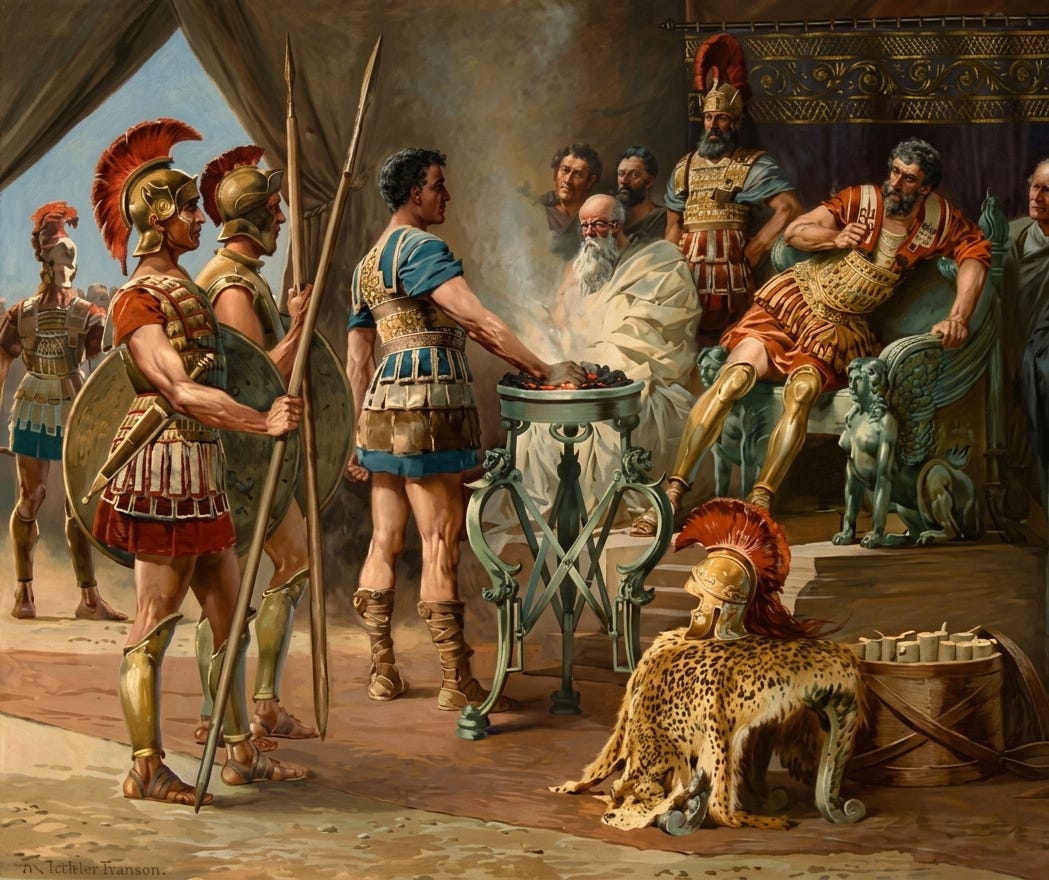
The legend of Gaius Mucius Cordus was often recounted to reinforce this virtue. According to the tale, in 508 BC Mucius snuck into an invading Etruscan camp to kill the rival king, who was leading the siege against Rome. He was unfortunately captured before reaching his target, but showed his unyielding resolve during the interrogation. He declared to the Etruscans:
“I am a Roman citizen, men call me Gaius Mucius. I came here as an enemy to kill my enemy, and I am as ready to die as I am to kill. We Romans act bravely and, when adversity strikes, we suffer bravely. Watch so that you know how cheap the body is to men who have their eye on great glory”.
To back up his claims, Mucius then thrust his right hand into a fire and held it there without giving any indication of pain.
Another important Roman virtue was virtus, which is where we get the word “virtue” today. Virtus was the ideal of the true Roman male. It informed a man what was good, what was evil, useless, shameful or dishonorable. Importantly, it encompassed a refusal to be dominated and instilled a conquest mentality within Roman men.
Finally the concept of dignitas encompassed these other virtues and directed them toward the Roman state. Dignitas meant displaying disciplina, gravitas, and virtus in service to Rome. Simply mastering the virtues was not enough; the virtues needed to be aimed at something higher — the well being of the city.
It was this milieu of virtues that was instilled in every young Roman until they became second nature. Apprenticeships, ceremonies, and customs all reinforced these values constantly.
One particular custom stands out, and it underscores the idea that Romans should never abandon the customs of their ancestors. This is the practice of housing the imagines, or wax masks of the dead, inside the home. The atrium of every noble Roman house was lined with these masks of deceased family members who had achieved high status either through political office or military achievement.
Young Romans who viewed them were constantly reminded: Your ancestors are watching, and you must prove yourself worthy of their legacy.
The Psychology of Roman Leadership
The mos maiorum essentially created a highly unified and capable leadership class among the Roman people. Every young aristocrat had a shared understanding of his duties and the sacrifices he was expected to make for his people.
Thus when exploring a chaotic period of Rome’s history like the aftermath of Cannae, we have a better understanding just who the Roman leaders were. The senators who rallied the citizenry were forged in ancient traditions aimed at creating strong men who would deliver when it mattered.
And this is where the second piece of the puzzle falls into place. Because of the mos maiorum, Rome’s elite were second to none. They were prepared to make tough, creative decisions when confronted with a seemingly impossible uphill battle.
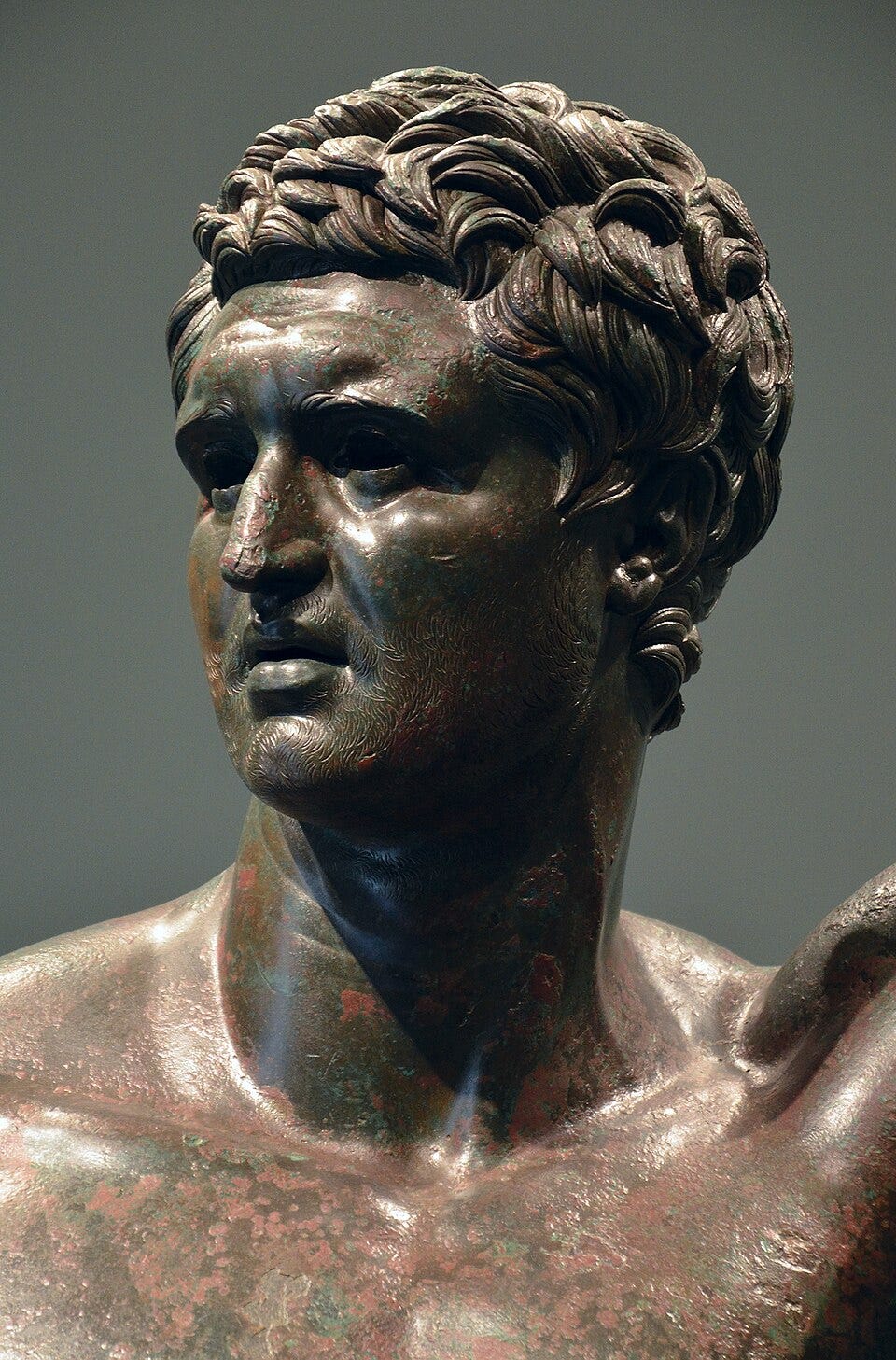
The resolve of Rome’s leadership was evident immediately after Cannae. The young Scipio, who would later defeat Hanniball at the battle of Zama and earn a place as one of the greatest Romans of all time, inspired some wavering tribunes and reminded them of their duty by saying:
“I swear with all the passion in my heart that I will never desert our homeland, or permit any other citizen of Rome to leave her in the lurch. If I willfully break my oath may Jupiter, Greatest and Best, bring me to a shameful death, with my house, my family, and all I possess!”
The courageous, impassioned attitude is nice, but what decisions did Rome’s leaders actually make that reinvigorated the city and altered the course of history?
