

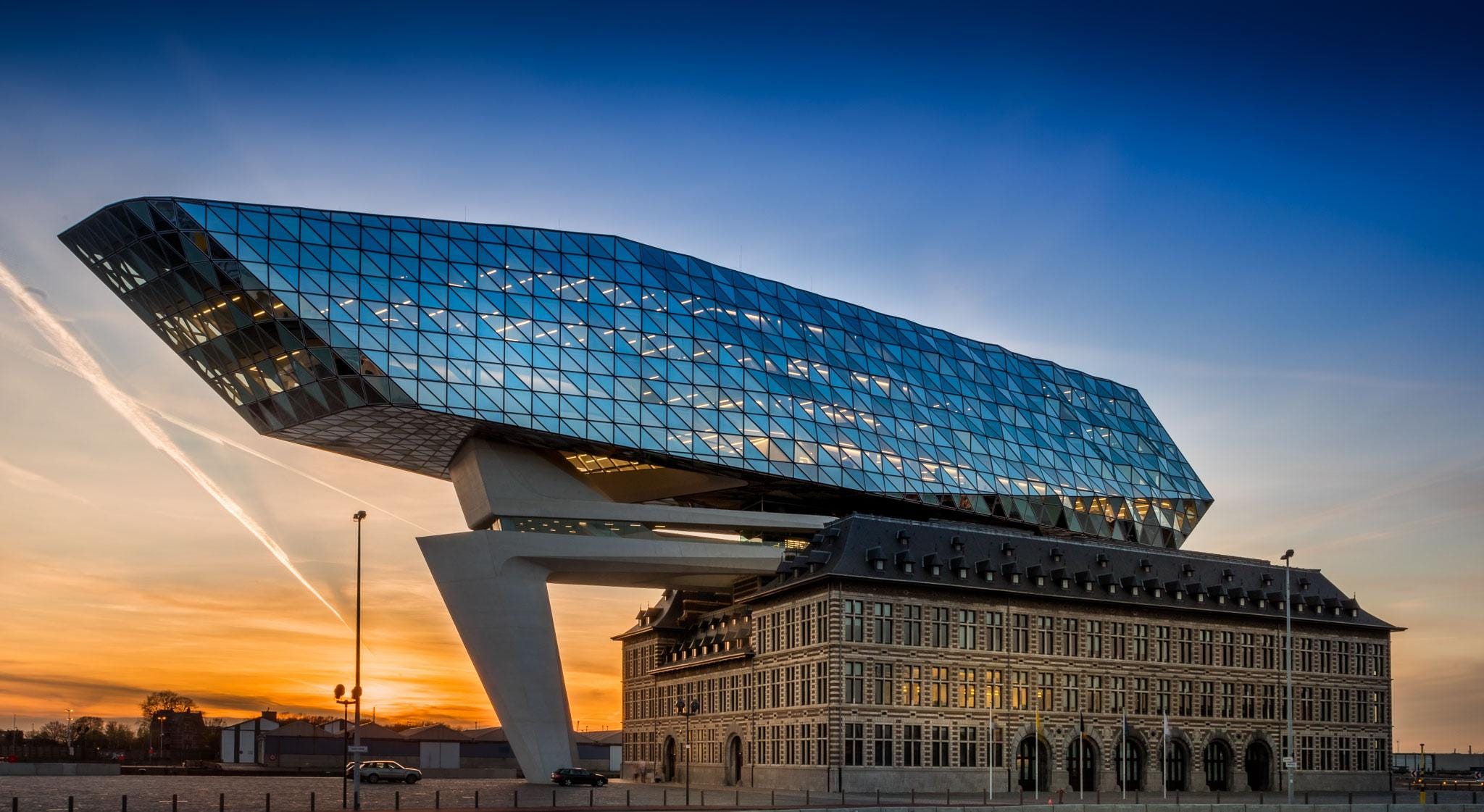
Modern architecture is ugly. You’ve probably noticed we aren’t building anything on par with the great structures of the past. What’s going on?
One possibility is simply that we aren’t a great civilization anymore. Kenneth Clark’s hit series Civilization opens with him standing on the Pont des Art, the “Bridge of the Arts” in Paris. He leads with a disturbing thought for our times:
“If I had to say which was telling the truth about society, a speech by a Minister of Housing or the actual buildings put up in his time, I should believe the buildings.”
When it comes to judging a civilization, then, maybe we should believe its tangible results rather than its own claims.
A century before Clark’s time in the 1960s, a similar idea was expressed by the writer and art historian John Ruskin. He wrote:
“Great nations write their autobiographies in three manuscripts — the book of their deeds, the book of their words, and the book of their art. Not one of these books can be understood unless we read the two others; but of the three, the only quite trustworthy one is the last.”
If we still want to hold onto the idea that we are still a great civilization — and I believe we are — we’re faced with a paradox: that while we might be great in terms of wealth and power, we produce ugly buildings. More fundamentally, we produce ugly art.
We have the means, but where is the architecture that proves we’re still a great civilization?
Reminder: You can support us in forming minds and rebuilding the West by unlocking our members-only content:
✔️ Full premium articles every Tuesday + Free content Thursdays
✔️ The entire archive: Western history, literature, and culture
✔️ The Great Books lists (Hundreds of titles that influenced Western thought)
Join to start reading and support the mission today 👇
When Architects Were Artists
While we can lay blame for modern architecture at the feet of modernism, a lack of belief in transcendental things, and other macro-ideas, sometimes the most grounded answers in history simply lay with the people who made it.
Great man theory has it that history is primarily shaped by those larger-than-life figures of their times, such as Charlemagne and Napoleon. Then, shouldn’t we assume movements of architecture to also be at the hands of its great (and not-so-great) architects? If so, then what happened to modern architects?
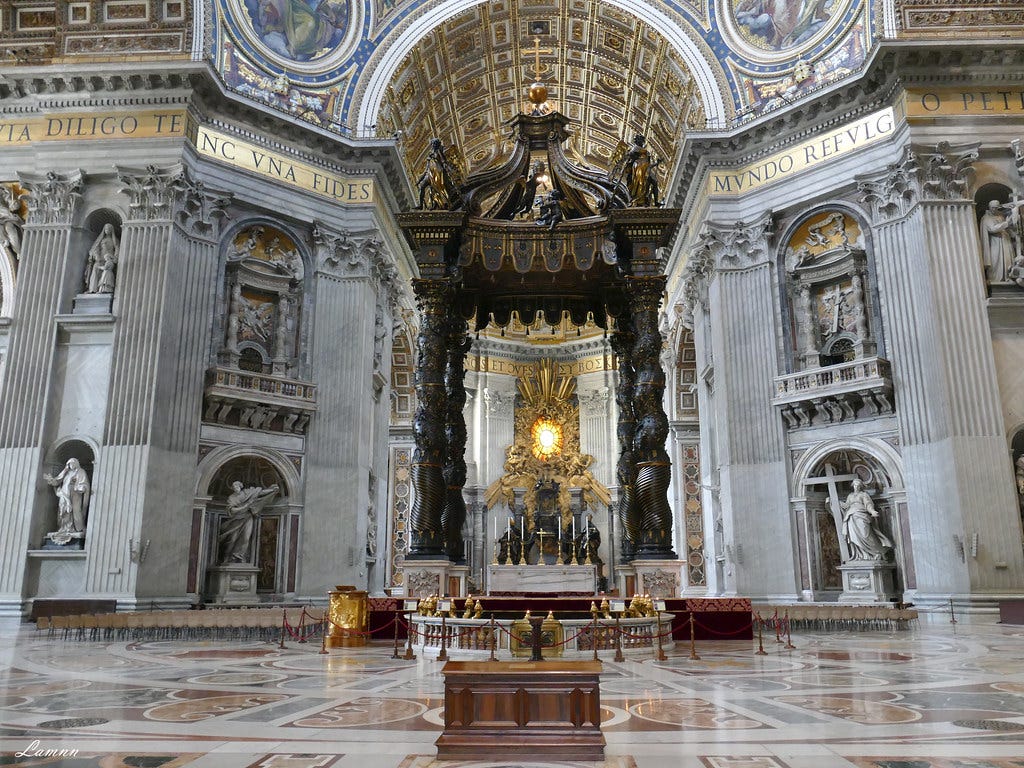
Clark points to an answer. He notes that the best Medieval and Renaissance architects didn’t begin as architects at all — they began as artists. The Gothic master masons first began as apprentice carvers; Brunelleschi began as a sculptor, Bramante as a painter, Ralphael, Peruzzi, and Romano as painters who all turned to architecture later in life.
This background in proper art is what gave these later architects a better sense of proportion and invention to apply at the grand scale of architecture. Clark believes their architecture is, in a way, more human than early-trained architects. By first learning to paint or sculpt the human body, the human traits of architecture are better executed. Training first to understand the strength of steel and other materials doesn’t help you do that.
St. Peter’s stands out as a prime example in Clark’s mind. It is Michelangelo’s most sculptural architecture because of its simplicity, vastness, and curvature which brings to mind the human torso. The principle behind many of these great Renaissance buildings was a proportion like those of the human body.
Further, Ruskin believed in the artist before the architect, too, stating it even stronger than Clark’s more measured opinion. Ruskin really believed being an artist first was a requirement, writing:
“No person who is not a great sculptor or painter can be an architect. If he is not a sculptor or painter, he can only be a builder.”
But what changes when architecture is separated from art?
Art-Less Architecture
There are many reasons why most modern architecture is ugly. A big part of it is because the architect separated from the artist as Ruskin and Clark acknowledge. But it’s not the only reason.
Even if architects did first become artists today, we may well end up in the same place. That’s because, in addition to ugly architecture, we have ugly art today, too — or perhaps we should call it a lack of art.
We should rightly ask how we ended up with both ugly architecture and ugly art. Well, the answer is complicated, but it’s primarily two things.
First, it’s rooted in a change in what our civilization believes. We paint, sculpt, and architect signs of what we believe. In the Medieval age, that was God. In the Renaissance, it was humanism. In the Enlightenment, it was measurement and mathematics. In the modern era afterward, it was doubt — about everything.
Because we couldn’t know anything anymore, after a long slide from the works of Bacon and Descartes, we couldn’t paint or sculpt anything other than abstractions — all open to interpretation and hence meaningless, because they can mean anything to anyone.
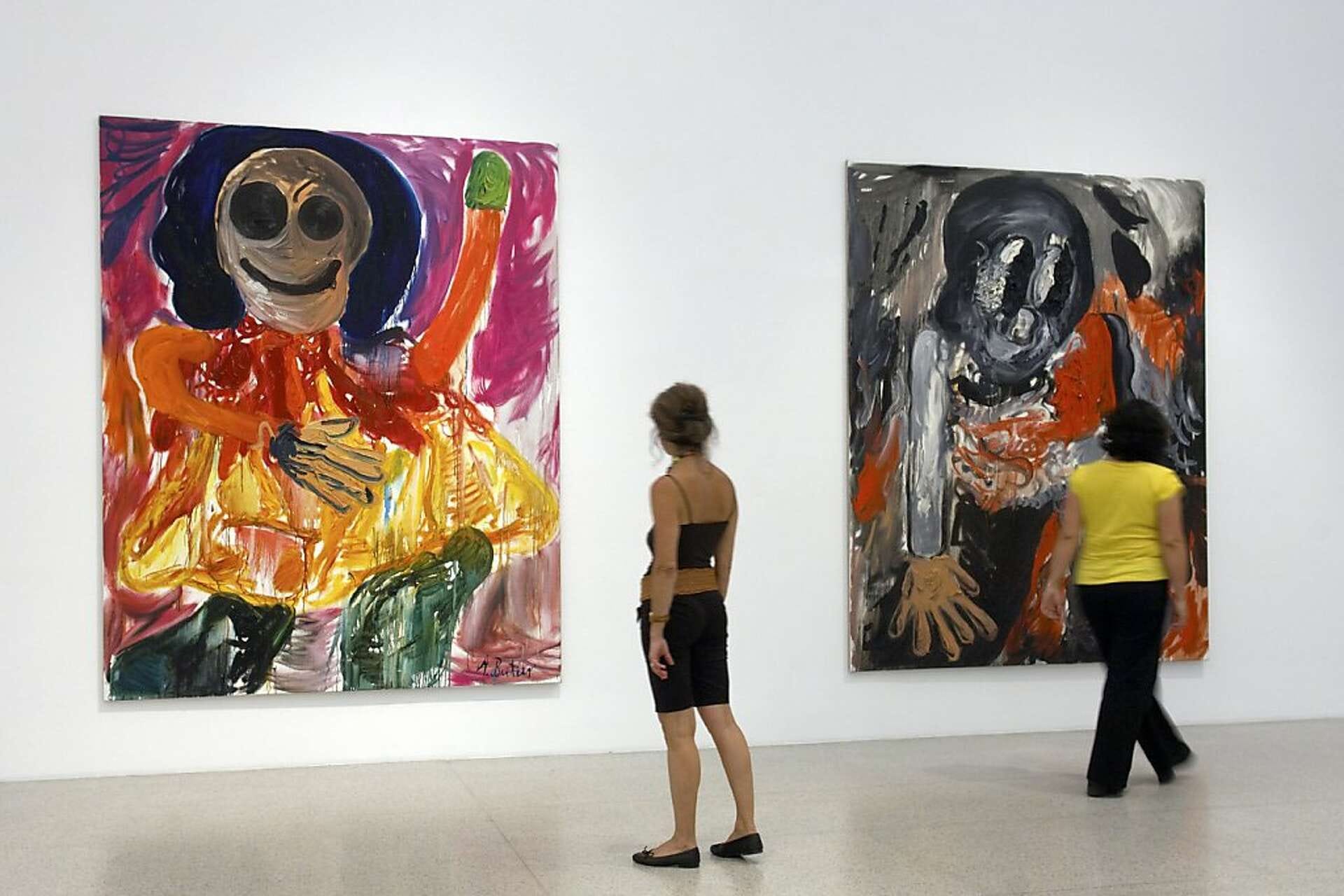
The second reason we have ugly art today is because of what I simply believe is pride. Art is a field where you generally only win by getting the most attention. To do that, the artist constantly looks for boundaries for push.
For a time, the boundaries pushed were technical, including experiments in perspective, color, texture, and raw detail. But I wonder if those technical aspects simply became saturated in the hands of the Renaissance and Baroque masters, at least when it came to painting and sculpting. Maybe, then, artists then had to find other boundaries to push on, chiefly the subjects of the paintings themselves. This kicked off, in my opinion, a race to the bottom in terms of ever more abstract and ridiculous styles, to the point where some scribbles on a nearly blank canvas, or a banana taped to a wall are considered art.
The cultural forces of relativism, nihilism, and pride pushed artists in a war of reductio ad absurdum to see who can make the biggest, boldest statement with the least amount of real art involved. This has plagued artists and architects alike over the last century…
