

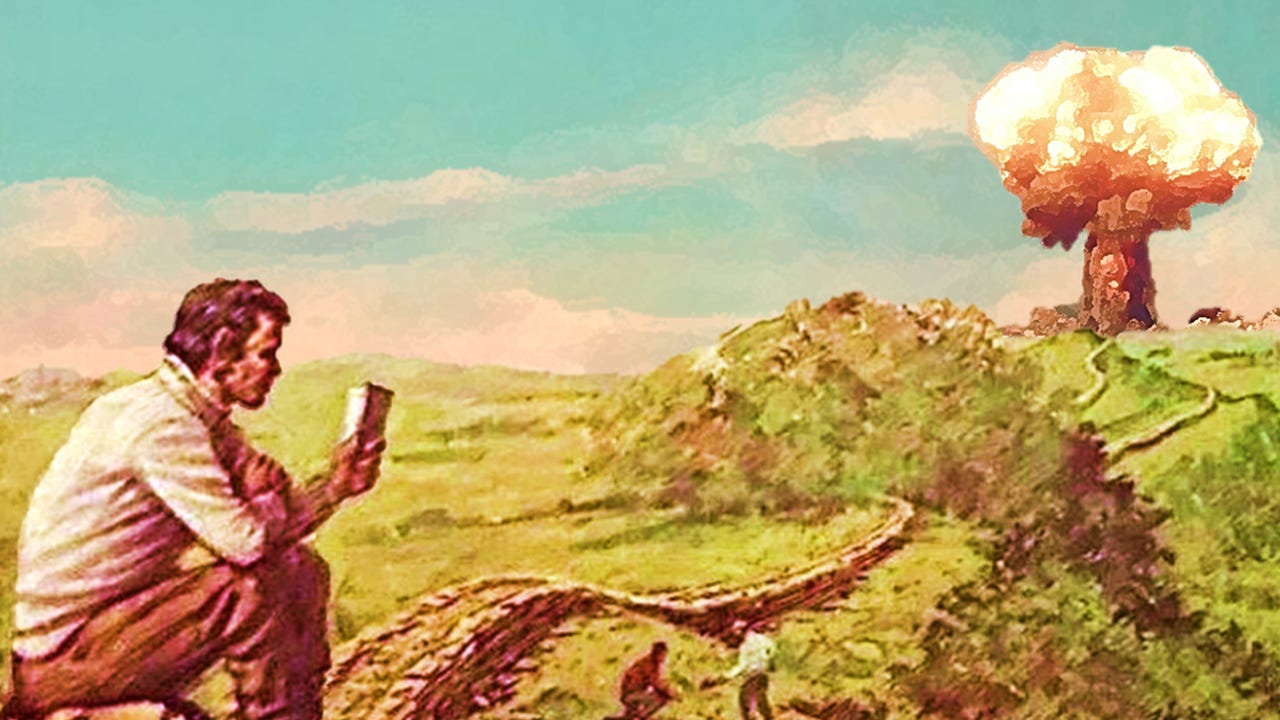
We often assume our world of technology and relative peace is the default state of human affairs — but it isn’t.
For most of history, life was brutal and short. Civilization is not a guarantee. As Kenneth Clark lamented in his acclaimed 1969 television series Civilisation, “however complex and solid it seems, [civilization] is actually quite fragile. It can be destroyed.”
Civilization, then, is a delicate achievement that requires constant maintenance. When that maintenance fails — as it did during the fall of Rome or the Bronze Age collapse — the darkness of illiteracy and violence becomes the historical norm once again.
So that means that in order to maintain a civilization, each generation must do its part. Fathers and mothers must pass on accumulated wisdom to their children, and when those children grow up, they must do the same in turn. Now today, Gen Z is the next generation to take the mantle. If you’re in this group, you’re beginning to have an impact on society at large. This is a great responsibility, and also a great challenge because our civilization is seemingly in such a fragile state.
With this in mind, I want to show you why, even as a seemingly advanced society, collapse is never far off. And it is only by understanding history that we can predict our future and arm ourselves with the tools to become great men and women of consequence who will stave off civilizational decline and build a better future.
So here are 3 ways that understanding history will change the way you see the world — and hopefully help you play a part in solving the challenges we face today.
Reminder: You can support us in forming minds and rebuilding the West by unlocking our members-only content:
✔️ Full premium articles every Tuesday + Free content Thursdays
✔️ The entire archive: Western history, literature, and culture
✔️ The Great Books lists (Hundreds of titles that influenced Western thought)
Join to start reading and support the mission today 👇
A Warning System For Decline
We can only understand the state of our current civilization in light of the cycles of history. To the casual observer, we are wealthy, well-fed, and entertained. Life is good right?
But to the historical mind, cracks are everywhere. One only needs to read a classic like Edwards Gibbon’s The History of the Decline and Fall of the Roman Empire, to see them.
Gibbon basically performed a “civilizational autopsy.” He posited that Rome didn’t necessarily suffer a sudden death from a single powerful blow. Rather, it eroded over centuries. The warning signs — currency debasement, reliance on mercenaries, political instability, a widening gap between rich and poor, and plummeting birth rates— were all present long before Rome officially collapsed. Yet, most Romans failed to notice as they continued their daily lives nearly uninterrupted.
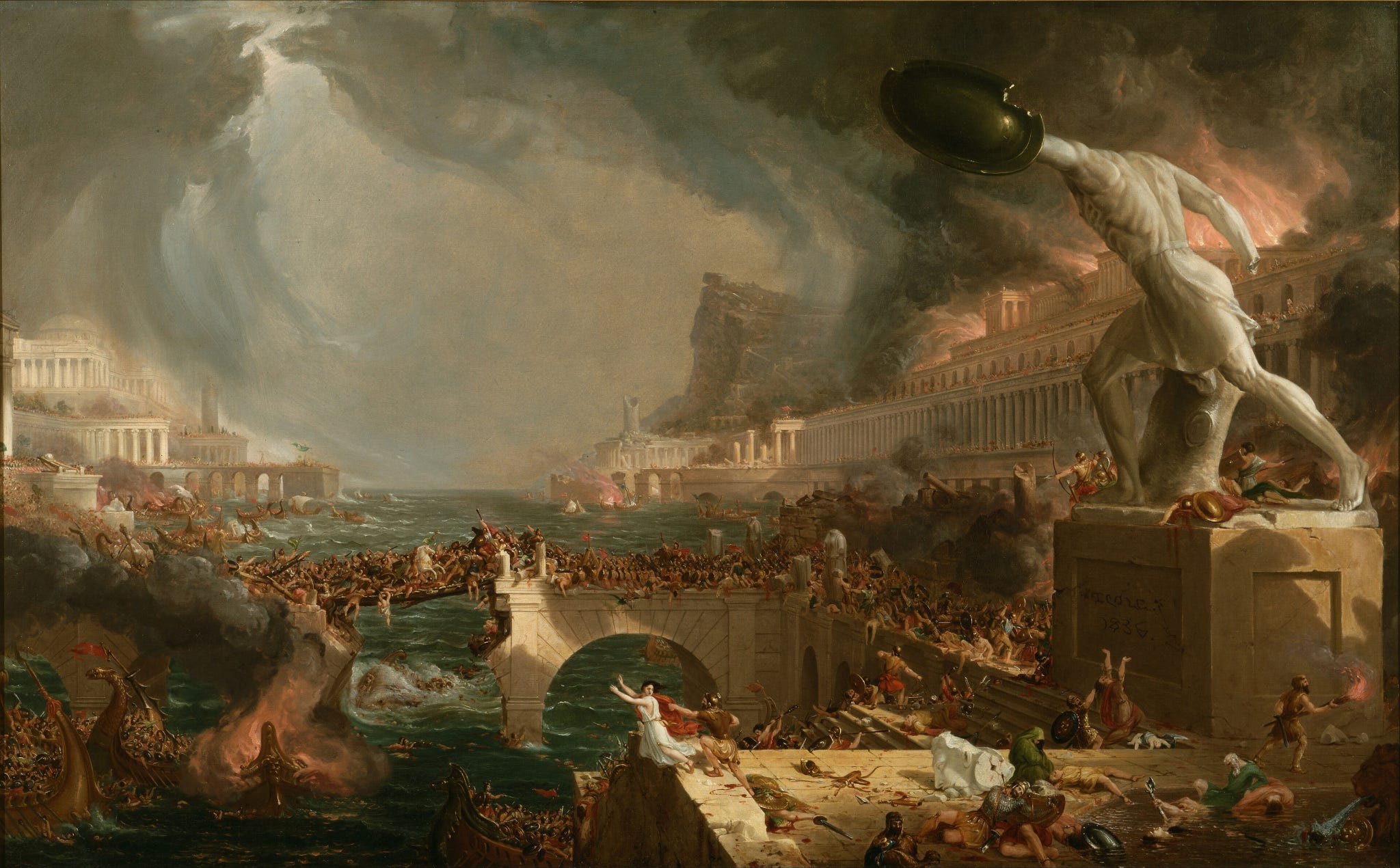
Gibbon called this the “natural effect of immoderate greatness.” Success bred a complacency that made self-correction impossible. Why sacrifice for the common good when prosperity feels guaranteed? This is precisely how decline arrives unannounced through the path of least resistance.
This pattern is not unique to antiquity, of course, and the symptoms Gibbon identified probably ring a bell to you. Other cultures have undergone the same cycle, and the signs are present in our own civilization. Rampant inflation, a faltering middle class, and plummeting birth rates are all too common news items in the West today.
Historical literacy serves as an early-warning system for these symptoms, though.
The person who has studied Gibbon or the collapse of the Weimar Republic possesses a pattern recognition that others lack. They realize that we are not fundamentally different from the Romans. They, too, assumed that because their world had always endured, it always would.
They were wrong.
A Blueprint For Survival
Ok, so history provides a detection system for failure, but it also offers a blueprint for survival, which is the second reason you need to understand history
History shows us how civilizations endure. Only when they treat their survival as a serious problem to be solved each and every day do societies make it through the many “great filters” that stand in their way.
One example is the long-lasting Byzantine Empire. When the Western Roman Empire collapsed, the East thrived for another thousand years. The Byzantines survived because they understood that civilization requires active maintenance…
