

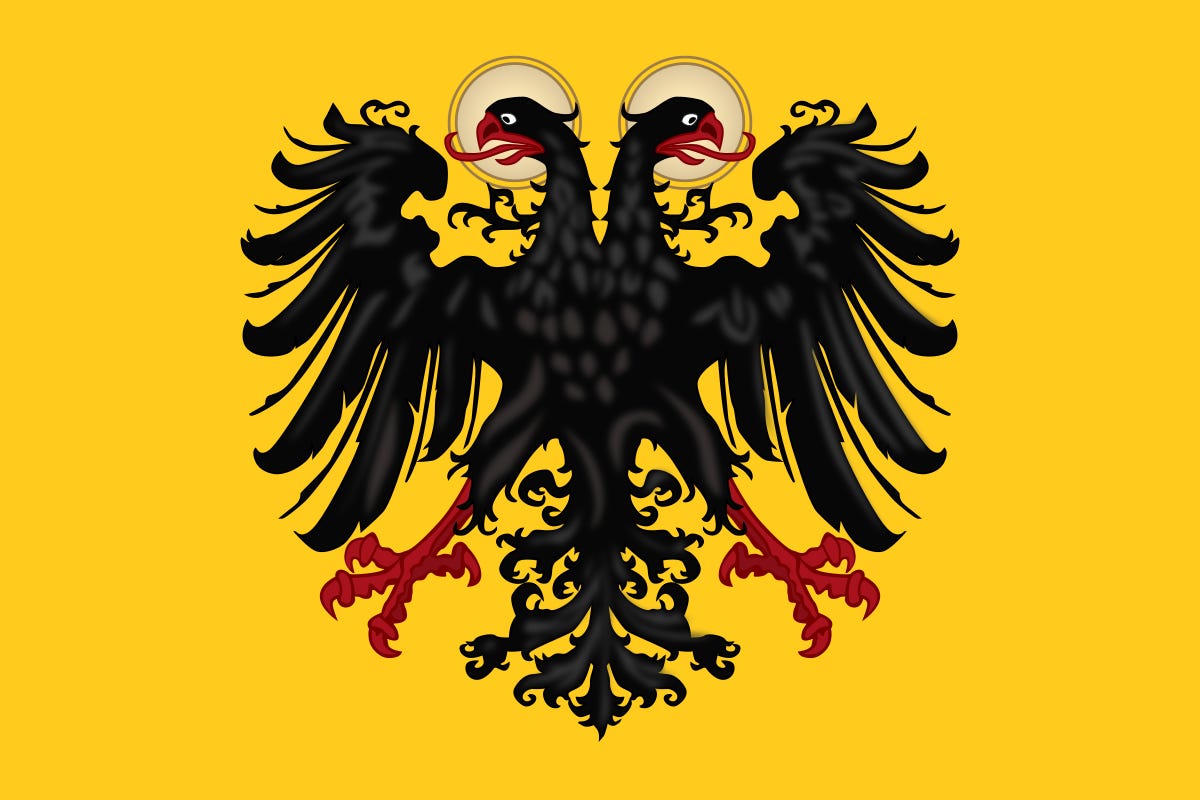
Voltaire famously derided the Holy Roman Empire (HRE) as “neither Holy, nor Roman, nor an Empire”, but what couldn't be denied was its longevity.
At its peak it incorporated hundreds of independent fiefs, each owned by a different lord or bishop with competing interests. They were far from unified — and even sometimes went to war with each other. Yet the empire still managed to last nearly 1000 years. Existing from 800-1806, it was birthed before William the Conqueror invaded England and continued on after the American Revolution.
So how did they do it? How did such a fractured political entity last so long?
The HRE’s fractured nature was not actually its weakness, but its strength. It has to do with a concept called subsidiarity: giving authority to local leaders rather than a far-off, disconnected central government.
The HRE provides a template for implementing responsible government today…
Reminder: You can support us by unlocking our members-only content:
✔️ Full articles every Tuesday
✔️ The entire archive of content: Western history, literature, and culture
✔️ The Great Books lists (Hundreds of titles that influenced Western thought)
Join to start reading and support the mission today 👇
A Decentralized System
The HRE’s longevity is a feat of particular intrigue when one considers its central geographic location and lack of natural defensible borders — it certainly wasn’t in the right place at the right time. Rather, its success was due, at least in part, to its governmental structure and embrace of subsidiarity.
So what exactly is subsidiarity?
Subsidiarity is a Catholic principle of governance developed by Pope Leo XIII in his 1891 encyclical Rerum novarum (“Of New Things”). The document was in many ways a response to the radical socialist and capitalist movements of the period and focused heavily on the conditions of the working class. It stressed subsidiarity as a bridge between the two economic philosophies.
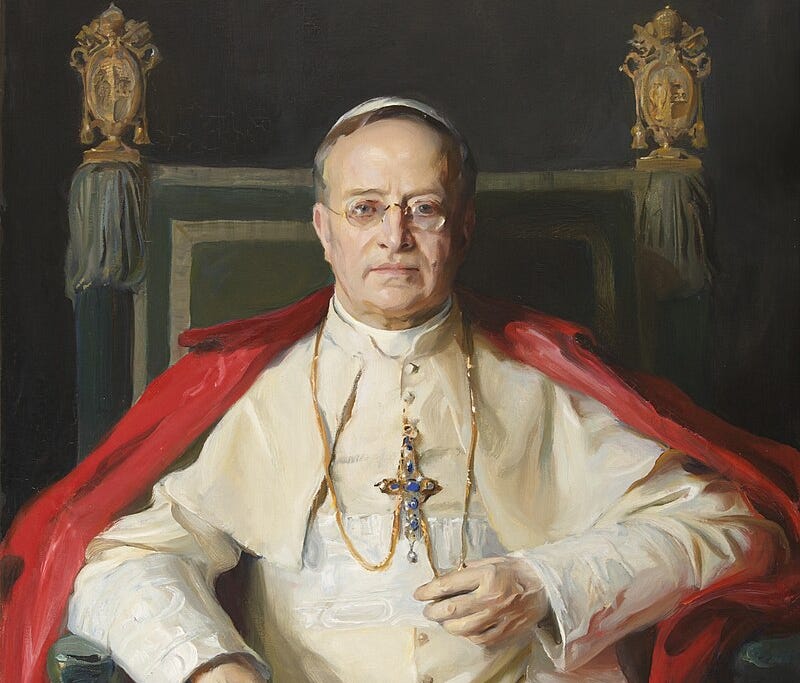
A later pope, Pius XI, defined subsidiarity more explicitly:
“a fundamental principle of social philosophy…that one should not withdraw from individuals and commit to the community what they can accomplish by their own enterprise and industry.”
Essentially it means that matters should be handled by the lowest or least centralized competent authority. Political decisions should be made locally because a decentralized government ensures those closest to the problem have the most control. By contrast, centralized governments are often too far away from the problems they must deal with, contributing to inefficiencies and out-of-touch solutions.
Moreover decentralization, and thus subsidiarity, has an inherently stabilizing effect as the government has many checks and balances and can’t be undermined by a few poor decisions from leadership. When a central authority figure makes a bad decision, it can end the entire enterprise, but if a few small lords err, the system as a whole remains largely undisturbed.
So how did the HRE embody this principle?
