

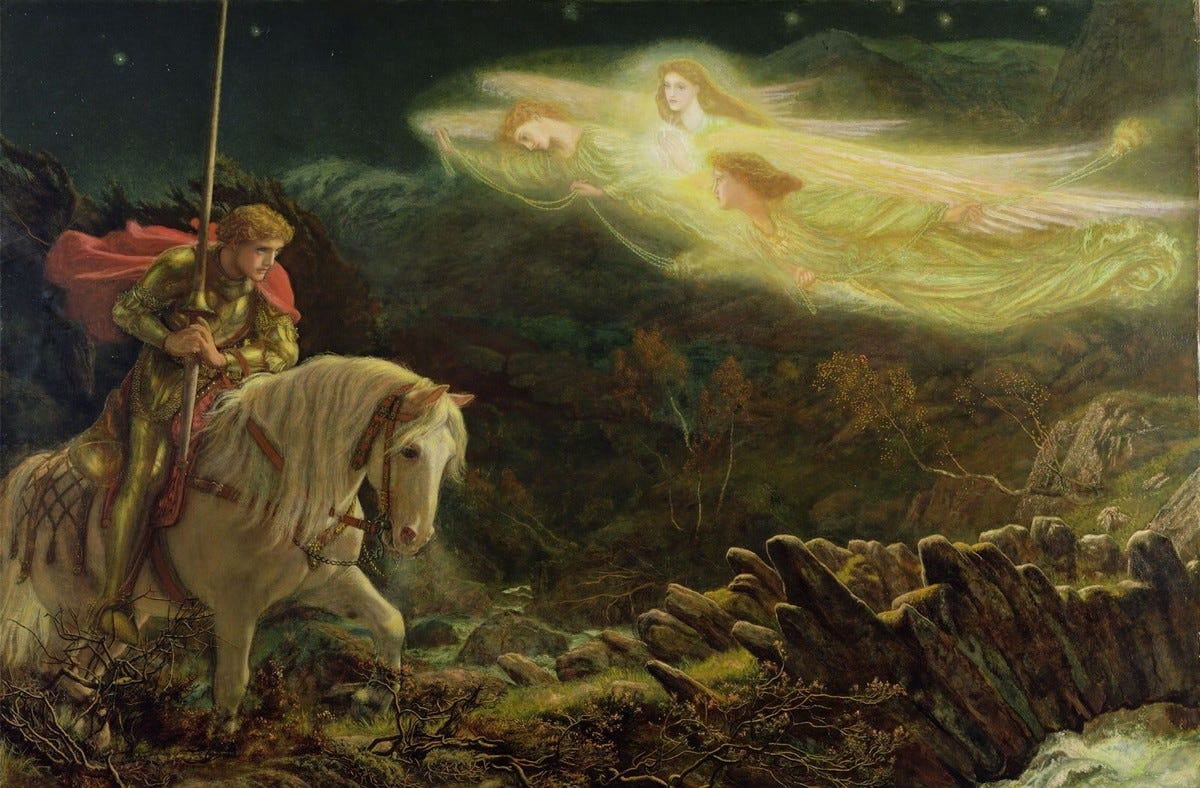
The most popular stories of the last generation were quest narratives for a reason.
The Lord of the Rings, Harry Potter, The Legend of Zelda, The Elder Scrolls, The Witcher — all retell the hero’s journey in their own ways. These fantasy books, movies, and role-playing games follow a hero who receives a call, leaves the familiar, endures trials, is transformed, and returns changed.
As children, we dreamed of living inside these stories, imagining ourselves as the main protagonist. You wanted to be more than a consumer of it, and secretly — maybe even unconsciously — you saw yourself as the hero.
Millennials, Gen Z, and now Gen Alpha are the generations plagued worst by short attention spans and passive scrolling; but they are also the generations engaged in some of the most immersive and participatory quest narratives in history, found in video games. The number of hours logged, the enormity of the worlds explored, and the depth of characters defined speak to two facts: 1) that these generations don’t have real-life “quests”, but 2) they want a mission, badly.
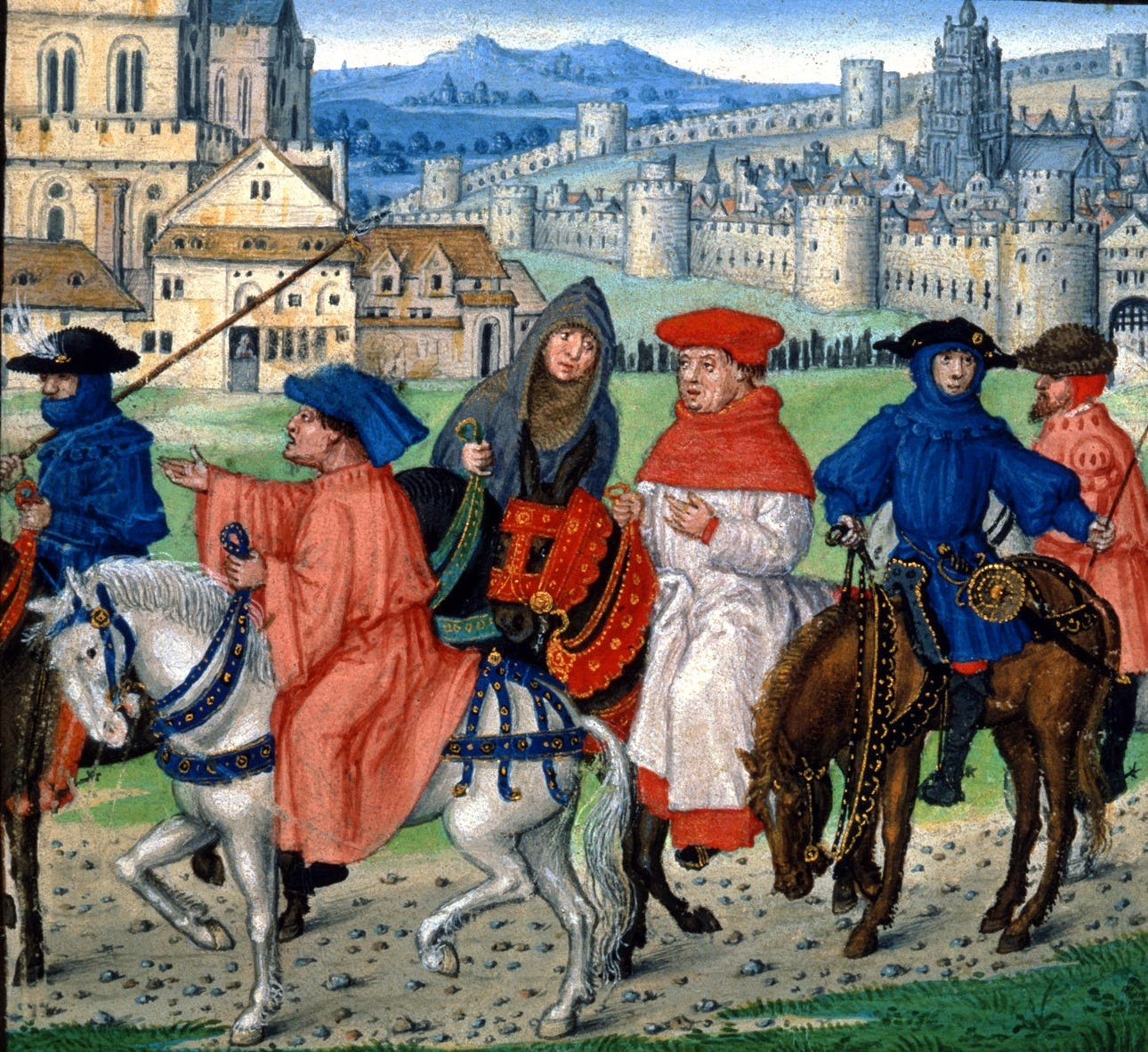
Though media and tech may have accelerated the desire for a real-life quest, this is nothing new. In the 14th century, Geoffrey Chaucer illustrated the need for a quest in his tale of pilgrimage: knight, miller, prioress and pardoner, (every social rank traveling together) set out from a London inn toward the shrine of Thomas Beckett at Canterbury. They told stories along the way, competed, argued, laughed, and prayed. Pilgrimages like these were the real versions of many quests found in our modern fantasy literature, movies, and games.
These medieval pilgrims understood that humans don’t need unlimited freedom or comfort, but they do need quests. You need a quest, too, because a life without a quest quickly becomes empty and directionless…
Reminder: You can support us in forming minds and rebuilding the West by unlocking our members-only content:
✔️ Full premium articles every Tuesday
✔️ The entire archive: Western history, literature, and culture
✔️ The Great Books lists (Hundreds of titles that influenced Western thought)
Join to start reading and support the mission today 👇
What a Quest Was and Why It Worked
The medieval pilgrimage was a well-defined but unpredictable experience of transformation. The departure required real commitments (much more so than simply a long vacation), often involving months of preparation, the settling of debts, and the writing of a will. The travel itself was of course challenging, as the routes to Jerusalem, Rome, and Santiago de Compostela were long, dangerous, and physically demanding. But the journey’s end was acknowledged as much more than simply a visit to a far-off place. It was a personal and spiritual journey that would transform the pilgrim in a radical way.
The later idea of vaguely “finding yourself” through free travel and exploration might sound similar, but the two ideas are very different. Both seek change, but the latter is really seeking a new identity to be found somewhere in the world. On the other hand, the pilgrim knows his fundamental identity as a Christian, and to go deeper in that identity is what motivates his quest. There is also a distinction in the fact that the pilgrim or any adventurer with a goal brings his will in the journey. It’s not a passive experience of a place or people, but rather a mission that pushes him or her to act. The aimless wanderer isn’t rooted in any identity at the outset and thus sets off with an equally undefined quest (maybe one without an end) and a certain passivity in attitudes. Who knows what meaning you’ll adopt if you wander, hoping it will find you?
A basic sense of destination must be known for any meaningful quest. Bilbo and the dwarves had a map and a plan. Certainly, there were many unexpected twists and turns from that plan, but these surprises tested their will toward the quest’s end. The aimless wanderer might latch onto these diversions as a new path in their search for meaning. But for the pilgrim, rather than diverting your aims, these trials merely strain your resolve for the goal. This is how the quest works to reveal those great qualities you couldn’t have discovered by staying in your hobbit-hole.
Much like The Hobbit, the itinerarium, a pilgrimage journal, documented the transformation of the pilgrim throughout the quest. Pilgrims recorded distances and landmarks of course, but more importantly their interior movements: moments of doubt, breakthrough, understanding, and spiritual consolation. The journey was written down because spiritual growth was the expected result.
Anthropologists like Arnold van Gennep and Victor Turner, drawing on the medieval pilgrimage tradition, described this middle state as liminality — a threshold condition in which the traveler is neither who he was nor yet who he will become. He has left his old identity behind and hasn’t yet arrived at the new one. The pilgrim was between worlds — stripped of his social role, his familiar surroundings, and his ordinary comforts precisely so that something new could take shape in him.
The pilgrimage worked because it provided a tangible solution to man’s desire for purpose. Aristotle argued in the Nicomachean Ethics that every living thing has a telos — a proper end toward which it moves, and in the movement toward which it becomes most fully itself. A human without a telos is a failure of being. St. Augustine identified the same truth but identified the telos of man in knowing God: the heart is inherently restless, oriented naturally toward an ultimate destination, which is God. The pilgrimage externalized and ritualized that interior condition, giving the restless heart a direction to pursue.
Seeking Quests in Careers
For most, the only “quest” of the modern era is the path of earning of living. This, our culture teaches, is the aim of life: to perform a job, make money, and if we’d made enough money in our working lives, to retire.
Aside from the question of meaning, however, this end in itself satisfies nothing of the need of humanity for a true quest. As we become adults, we all recognize that the working world is much duller than life in stories. And even though most of life’s real quests may fall short in our perception of their significance, the typical career falls farther still — particularly the modern career, because it is more open-ended, less foreseeable than ever before.
The medieval world offered a clearer path to most people. Religious life had been shaped and structured for centuries already, offering young men respected paths into priesthood or monastic life. Women too were offered sensible paths in convents for a more structured participation within the Church. But even outside of the dominant institution of the Church, secular career paths were quite clear.
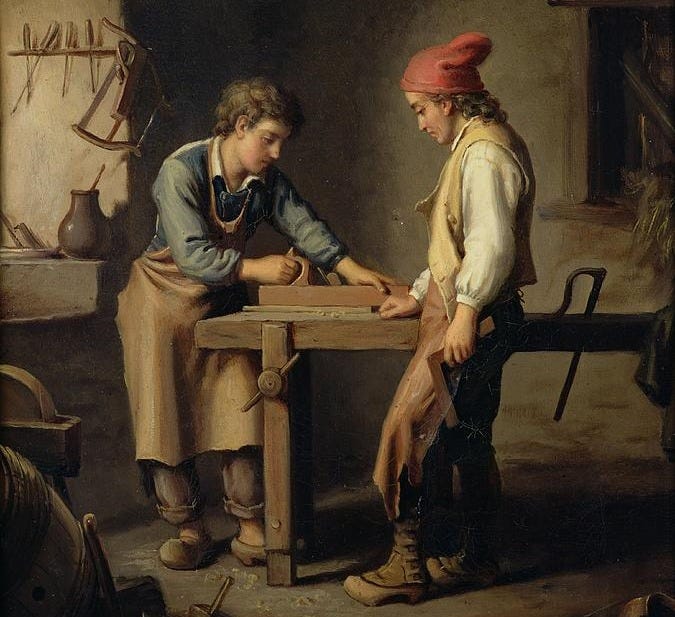
The guild system offered a young man entering a trade a path with clearly defined stages in apprentice, journeyman, and master. You knew where you were in the world, your career, and what was required to advance. At the least, the son typically knew he had a real path in the work of his father. The career outlook was reasonably predictable.
But modern life has replaced structured journeys with open systems, such as education without a career path and a career without clear milestones for advancement. This ambiguity in the working world is the natural result of a freer world (a good in itself), but not without the cost of clarity. Some thrive in this fog of war, but many others struggle with restlessness when presented with endless choice and no direction. They need a defined quest, but there is no quest-giver. In the grand scheme of things, a career is only a side-quest…
