

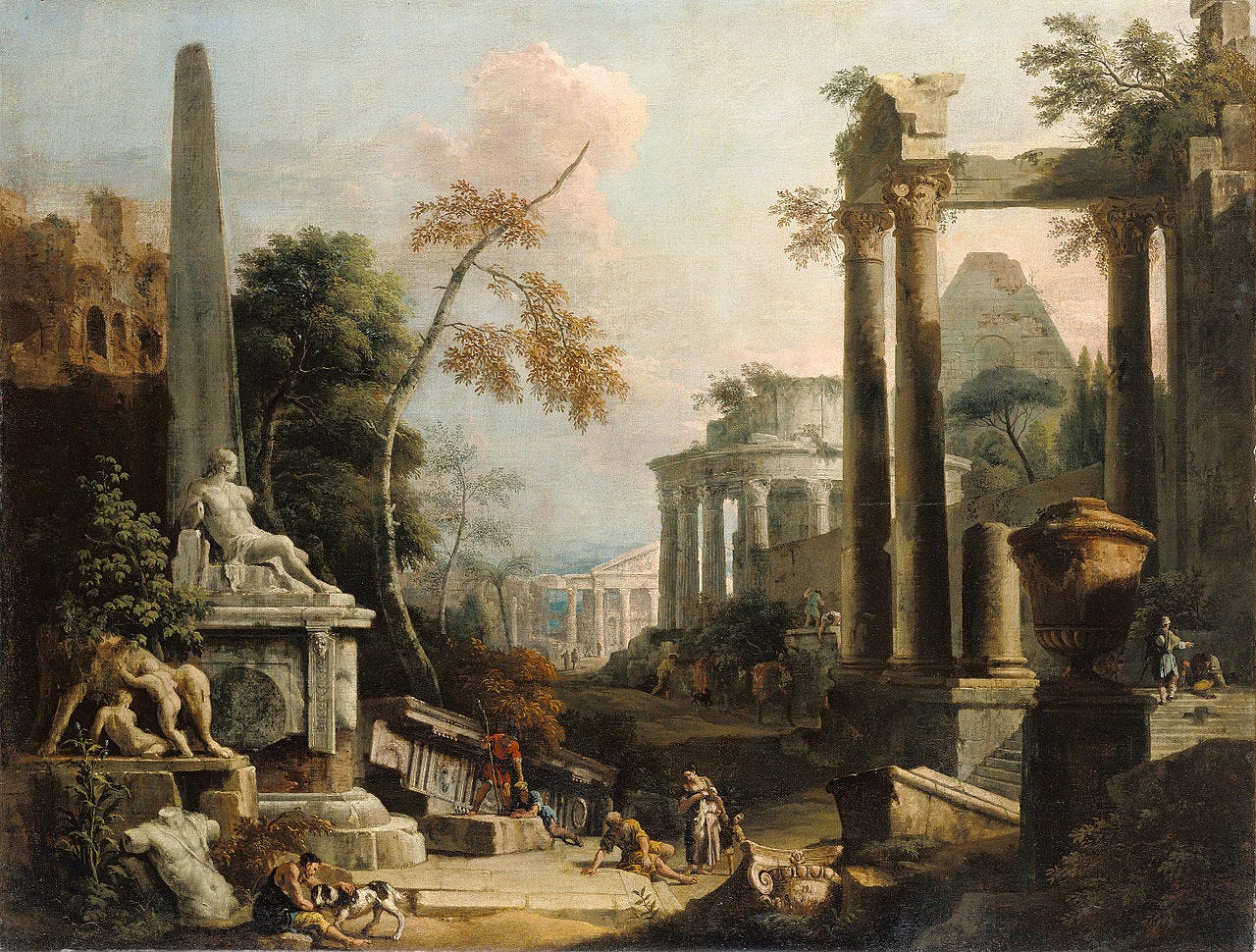
“The West” and “Western Civilization” are terms often used to delineate between our civilization and the rest, but what lines do they really draw between the global civilizations? Where does the “West” end and the “East” (or any other formulation of other civilization) begin?
The classical formulation defines the West as essentially derivative of three cities: Athens, Jerusalem, and Rome — or in terms of their results: Greek philosophy, Christianity, and Roman law.
But these are just the ideas that shaped the West. To say they are sufficient to define the West is to reduce an entire civilization down to its ideas. Rather the West is, like any civilization, rooted in a certain time and place. Then, to understand Western Civilization, we must first look to the peoples that built and places that influenced the West as we know it today.
Reminder: You can support us by unlocking our members-only content:
✔️ Full articles every Tuesday
✔️ The entire archive of content: Western history, literature, and culture
✔️ The Great Books lists (Hundreds of titles that influenced Western thought)
Join to start reading and support the mission today 👇
Roots of the West
The history of the West, like that of any civilization is a complex affair; the roots of the West lie in the pre-civilizational states inside Europe and its periphery. In the classical, distilled description of the West’s origins, historians typically point first to Athens, to the Homeric age sometime around 2800 BC.
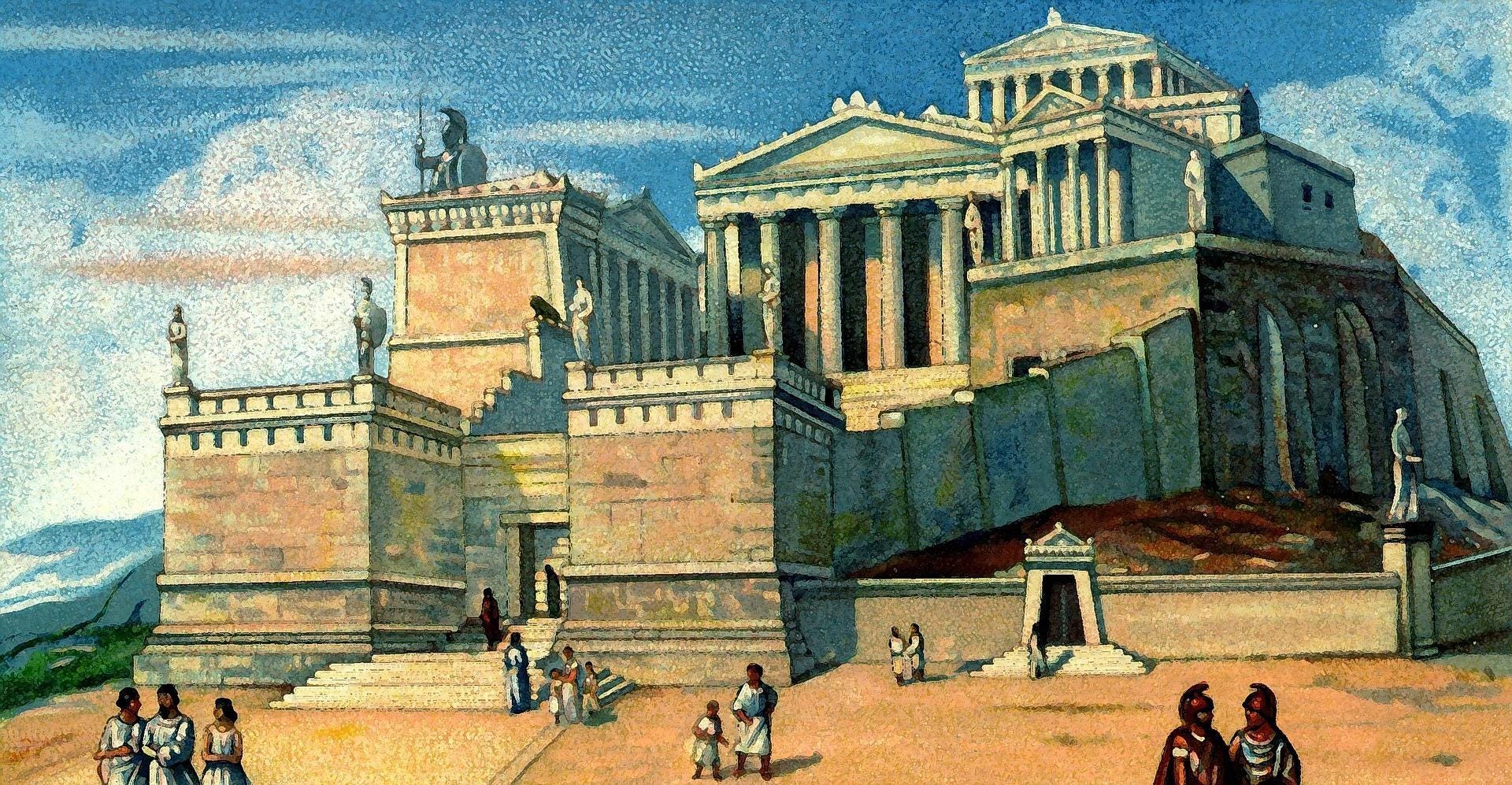
One might wonder why not begin further back to the pre-Greek Mycenaeans, but if a useful description of anything’s origins are to be found, they must be limited, even artificially by a figurative line in the sand. That line for the history of the West is ~2800 BC. Practically, this is when the body of Greek literature in the Western canon begins; therefore, Homer is a fitting place for the first root of the West. Books could be (and have been) written on the stage set by the Greeks for Western Civilization, but historian Christopher Dawson summarizes the influence of the Greeks well:
“It is from the Greeks that we derive all that is most distinctive in Western as opposed to Oriental culture – our science and philosophy, our literature and art, our political thought and our conceptions of law and of free political institutions.”
The next root of the West, still in line with the classical formulation, is from a people once wandering the deserts of the Middle East in search of a home, arriving at last to their Promised Land, and building a nation around Jerusalem. It’s from them that we inherit a Judaic spirituality, forms of sacrifice and ritual, and the moral foundation of the West. Most importantly, it’s from the Jewish conception of God that later Christendom and the West would recognize its summum bonum, its highest good that set the tone and proper ordering of all things.
Erring on the side of inclusion (but welcoming debate), smaller roots of the West extend in all directions from these two foundational cities of Athens and Jerusalem. Influences from the proto-European tribes of the Germanics, steppe peoples from north of the Black Sea (even out to the Russian tundra), and Nordics interacted, fought, and mingled with peoples of the Mediterranean at various points in the West, particularly throughout the first millennium after Christ. From the South, the vibrant and ancient culture of the Egyptians and pre-Islamic Arabs influenced the West in philosophy, science, and religious mixtures, including that of Manichaeism (from modern-day Iran) and Gnosticism. These later religious ideas, though influential for a time in the Mediterranean, didn’t so much form fundamental parts of the later West by their adoption, but rather in the West’s antagonism to their ideas. The West reacted to these foreign ideas with clarifications on orthodox Christian teaching and sensitivities to nuanced theological points that persist into the politics and culture of today. Hence, the West (and likely every civilization/culture) was partly shaped by external influences by the very act of combatting them.
Most contentiously, Dawson was generous in ascribing Western roots in the West’s historical nemesis of Islam. While Islam was flourishing across the entire southern Mediterranean, Europe was still seeking recovery from the fall of the Western Roman Empire. Despite limited highs in the emergence of the Holy Roman Empire and the Carolingian renaissance, the West lived in relative poverty in comparison to its Islamic neighbors (eventually pushing into southern France). Dawson wrote that the West wouldn’t regain parity with the Islamic nations until the 13th century, and only surpass them by the 15th century. During these Islamic highs, they made great contributions to mathematics (e.g. the decimal system and algebra from Al Khwarizmi), astronomy, philosophy (e.g. Avicenna), and — like many European monasteries at the time — preserved and translated many works of Greek origin. Islam’s architectural and artistic influences remain obvious around much of Mediterranean Europe to this day. Ironically, it’s against Islam that the West unified in defense, ultimately shaping the Medieval warrior culture of the Crusades.
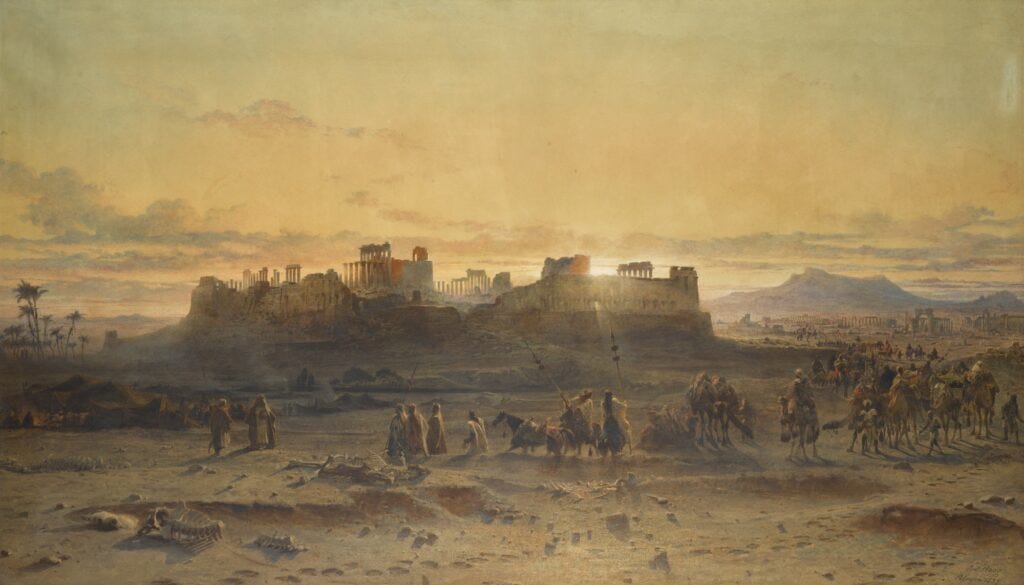
The last major influence on the West is that of the third great city in the classical definition of the West: Rome. The Roman Empire influenced the West in too many ways to name here, but perhaps an understated way was by acting as a coalescing agent among the many separate influences mentioned above. Roman roads, infrastructure, trade, law, and its institutions provided the mechanical and legal means of bringing together influences from far and wide. This brought cultural influences from the far East, West, North, and South into the heart of Europe.
The next phase of the West was its solidification into Christendom…
