

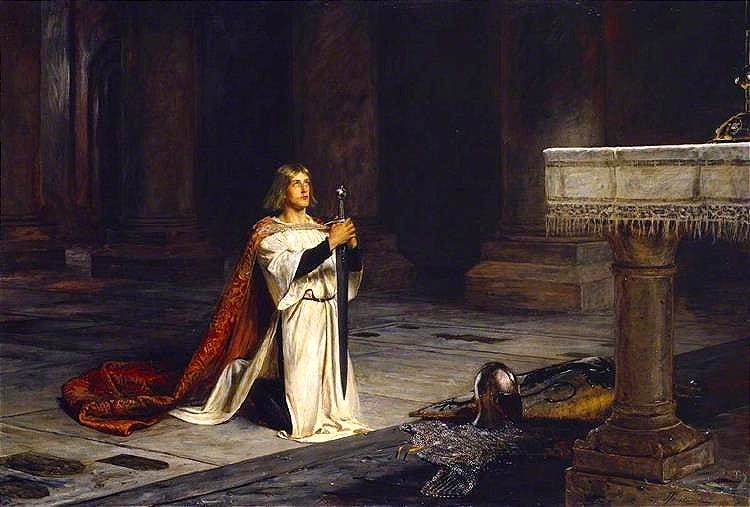
Thomas Carlyle argued that the history of the world is the biography of great men. But his critics replied instead that great men are products of their age — fulfillments of a cultural expectation.
However, the disagreement between them misses the more important point that great men and the movement of history are inextricably tied.
What I will side with Carlyle’s critics on is that the type of hero for each age appears formed by society. No civilization spawns heroes at random. A society’s laws reveal what it wishes were true, and its philosophy reveals what should be true. But the hero archetypes that emerge express what is true of their society. The hero — whether mythological or historical — represents what a civilization actually believes.
Let’s look at that belief across the centuries, specifically how the idea of the hero changed throughout Greek, barbarian, and Roman cultures, but dramatically shifted with the rise of Christianity, where the ideals of the hero reached their zenith. But as modern culture began a turn away from Christianity with the onset of the Enlightenment, we’ll also see how the heights of our modern hero archetypes have fallen with it…
Reminder: You can support us in forming minds and rebuilding the West by unlocking our members-only content:
✔️ Full premium articles every Tuesday + Free content Thursdays
✔️ The entire archive: Western history, literature, and culture
✔️ The Great Books lists (Hundreds of titles that influenced Western thought)
Join to start reading and support the mission today 👇
The Ancient World
Homer gave the Greeks their first and most enduring heroic template in Achilles — the prevailing warrior in the Trojan War against Hector. The Iliad is an extended meditation on what the early Greek imagination considered the highest human type: the man of excellence — of arete — in skill, physicality, courage, and loyalty.
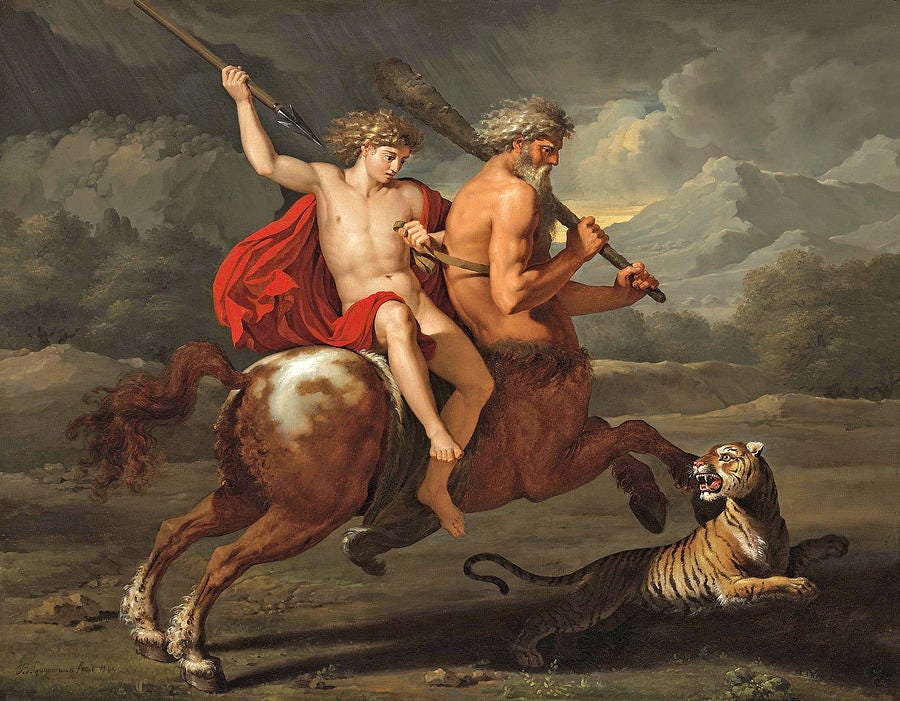
But by the classical period, Athens had produced a different (but real) hero in Socrates. Plato’s works Apology, Crito, and Phaedo describe to us a man who dies for the sake of his philosophy. Socrates remains both loyal to his values and the law in his refusal to escape from prison and willingly accepts death with a composure that shamed his weeping friends. The heroic ideal had migrated from the body to the soul. Socrates and his student Plato launched the brightest era of Greek philosophy, as schools were begun and followed by droves of young, curious Greek minds. The culture was fading in its worship of the de facto Greek pantheon, and a groundswell of philosophic spirit was taking hold of wider Greece.
Rome’s ideal was in many ways itself, or rather specifically that of civic virtue. Plutarch’s Lives — the most influential collection of heroic biography in Western history — held up figures like Cincinnatus, who left his farm to save Rome and returned to it immediately after, as the Roman summit. Virgil’s Aeneas was defined by pietas: dutiful devotion to gods, family, and city. The Roman hero was the man who subordinates himself entirely to the purposes of the empire, much like John F. Kennedy’s proposal to Americans to “ask not what your country can do for you — ask what you can do for your country.”
The Medieval World
In the fall of the Western Roman Empire, the influences of barbarian warrior culture, Roman civic duty, and Christianity merged to create one the of most impactful heroic archetypes in world imagination — the knight, along with his chivalric ideal. In the knight, the warrior’s strength was directed by Christian virtue and placed in service of the local lords. The Song of Roland gives us one of its earliest expressions still extend today, with Roland dying at Roncevaux not merely as a brave soldier but as a Christian warrior. The Arthurian cycle refined the ideal further in the adventures of Lancelot, Gawain, and Galahad.
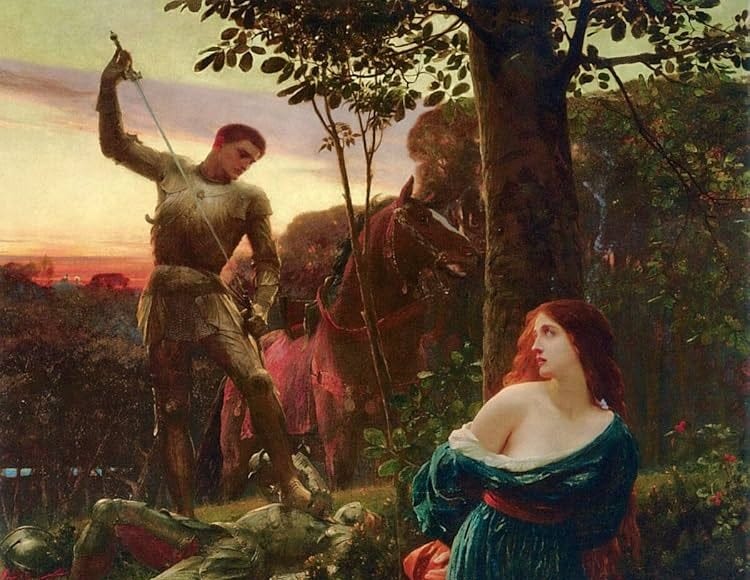
What the chivalric tradition understood was that the knight’s dignity depended not only his will and strength, but more acutely on his faith and moral uprightness. A knight who fought for glory alone was simply Achilles with a cross on his shield. The chivalric ideal demanded more in the adoption of a monastic-like attitude to martial excellence: placing it in service of the weak, the common good, and the Church.
By the late medieval period the knight had become a figure of self-serving vanity, confirmed by the misadventures of Don Quixote. Knighthood, though a lasting heroic ideal even through today, still lacked something in the highest hero archetype ever achieved.
The Modern Turn
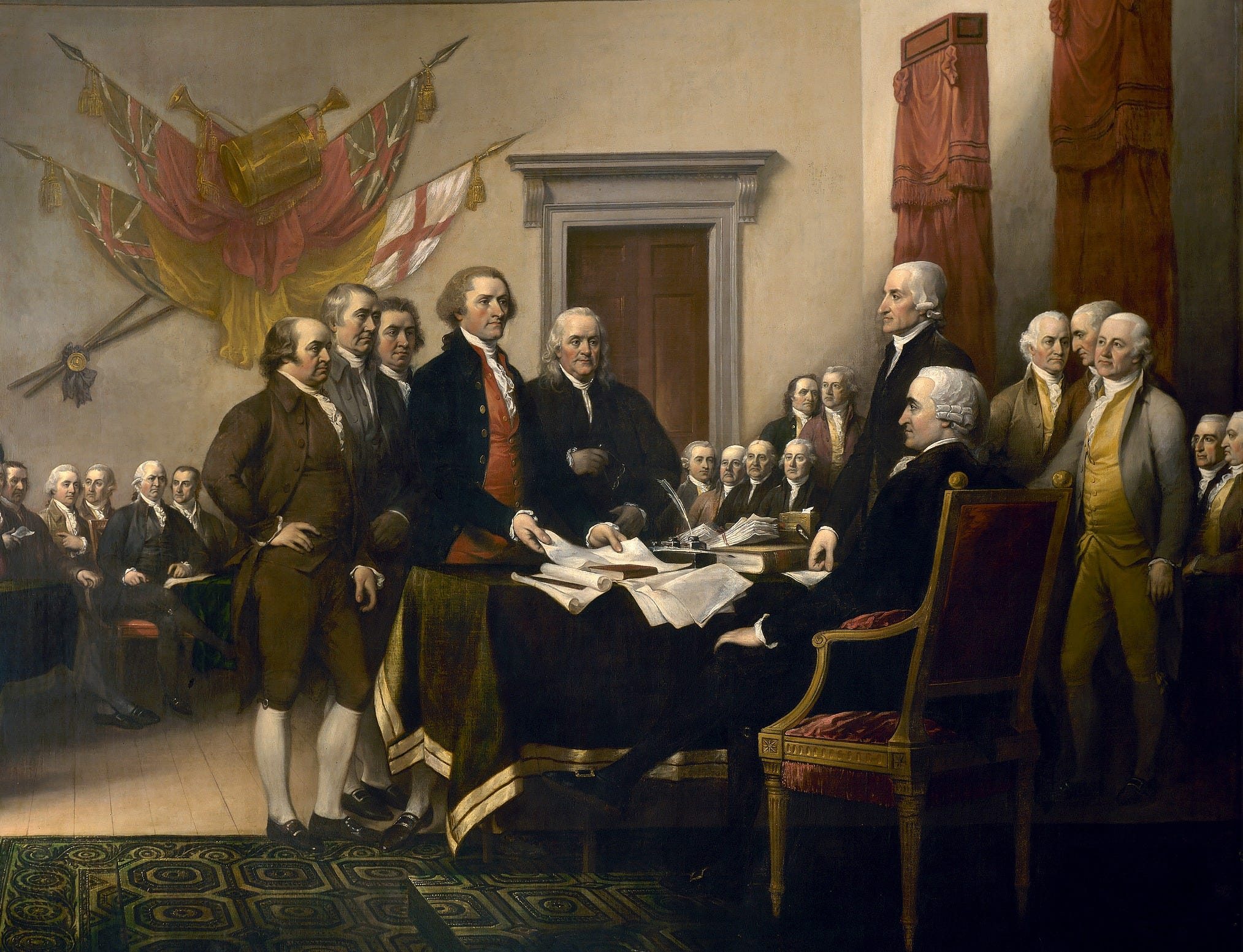
The early American republic produced heroes in the mold of Plutarch’s Romans. Washington was like a Cincinnatus — the idealized farmer-soldier who saved the republic yet desired a return to his farm. Parson Weems’s hagiographic Life of Washington is essentially a secular saint’s life written in the Plutarchan mode. The heroic template was still recognizably classical, self-sacrificing statesmen, still oriented toward something beyond the self: the republic, the common good, the unprecedented experiment in self-governance. The Founding Fathers were flawed men, as all men are, but the heroic tradition they inhabited pointed toward an idea of ordered liberty that transcended any individual.
The 19th and 20th centuries gradually displaced the civic hero with the ideological one. The hero became the figure who advanced a cause — liberation, equality, justice, solidarity. These are genuine goods, and many of the figures elevated in their name were genuinely self-sacrificial, genuinely courageous, genuinely admirable. Martin Luther King Jr. is the most instructive modern example: a man of real moral seriousness and evident personal courage, elevated to a status of near-inviolable veneration in American culture. He is effectively a secular saint — a figure whose image confers moral authority and whose criticism is treated as a kind of sacrilege.
The theological difficulty lies in the structure of the veneration, and what that structure reveals about the culture doing the venerating. Augustine’s concept of ordo amoris — rightly ordered love — holds that goods must be loved in proportion to their proximity to God, the highest good. Racial equality is a genuine good, rooted in the conviction that every human person bears the image of God. But when racial equality becomes the ultimate good — the summit of the moral hierarchy, the standard against which all other values are measured — it’s been elevated beyond its proper place. The religious impulse doesn’t disappear when God recedes, but instead resettles on whatever is next in line.
When it comes to heroes, the main result of this shifting of values is that our heroes narrow in their virtues. We make heroes out of individuals for smaller and smaller reasons. For example, the American Founding Fathers became heroes to us (on the tail of the Enlightenment) not because they were deemed heroic in a broad sense, but specifically in terms of a bravery and self-sacrifice that won political freedom for early America.
The latter half of the 20th century saw the hero archetype shrink further to one of political action — those actors who won us racial equality, or victory over the U.S.S.R, or some other specific political accomplishment rose to become the newest generation of secular saints. They are not saints in the personal sense in terms of exemplifying moral virtue; they’re secular saints for what they enacted, repealed, signed into law, marched in protest for, etc. While many of these ends may have been good, the idea of “hero” in the modern sense shrunk significantly to mean those who led this or that political action.
This is the modern heroic predicament: that our heroes continue to shrink in moral stature. The causes they serve may be real and important, but the grandness of the hero has been diminished, because the ruler by which we measure them has shrunk. They are not bigger in the minds of us today because they aimed at bigger things, but because we expect so much less.
Our culture’s heroic imagination has descended to merely global maxima — the best among what we can see simply with our own eyes. But there was a time when heroes really were measured by the highest things — and those heroes have been with us the entire time…
