

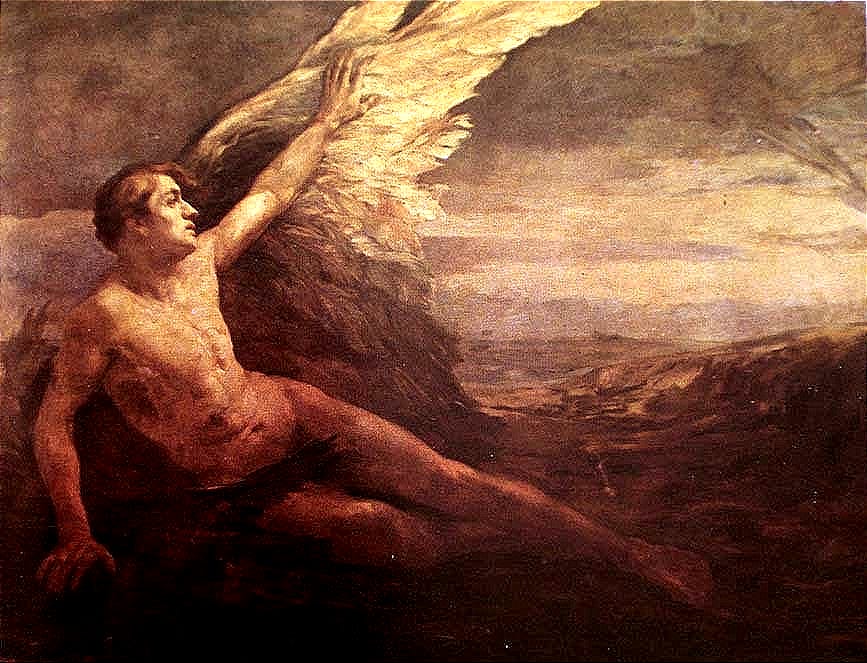
There is something in the Western soul that can’t sit still. Other civilizations built empires, yes — but they built them to stabilize rather than to expand. The West built empires and then kept going. It crossed oceans not merely to trade but to discover. It mapped the stars not merely to navigate but to understand. The West asked not just “how do we survive?” but “what lies beyond that horizon?”.
But this Western ethos is not simply ambition. It is something praiseworthy in moral judgement until it gets polluted into ambition — that is a central danger the West is wrestling with which we will return to.
Christopher Dawson, the great Catholic historian of culture, identified what he called the “missionary character” of Western civilization: a compulsion to transform the world. The West, uniquely among civilizations, has always exported itself. Its ideas, faith, institutions, and art were not made for itself, but for the whole world. There was always another people to convert, another land to civilize, another problem to solve, another frontier to push.
Similarly, Oswald Spengler, writing from a more aloof vantage point, said much the same thing. The defining symbol of Western culture, he argued, was not the Greek temple or any other tangible figure but the infinite plane. The West, in his mind, is Faustian: always reaching, always expanding, oriented not toward harmony or stillness like in the East but toward the unlimited. Its mathematics invented calculus — the mathematics of infinitesimal change and limits to infinity. Its architecture built cathedrals that pointed to heaven. Its music reached for ever greater grandeur.
Both men were describing the same energy. The question neither fully answered was: what happens to that energy when it has nowhere transcendent to go?
Reminder: You can support us in forming minds and rebuilding the West by unlocking our members-only content:
✔️ Full premium articles every Tuesday + Free content Thursdays
✔️ The entire archive: Western history, literature, and culture
✔️ The Great Books lists (Hundreds of titles that influenced Western thought)
Join to start reading and support the mission today 👇
When the Hunger Turns Inward
The frontier, in every meaningful sense, has closed. The age of earthly discovery is over. The entire world is not only just mapped, but constantly photographed by satellites orbiting above and displayed to anyone via Google. But more importantly, the inner frontier that once gave Western expansion its moral weight has also receded. The idea that the West carried something worth giving — a faith, a civilization, a vision of human dignity — has been largely abandoned by the West itself, hollowed out by self-doubt and historical guilt.
What remains is the West’s quest for the infinite, with nothing big enough left to accommodate it. Stripped of its orientation toward something beyond itself, the old Faustian drive simply turned inward, resulting in a practice of extraction rather than transformation.
Look at where the bulk of our best Western minds now direct their energy. They don’t seek to build institutions that outlast them, nor complete the kinds of civilizational projects that once consumed the best of a generation. Instead, an enormous portion of Western intellectual horsepower is devoted to a single obsessive question: how do I make money without making anything? The ideal is no longer the explorer or the builder or even the industrialist. The idea for many early 20-30 year olds is the man who has found the algorithm, the loophole, or the pattern in the market that will make him rich beyond imagination. Entire subcultures are organized around decoding the stock market not as a mechanism for allocating capital toward productive ends, but as a puzzle to be solved before the next man beats can. The vocabulary is telling, too: plays, positions, edges. That is a language of strategy without purpose.
This is not an attack on capitalism. Capitalism, at its best, was itself a Faustian enterprise — building, risking, creating. What we are describing is something more parasitic: the Faustian drive fully unmoored, seeking infinite return for minimal creation. It searches for expansion without exploration and gain without effort.
The Destroyer of Just Society
The ancient Greeks had identified this pathology long before it became civilizational.
They called it pleonexia, the desire to have more than one’s share. Aristotle placed it at the center of his political philosophy as the great destroyer of just communities. It was not merely greed in the vulgar sense; it was the disposition of the soul that could never be satisfied, that measured its own worth entirely in terms of accumulation relative to others. The pleonektes (the one afflicted with this desire) was not simply rich, but actually incapable of the kind of self-control that makes friendship, justice, and genuine community possible.
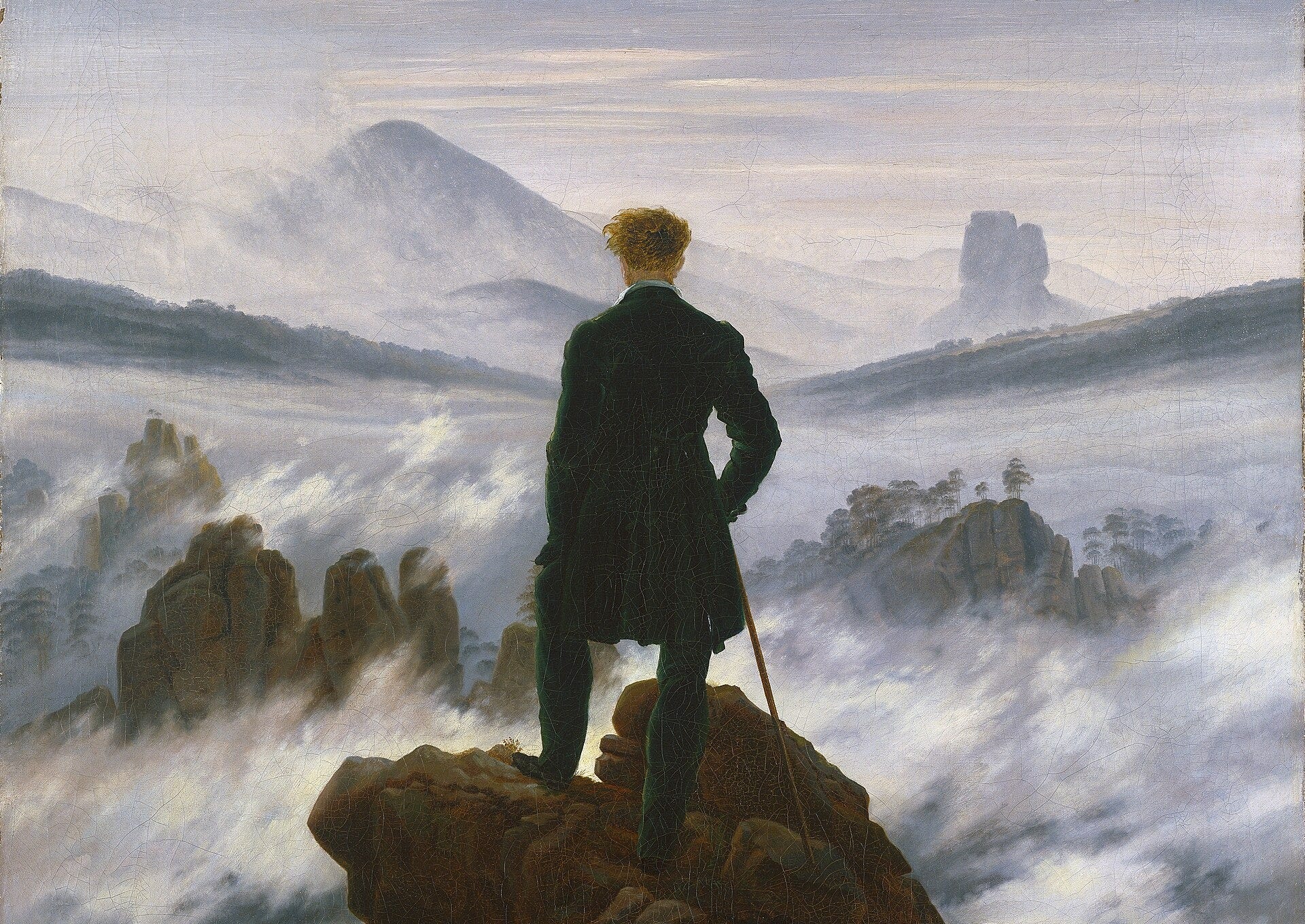
What Aristotle understood, and what we have largely forgotten, is that unchecked desire is both a personal failing and a political one. A civilization biased toward pleonexia does not merely produce unhappy individuals; it produces institutions, cultures, and incentive structures that systematically reward the wrong things and punish the right ones. It elevates the schemer above the builder, the extractor above the creator, the man who found the shortcut above the man who did the work.
The West’s aimless hunger also mirrors how personal self-focus relates to depression. As the renowned psychologist Jordan Peterson has said, “There’s a direct relationship between how much you’re thinking about yourself and how miserable you are.” Likewise, when a civilization with an inherently outward-facing character turns its focus to its interior, it loses the vitality that made it great in the first place.
The Greeks did not think this was inevitable. They thought it was a choice made collectively, over time, through cultural habits and the virtues a people chooses to honor. If enough people choose to put their energy into building, exploring, and creating a healthy culture, they become the proof of a civilization once again looking outward rather than inward.
