

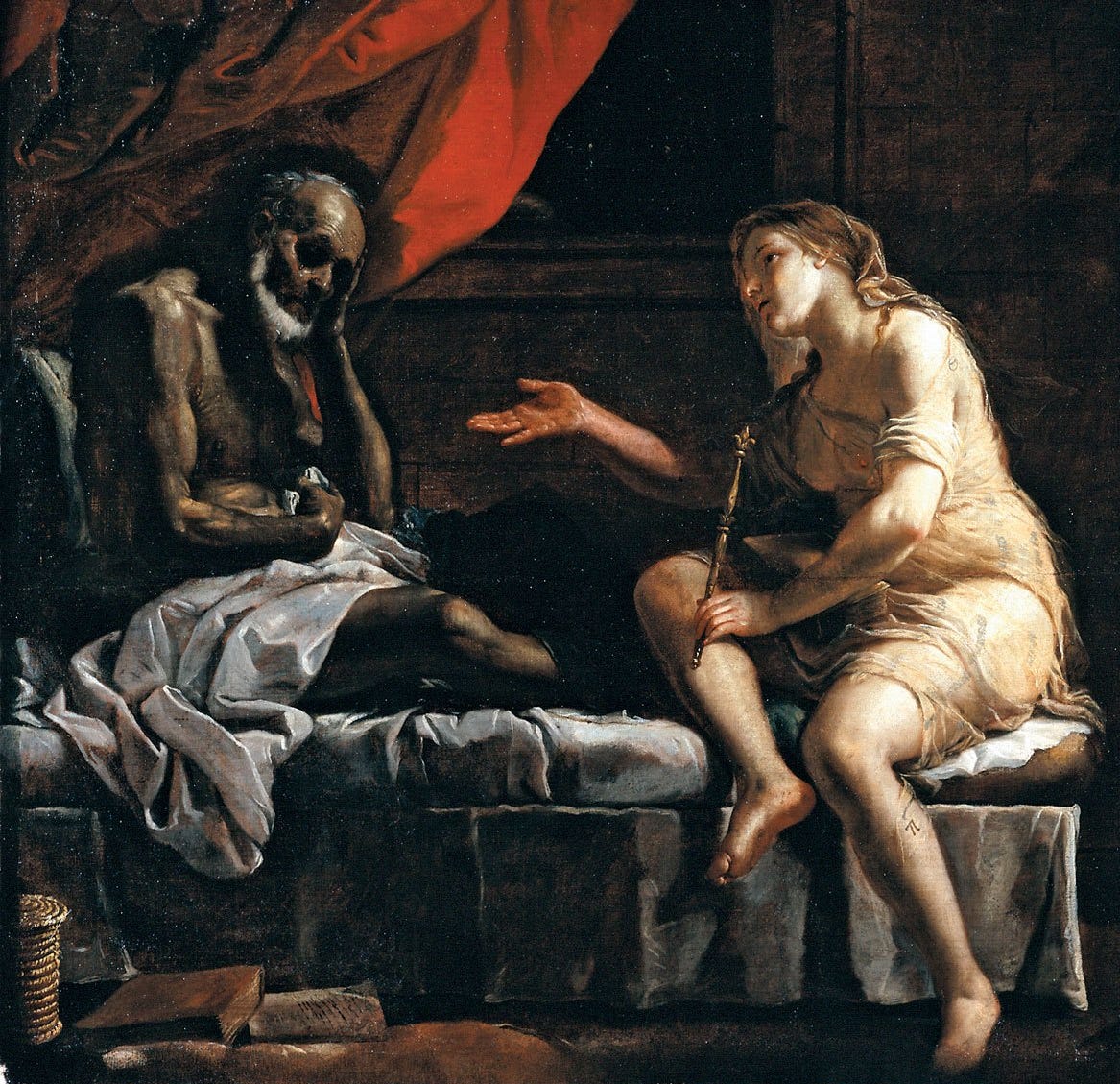
The Consolation of Philosophy was penned by a persecuted man in a dying empire.
Boethius, the author of the work, is sometimes considered the “last Roman philosopher” — a prominent, well-educated Roman subjected to imprisonment, and eventually, execution. His death marks an endpoint to not only his own earthly life but an era. The classical world effectively ended with Boethius.
Just as Rome’s fall may have seemed pointless and unnecessary, so too Boethius viewed his circumstances shortly before his death. He lamented his unjust suffering in his magnum opus.
But in his deeply personal exploration of the fickleness of fortune, he discovers something revelatory: misfortune can actually be a good thing.
It sounds crazy, but it’s a discovery that reveals the truth about God, fate, and goodness…
Reminder: You can support us by unlocking our members-only content:
✔️ Full articles every Tuesday
✔️ The entire archive of content: Western history, literature, and culture
✔️ The Great Books lists (Hundreds of titles that influenced Western thought)
Join to start reading and support the mission today 👇
Rise and Fall of the Last Roman Philosopher
To call Boethius' plight a “fall from glory” would be an understatement. Born to a wealthy political family in 480 AD, he rose through the ranks much as his father had done before him, becoming a senator and consul by his early thirties. And in 522 he was appointed Master of Offices, one of the highest offices in the empire, by Theodoric the Great.
Boethius was far from your typical career climber, though. An avid reader of Greek philosophy, he wrote that he was originally inspired to go into politics by Plato:
“...philosophers should take part in politics in order to prevent the state from falling into the hands of the stupid and the wicked…”
Boethius’ crowning achievement, though, was the appointment of his two sons as consuls that same year. In the Consolation, he remembers celebrating their appointment “as if it were a military triumph…”
Boethius had reached the height of Roman politics, but the glory didn’t last. Shortly after entering his new position in Theodoric’s court, he became embroiled in political controversy. He was accused of treason by a rival after defending a fellow politician from the same crime.
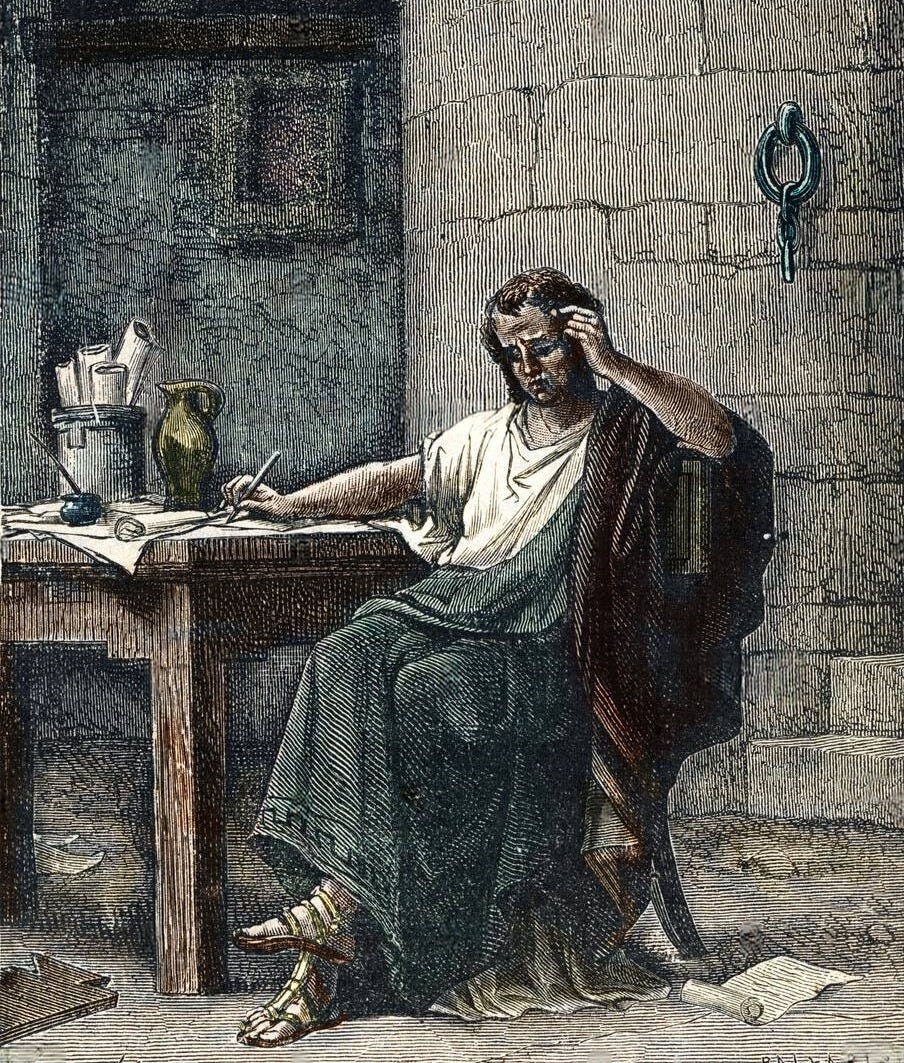
Boethius believed it was his unflinching loyalty toward the truth that was his downfall. He writes:
“I found myself inevitably opposing the plans of selfish and unprincipled men, and in the effort to keep my conscience clear and do what was lawful and right, I offended a lot of people who were more powerful than I was.”
So Boethius found himself in a jail cell lamenting his hardship, and it was here where one of the most influential works in Western literature was penned. Great works of art always begin with magnificent struggle, right?
Fortune’s Cruel Wheel
In The Consolation, Boethius dialogues with the personification of philosophy, Lady Philosophy, about his plight while addressing larger philosophical questions like the existence of evil and the nature of happiness.
But first, Boethius wrestles with the tension between God’s Providence and the role of Fortune in life — a deeply personal conundrum for him as he lingered in his jail cell. Why was he, a virtuous man, pushed from such a height while dishonest men retained their power?
