

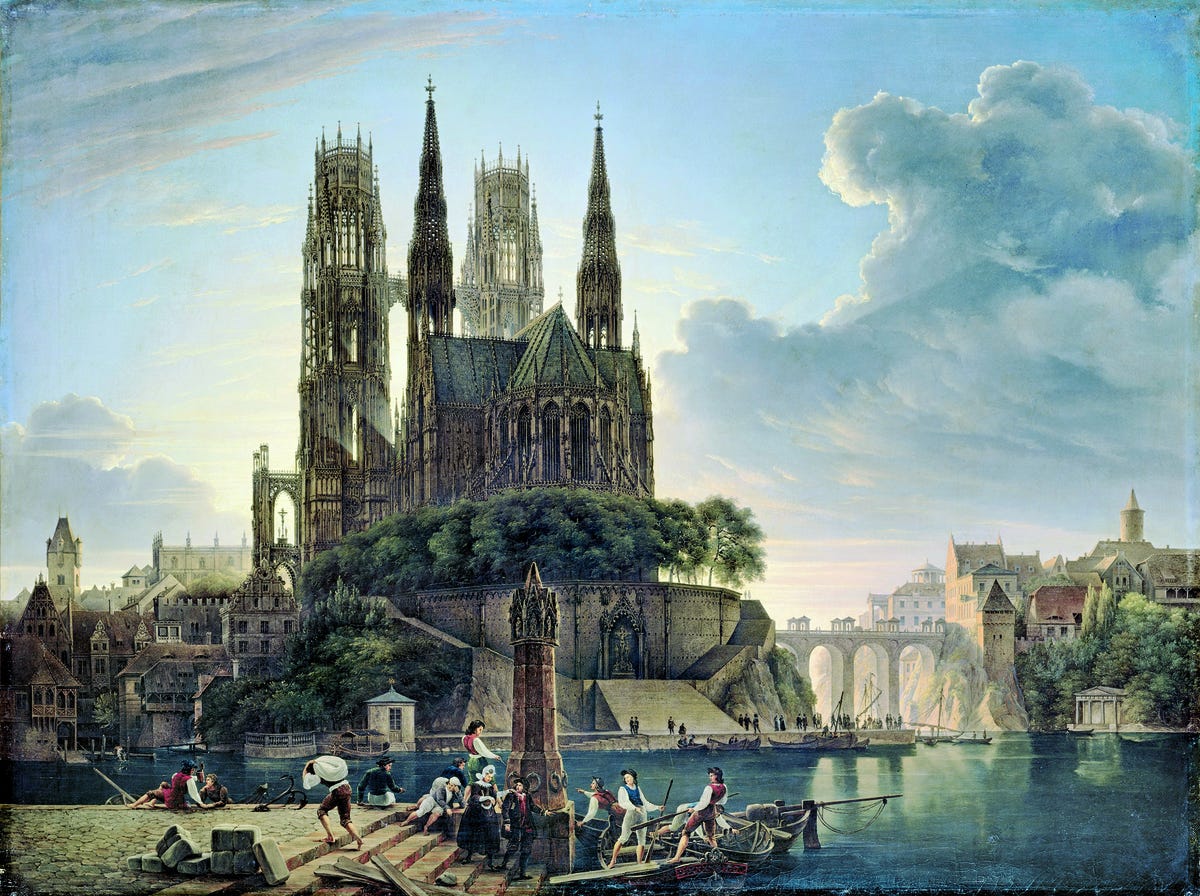
What really is “the West” anyway? Is it merely a geographic term, a cultural distinction, or something more?
When thinking about what the West really means, there are two ways to approach the question: 1) the history of how it came to be, and 2) the characteristics of the West that make it distinct from all other civilizations. Most have a general sense of the first, but the second is more elusive as we struggle to define what it really is about the West that makes it so powerful, easy to love, and worth fighting for.
The soul of the West is truly its Christianity — Christendom is the old term for what we now blandly call “the West”. But, as I’ll show, it’s this integral Christian soul of the West that has developed all the other parts of our civilization — its Mind in philosophy, Heart in morality, and Hand in politics…
Reminder: You can support us by unlocking our members-only content:
✔️ Full articles every Tuesday
✔️ The entire archive of content: Western history, literature, and culture
✔️ The Great Books lists (Hundreds of titles that influenced Western thought)
Join to start reading and support the mission today 👇
Mind of the West: Philosophy
Rational Theology
Western philosophy depends on reason and rational argument rather than on revelation or tradition alone. The rational approach to philosophy is a fundamental result of the West’s understanding of an intelligible universe with universal truths, a necessary tenet for exploration of the natural world through the scientific method. This developed in Greek thought by the likes of Socrates, Plato, and Aristotle, but developed more fully in the Scholasticism of the Middle Ages which more explicitly synthesized faith and reason, since two truths cannot contradict. Greek rationalism and Jewish/Christian theology combined into a core component of the West in a rational theology, providing room for understanding the transcendent through logical extensions of fundamental theological principles.
Directive History
Another idea that was philosophically and scientifically formative to the West was the directivity of history towards an end. Unlike other civilizations which supposed a cyclical or regenerative history to the world, the Western conception of history assumed a beginning and an end to the known universe — and critically — one open to human improvement. The West recognized human agency in world affairs, but also in Christian salvation history by man’s cooperating God’s salvific plan.
Missionary Character
It’s fundamentally from this Western understanding of the directivity of world history that produced the “missionary character” of the West described by historian Christopher Dawson in his work Religion and the Rise of Western Culture. To Dawson, the West’s missionary character — what spurs is to spread beyond itself — distinguishes the West from the rest. The Western individual mind and collective mind are not content with the status quo or mere equilibrium, in stark contrast to many Oriental cultures’ emphasis on balance and harmony. This is not a moral judgment either way — it may well be that the world is better improved through moments of pause than constant motion, but the West fundamentally evolves with a characteristic entropy that tends toward technological, artistic, economic, militaristic, and even religious self-improvement. In Dawson’s words:
“The other great world cultures realized their own synthesis between religion and life and then maintained their sacred order unchanged for centuries and millennia. But Western civilization has been the great ferment of change in the world, because the changing of the world became an integral part of its cultural ideal.”
This missionary character of the West of course retains the literal sense of “missionary”, in that the West’s desire to spread beyond itself is not solely a desire to expand in merely secular ways, but also in spreading the Christian identity. This religious missionary spirit originates with peculiar historical precision in the life and teaching of Jesus Christ. Few civilizational characteristics can be traced so precisely to a single city or century, let alone a particular historical teacher and a span of a year or less. Many point to the first missionary as Paul in his great travels around the eastern Mediterranean; however, the first missionaries were truly the first followers of Jesus Christ, particularly those of his 12 apostles. These apostles, though perhaps they did not venture far by our modern standards of “mission trips” nonetheless fulfilled the fundamental core of missionary work by helping spread the teachings and influence of Jesus Christ in the communities through which they traveled. Nonetheless, this literal missionary work of the early Christians was the seed of the greater Western missionary sense — one that continues today.
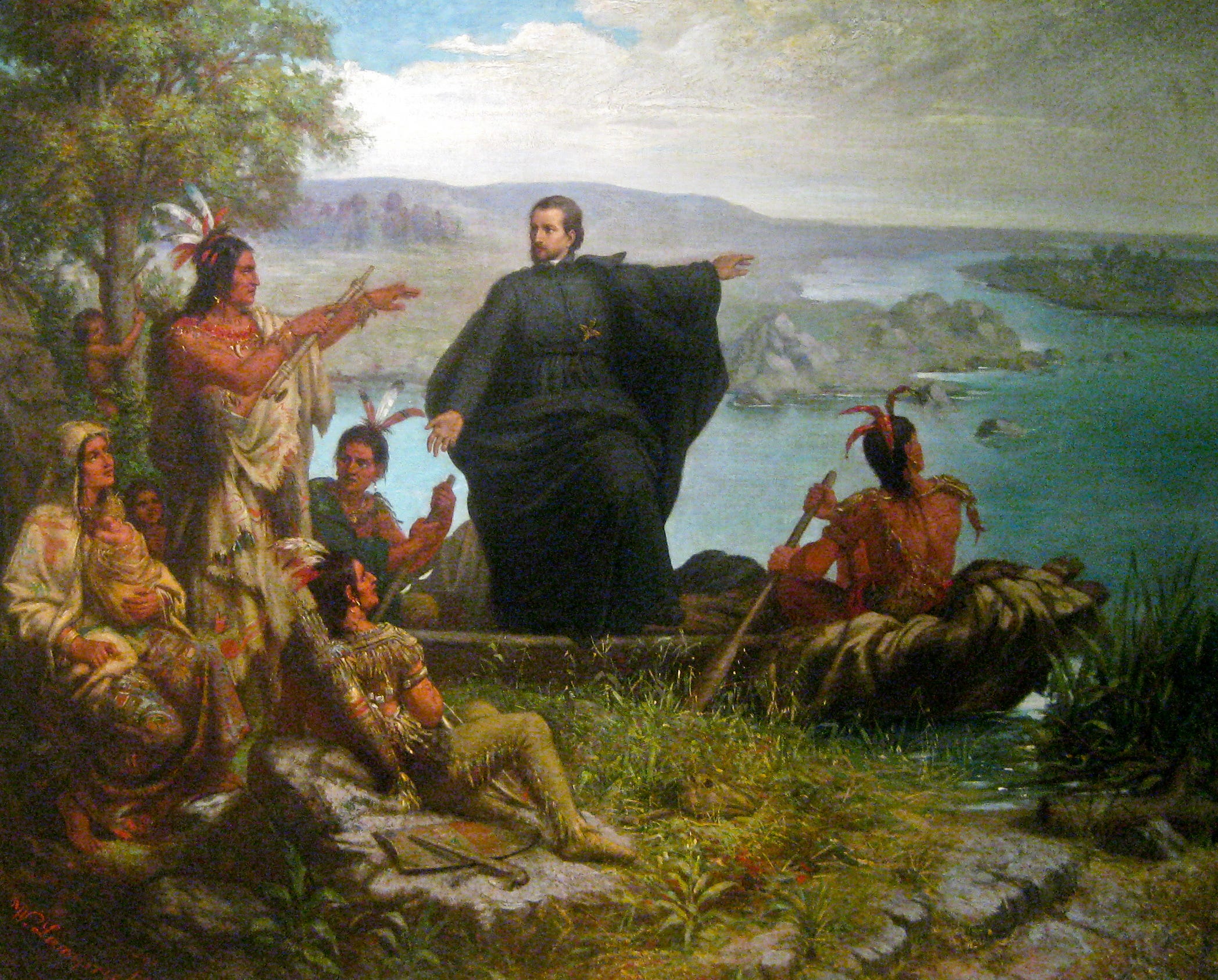
In this universal missionary character, there is evidence to suggest the West succeeds when it looks outside itself and stagnates when it looks inward, as many people do when hindered by confidence to make their way in the world. Sir John Glubb’s The Fate of Empires essay illustrates the typical lifespans of the world’s great empires. Sifting through for those empires that emerged in the West, we find six major Western empires according to Glubb: Ancient Greek empire, the Roman Republic, the Roman Empire, the Spanish Empire, the British Empire, and the current hegemon, the American Empire. What is apparent from these is the long gap between the fall of the Roman Empire (180 AD according to Glubb) and the rise of the Spanish Empire (1500 AD), over 1300 years without a superpower in the West. Before this gap, empires existed unbroken from Greek ascendance through Roman decline; in the modern era, the Spanish, British, and American empires have formed a continuous inheritance of Western hegemony.
A case could well be made for the Holy Roman Empire as deserving of occupying a significant (and long-lasting) exception to this gap; nonetheless, even with its inclusion, the overall sparsity of Western power in the Middle Ages remains apparent. What is difficult to ascertain is whether the gap of Western empires is a cause or a symptom of the coincident decline in the West’s missionary character — in the Middle Ages, the West’s attention turned inward to, as we have mentioned, solidify its character and unify its parts into a coherent character. Nonetheless, this inner formation (perhaps necessary) cost the West territorial and worldwide influence typically wielded by empires; the West could only emerge again as a world power when it began to look outside itself in the Age of Exploration.
Heart of the West: Morality
On a moral level, the West of course remains on Christianity as the core of ethics. Allowing for a more transparent historical term, we might say more precisely that the West rests on Judeo-Christian values. The basic moral stances are well contained in the Jewish root of the West; however, the Church has since steadily elaborated and applied this morality to the broad array of ways man has come to offend God, especially in an age now where technology is outpacing our law and philosophy.
Value for Life
Nonetheless, from Christianity the West has assumed a number of far-reaching moral codes that, despite their clarity, have taken time to reconcile with the political, economic, and militaristic arms of society. One such clear moral combat was on issues of life between the early Christians and the Greek and Roman practices of abortion, infanticide, and slavery. Because Christians believe man to be made in the image of God — imago Dei — all innocent life should be protected, and Man’s primacy in the natural world was established. As Christians rose to power, abortion and infanticide were relatively quickly eliminated. Slavery, because it was so intertwined into the economy and worldwide cultural norm, was much slower — not facing significant abolition efforts until the British Empire’s crackdown on the Atlantic slave trade in the 1800s. However, even through the Middle Ages, there was already significant Church pressure to reduce slavery in Christendom. Slavery, as we know it today, did not exist in mainland Western Europe through the Middle Ages to any great degree. It was an exception in parts of Italy, Spain, and the Byzantine Empire; instead, serfdom replaced slavery as the “lowest” rung on the labor ladder. This serfdom, although it still limited significant freedoms by today’s standards, looked nothing like the New World plantations, racialization, and maltreatment. Serfdom, though not yet providing true political freedom, was a massive step forward after millennia of slavery across the world.
Care for the Poor
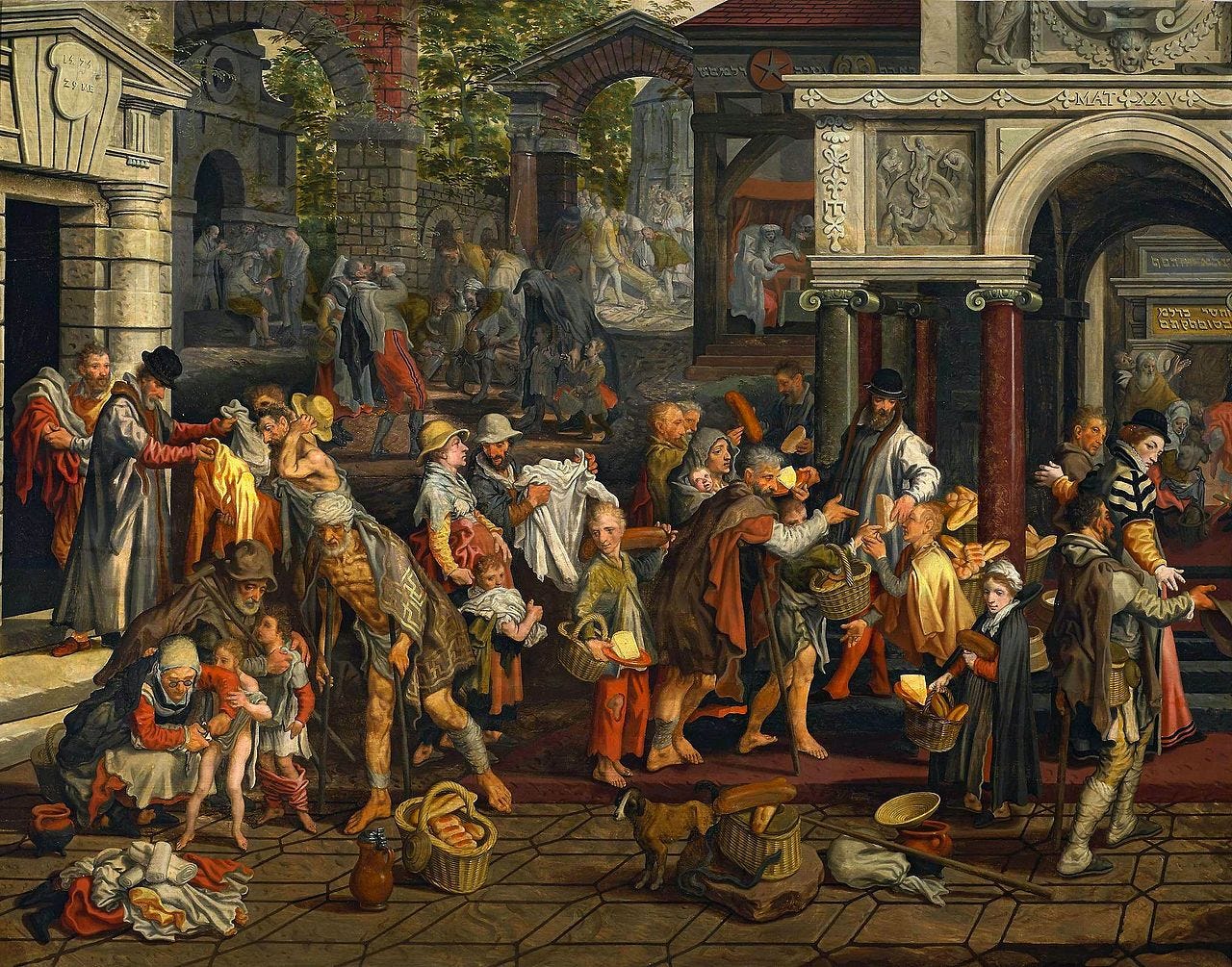
Going further, the Church assumed the primary role of caretaking for the poor, weak, and marginalized in society. While this practice of charity began very early in the Church, this role as the benefactor of the downtrodden accelerated during the fall of the Western Roman Empire. In a great testament to its fortitude, the Catholic Church remained standing throughout the fall of the empire around it. This role of the Church would plant concern for the lowest in society across the West, in many instances growing into a political notion of welfare.
Universal Moral Law
Another major moral cornerstone of the West is the idea of a universal and singular moral law, including natural law, that extends to all people, regardless of their nation, tribe, or creed. The West believes these universal moral laws transcend borders and understanding. This results in a perceived duty by Western powers to intervene in other sovereign nations where egregious oppression and violence occur (e.g. the British Empire vs. the slave trade in the 1800s). This Western intervention (partly influenced by its missionary character) even extends to situations where the judged foreign society is ignorant of its own misdeeds. The Aztec sacrifice of their own citizens to appease their gods is an example, where a core religious ritual (thought to be a good in the native society) worked to only harden the conviction of the Spaniards in overthrowing the Aztec Empire.
Another even more interesting characteristic of the West is how its universal moral yardstick applies across time itself. This results in a harsh judgement by the West on the sins of its own past as well as those of allies and enemies. It is partially thanks to the “great conversation” — that continuous stream of thought and critique in the western canon — that this occurs, as later Western philosophies, religious developments, and artistic moments compare and contrast themselves against their predecessors. The idea of the universal moral law is taken so seriously in the civilization that birthed it, that the West often suffers under the weight of its own judgement. However, perhaps it’s this self-judgement (assuming Christianity as the source of its morality) which enables the West to rapidly improve by purging itself of ideas that might hinder it in the long run, such as the collective, authoritarian forms of government which only briefly reigned in central Europe in the 20th century.
Moral Absolutes
Worth noting too, is that the West’s moral law assumes a basis in moral absolutism. That despite the efforts of the post-modern philosophers of late, the core of the West’s moral judgements lie in recognizing good vs evil, just vs. unjust, and true vs false. The Biblical basis for the fundamental Western morality has no place for a morality seeing everything as simply another shade of grey. Church teaching and Western law recognize caveats reducing culpability in wrongdoings, but they do not confuse the wrongdoing as merely a difference in perspective.
Enlightenment Values
Lastly on the character of the West, the immense influence of Enlightenment values must be named. However, much of these values are not new in the history of the West, but rather a collection of previously-known values which during this period began to reform the basis of political thought. Individual liberty, religious tolerance, “progress”, natural rights, constitutional governments, separate of church and state — none of these ideas were bona fide inventions of the Enlightenment thinkers, but their organization as a coherent political codex was the spark for their adoption by Western governments over the next centuries, as old political orders gave way to new, more democratic forms of governance. Many of these ideas origins and early political implementations may be argued as not what we think of them as today (for example, how the modern idea of separation of church and state may differ from its original intention), but we can write of these another day.
Let’s turn instead to the political character of the West…
