
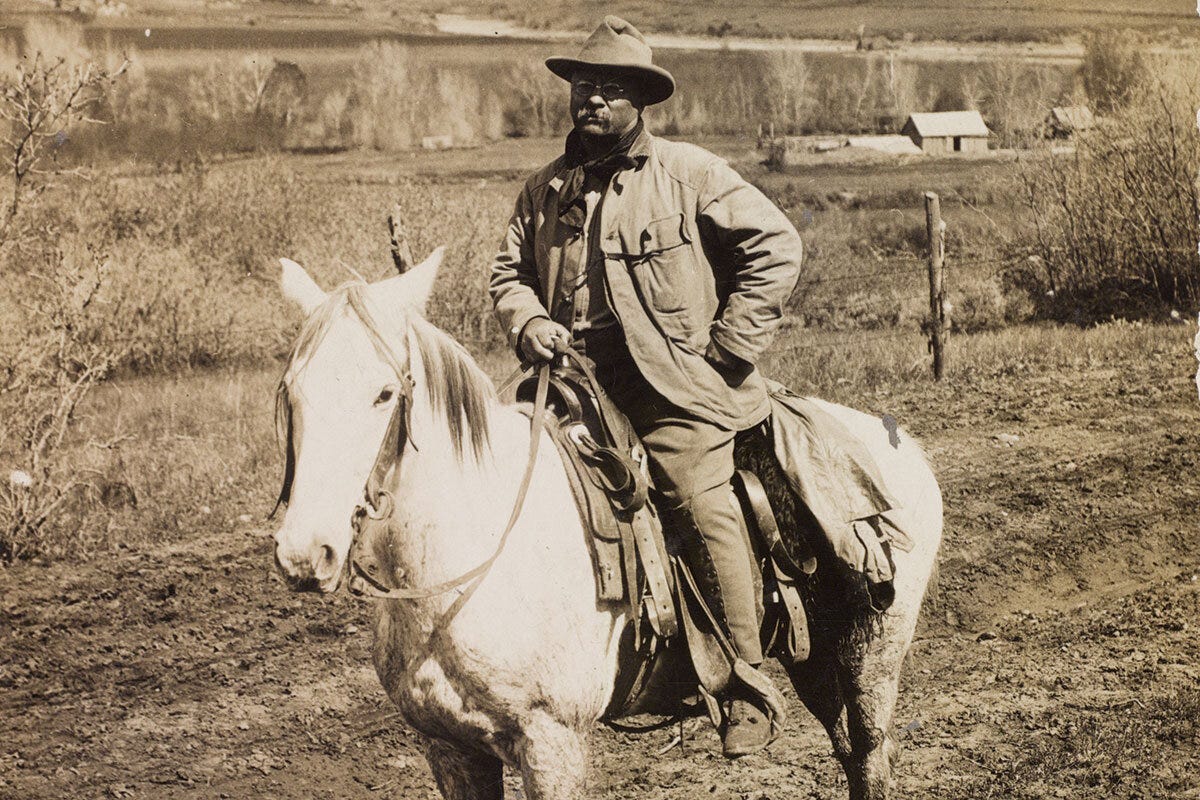
We live in a world where everyone is offended and everything is unfair. We love playing the victim.
But allowing yourself to be a victim might be one of the most destructive things you can do. It puts you on the defensive; it biases you toward inaction; and it defeats you psychologically long before you’re ever defeated in reality. It’s avoiding this mentality that makes great success stories like that of Teddy Roosevelt.
While campaigning for president, Teddy was shot on his way to give a speech. The bullet punched through his steel eyeglass case and his folded speech, lodging in his chest. His response was legendary: “Friends, I shall ask you to be as quiet as possible. I don’t know whether you fully understand that I have just been shot — but it takes more than that to kill a Bull Moose”. He would go on to carry that bullet inside him for the rest of his life.
Teddy Roosevelt was a different breed of man than we seem to have today. As we’ll see, he was a man willing to get in the arena and fight, despite all odds against him. What kind of culture and upbringing produce him? Teddy Roosevelt wasn’t always this way — his life had plenty of tragedy and hardship. He should’ve been a victim of society rather than its president. So, what happened?
Reminder: You can support us in forming minds and rebuilding the West by unlocking our members-only content:
✔️ Full premium articles every Tuesday + Free content Thursdays
✔️ The entire archive: Western history, literature, and culture
✔️ The Great Books lists (Hundreds of titles that influenced Western thought)
Join to start reading and support the mission today 👇
Born Weak, Made Strong
Roosevelt came into this world weak. Born to a wealthy family in New York City a few years before the Civil War kicked off, he suffered from severe asthma. In his own autobiography, he describes himself as a sickly, timid boy.
His father did what he could to help young Teddy manage his asthma, but he also played a pivotal role in making sure the young Roosevelt didn’t make it his identity. His father made him understand that his mind was strong and his body was weak, but that he could work to make his body strong.
What might quickly have become a victimhood mindset was turned into a challenge. His family set up a gym at home for him to train. While also training his body, he trained his mind through reading as well, recalling an impactful Marryat novel about a naval captain who determines to make fearlessness a habit by acting unafraid until it sticks.
But, despite his improvements thus far, his challenge was highlighted again during a trip as a young teenager to Maine, where two boys bullied him. Failing to defend himself, he then took up boxing lessons from a former prize-fighter, John Long. Roosevelt, wittingly or not, was taking up a mantra from Seneca’s On Providence that “all his adversities he counts mere training.”
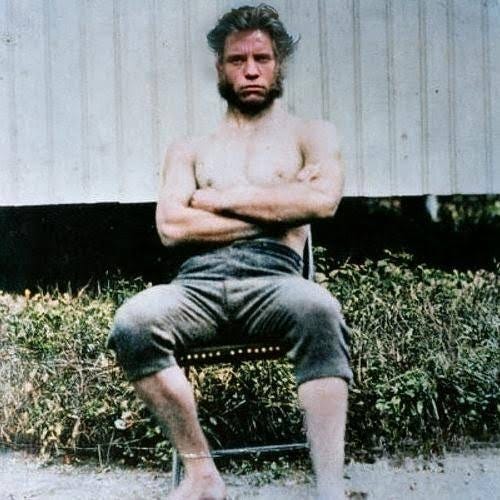
Roosevelt would take boxing with him to Harvard in 1876. The timid, asthmatic boy was now ready to take on the world — but his tragedies weren’t over yet.
Tested by Tragedy
Adult life would test Roosevelt even more than his childhood had. At first, things started out well. He married, then had a daughter named Alice Lee Roosevelt, named after her mother. But a mere two days later — on Valentine’s Day of 1884 — his mother dies in the morning from typhoid and his wife dies in the afternoon from kidney disease. He’s only 25. Roosevelt records the day in his diary with a large X and a single sentence: “The light has gone out of my life.”
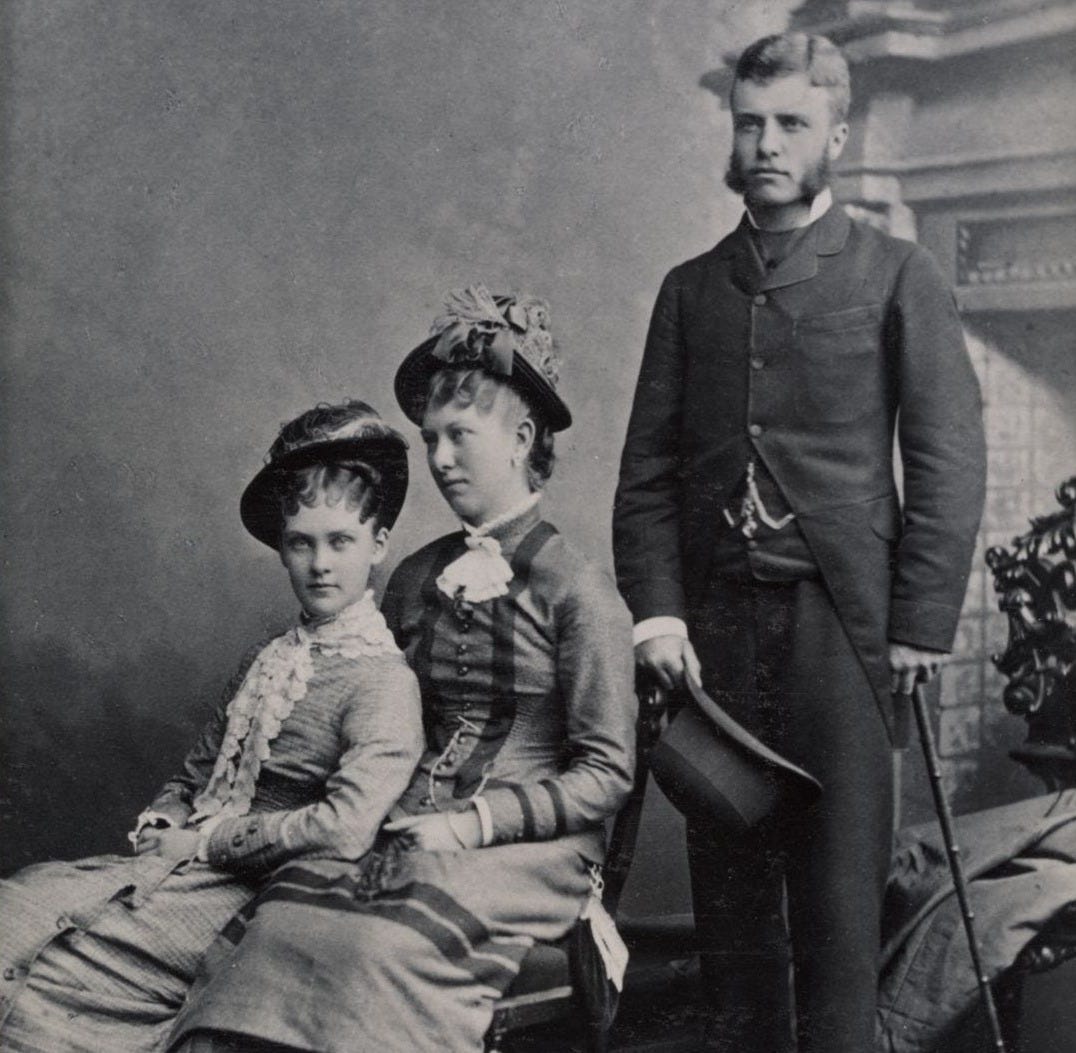
With their deaths, Teddy seems to have further leaned into to what was already a stoic demeanor. He rarely spoke of his wife again and later remarried. While his sister raised young Alice, Roosevelt headed out to ranch in the Dakota Badlands — very likely a way to take his mind off his recent tragedies.
He was already what Aristotle’s Nicomachean Ethics would call the great-souled man, someone who bears misfortune with dignity. Aristotle wrote:
“Nobility shines through, when a man bears with resignation many great misfortunes, not through insensibility to pain but through nobility and greatness of soul.”
Roosevelt certainly bore his history of tragedy quietly, and not from a place of indifference. Importantly, while there’s certainly a time to grieve, Teddy didn’t let his tragedies sink him into inaction. What very likely could debilitate most people, didn’t stop Roosevelt.
A Strenuous Life
Two speeches highlight Roosevelt’s ethos on bearing hardship and a life of action. The first was his “Strenuous Life” speech in 1899, before his presidency. Despite his aristocratic upbringing Roosevelt rejected a “doctrine of ignoble ease”. He holds that it’s better to attempt great things, even if it risks several failures. This is to live a life of trying, of not being afraid to fail. And, so, Roosevelt attempted great things.
Roosevelt’s bouts with tragedy, hardship, and his love for the outdoors and ranching helped him identify with the common man, despite his affluent background. This helped him win the vice-presidency in 1901, assume the presidency after Mckinley’s assassination, and continue as U.S. president in 1905 — the height of power attainable in North America for any individual at the time. Despite bad health and terrible personal loss, Roosevelt was able to persevere to ascend to the pinnacle of American society. Instead of allowing himself to fall into a victim mentality, Roosevelt merely aimed higher and landed himself in the White House.
The next decade would solidify Teddy Roosevelt as not only a successful president, but also a cultural icon…
