

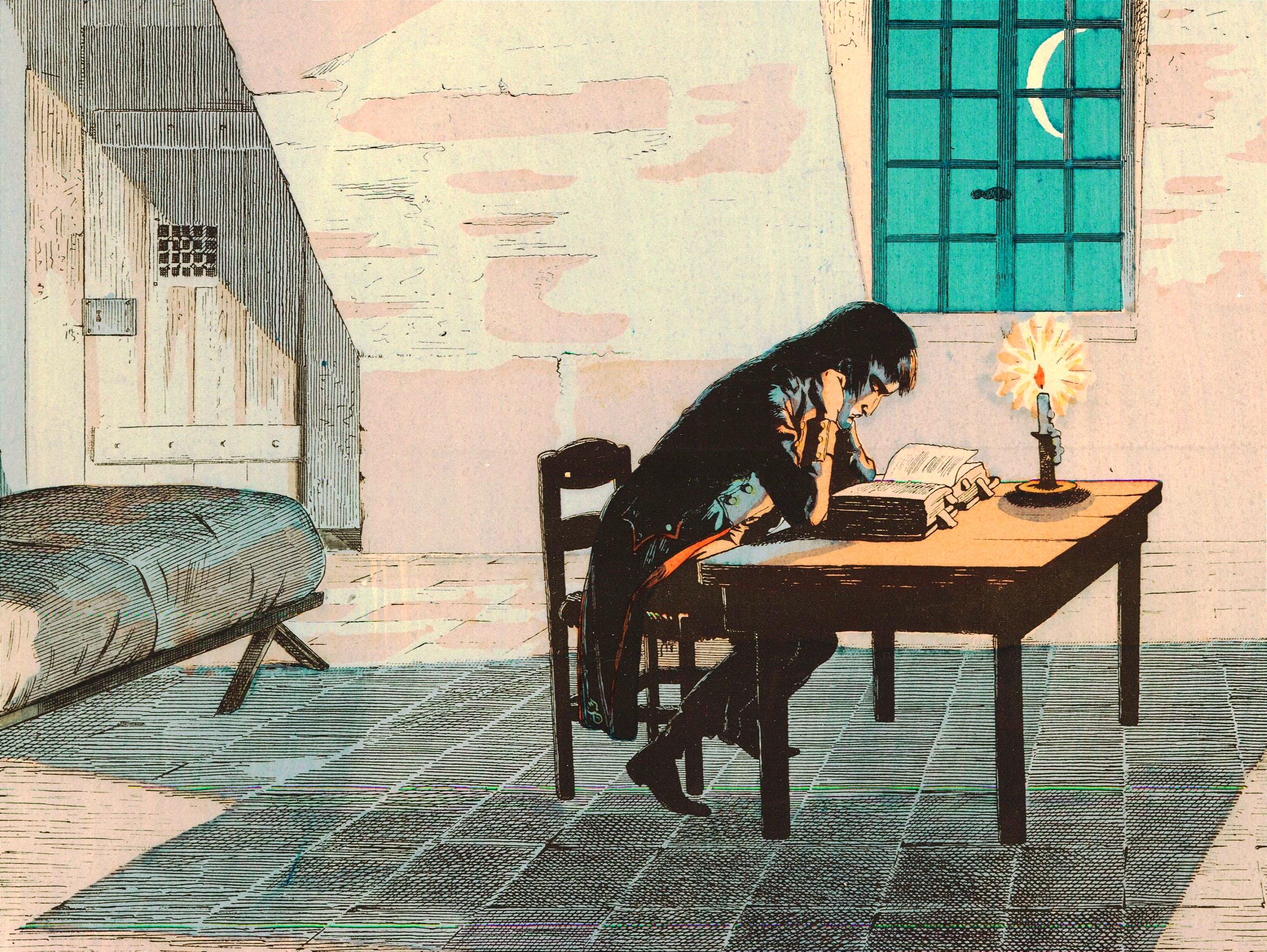
Modern self help books fail for a single reason: they trap you inside your own head. They get you to analyze your flaws or optimize your daily routine, but at the end of it all, you get stuck in the habit of overthinking every step of your life.
So If you want to actually find out what you’re capable of, you need to stop reading about yourself. You need to be reading about others — specifically, the great men of history. You need to learn how they moved, what they accomplished, and how they overcame great adversity. You need to lose yourself in the adventure of their lives instead of critiquing your own.
The single greatest self-improvement tool you can own, then, is a biography. It shows you a real life example of what a person is capable of rather than a list of contrived “life hacks.”
So here are 3 reasons you should ditch modern self-help slop for the Great Man biography, and I’ll list some recommendations of my favorite biographies for you to get started.
Reminder: You can support us in forming minds and rebuilding the West by unlocking our members-only content:
✔️ Full premium articles every Tuesday
✔️ The entire archive: Western history, literature, and culture
✔️ The Great Books lists (Hundreds of titles that influenced Western thought)
Join to start reading and support the mission today 👇
Embrace the Adventurous Life
The first reason to read biographies is what I hinted at in the intro: it gets you out of your own head.
Overthinking is one of the most detrimental habits that can stifle a person’s personal development. It makes you constantly question every decision, paralyzing you until you just feel stuck. It prevents you from taking action. Instead it’s better to aim toward something, forgetting yourself in the process, and over time you’ll become a more action-oriented person.
The Roman emperor Marcus Aurelius is a perfect example of someone who overcame overthinking despite his contemplative nature. He, like so many of us, had a tendency toward over-philosophizing rather than doing. In his personal journal known today as the Meditations, the emperor often scolded himself for lingering too long in the realm of philosophy.
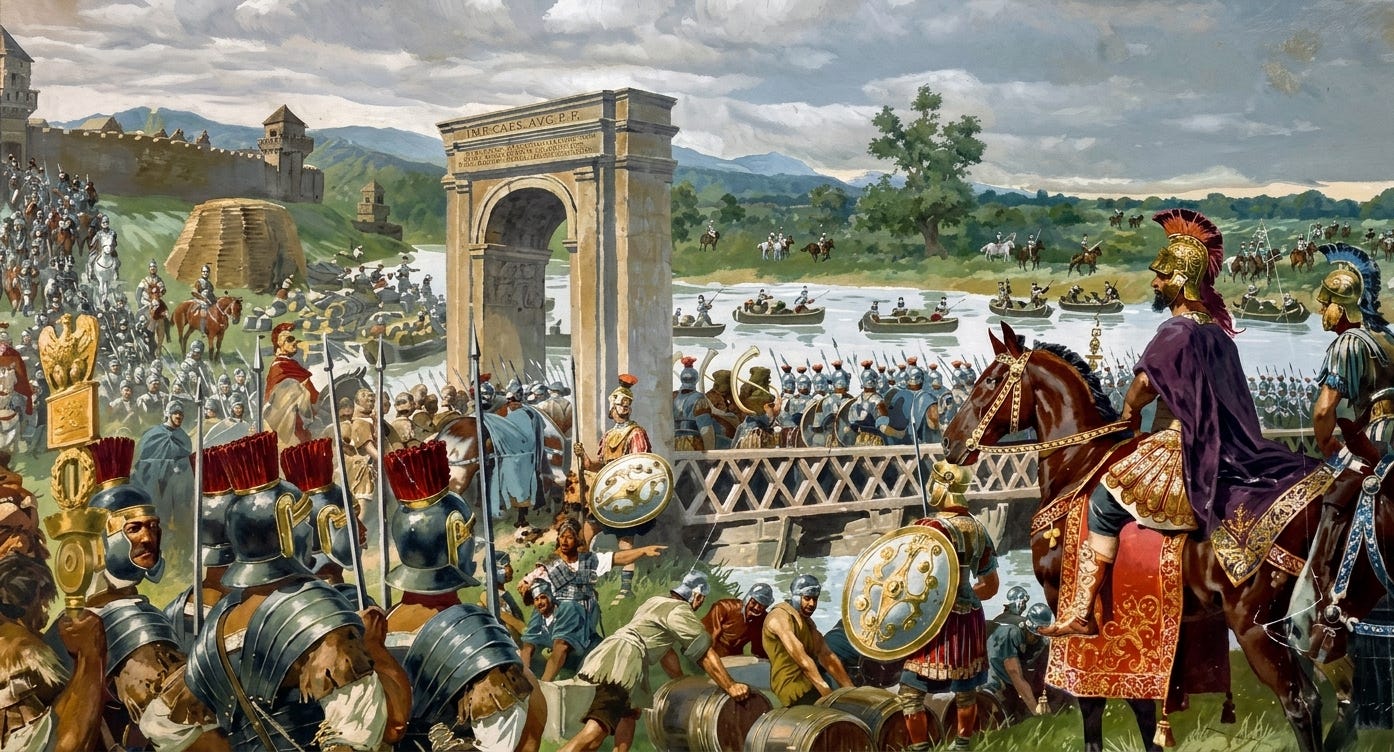
But he understood that self reflection was not the purpose of life, and that to grow as an individual one must stop daydreaming and step into the realm of reality. Life was about acting in the world, not just analyzing it. One line from Meditations perfectly encapsulates this idea:
“Waste no more time arguing about what a good man should be. Be one.”
If you read about Aurelius’ life, it’s clear he attempted to live out this philosophy via his dedication to stoicism and willingness to act when things fell within his control. In fact his Meditations were written while on military campaign on the far borders of the Roman Empire. He served on the front lines alongside his soldiers, defending the empire from barbarian incursions. He was no doubt a deep thinker, but he knew that ultimately it was one’s actions that mattered.
There’s nothing wrong with deep contemplation, of course, but when it becomes a means of procrastination, it starts looking a little more like cowardice than prudence. It becomes an excuse to sit on your hands rather than take action. Reading self help books can sometimes cross into this territory. It’s attractive to read about ways to improve your life without ever getting out into the real world.
In my opinion, reading about the great men of history does a better job of inspiring an actionable mindset in us when we learn about their courageous lives. Therefore reading biographies gets us out of our own heads and into the story of a life full of adventure that will push us toward our own achievements.
The Long Perspective
The second reason you should read biographies is that they give you the “long perspective,” meaning that biographies allow you to to trace cause and effect across a full human lifespan.
Rather than a list of neatly packaged life hacks, biographies offer a holistic representation of a great person: how decades of failure laid the groundwork for a sudden breakthrough; how early arrogance caused ruin and a recalibration; or how effort and patience paid off in the long run.
You’ll see that at many points in the lives of great historical figures, they wouldn’t be considered consequential at all — and the possibility they’d be remembered for centuries might seem laughable if you only took a snapshot of their lives at a single moment in time.
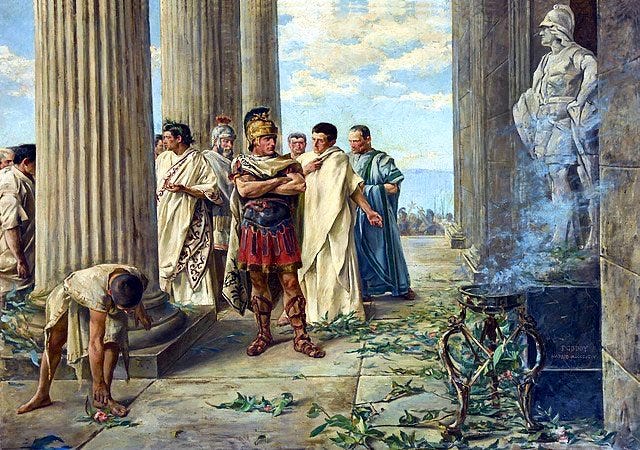
Julius Caesar is probably the best example of this. By the age of 30, he hadn’t accomplished anything notable, and believed himself to be a failure. When he visited Alexander the Great’s tomb, he wept. By his age Alexander had conquered the world, but Caesar was still a minor figure on the world stage. Caesar’s success came in due time, though. He went on to become perhaps even more famous than Alexander, and many of his greatest achievements did not come to full fruition until his 40’s and 50’s.
The lives of characters like Caesar prove that you can’t count yourself out early, and that each life plays out at its own pace. Biographies teach us this important fact because we get to analyze one life at a time rather than snapshots of success stories at cherry picked moments.
By understanding the long perspective, you’ll feel more comfortable with the knowledge that your life isn’t necessarily going to follow the template of someone else’s, and your achievements will come at different life stages. You’re in it for the long haul after all.
Grounded in Reality
The final reason that I think you should read biographies over self help books is that biographies are real. While a lot of self help books give an idealized version of personal improvement, biographies show the grittiness of real life. Biographies are narratives of what actually happened rather than advertisements getting you to buy into a certain way of doing things.
Because of this, a good biography will lay bare the faults of its subjects just as much as the triumphs. Understanding leaders like Winston Churchill or Alexander the Great succeeded even though they each had imperfections and personal vices is eye opening. It’s also motivating. It shows your journey toward ambitious goals can begin today without waiting for perfect timing or personal perfection. Greatness begins to look far more accessible when you realize that those who achieved it were complicated humans like you and I.
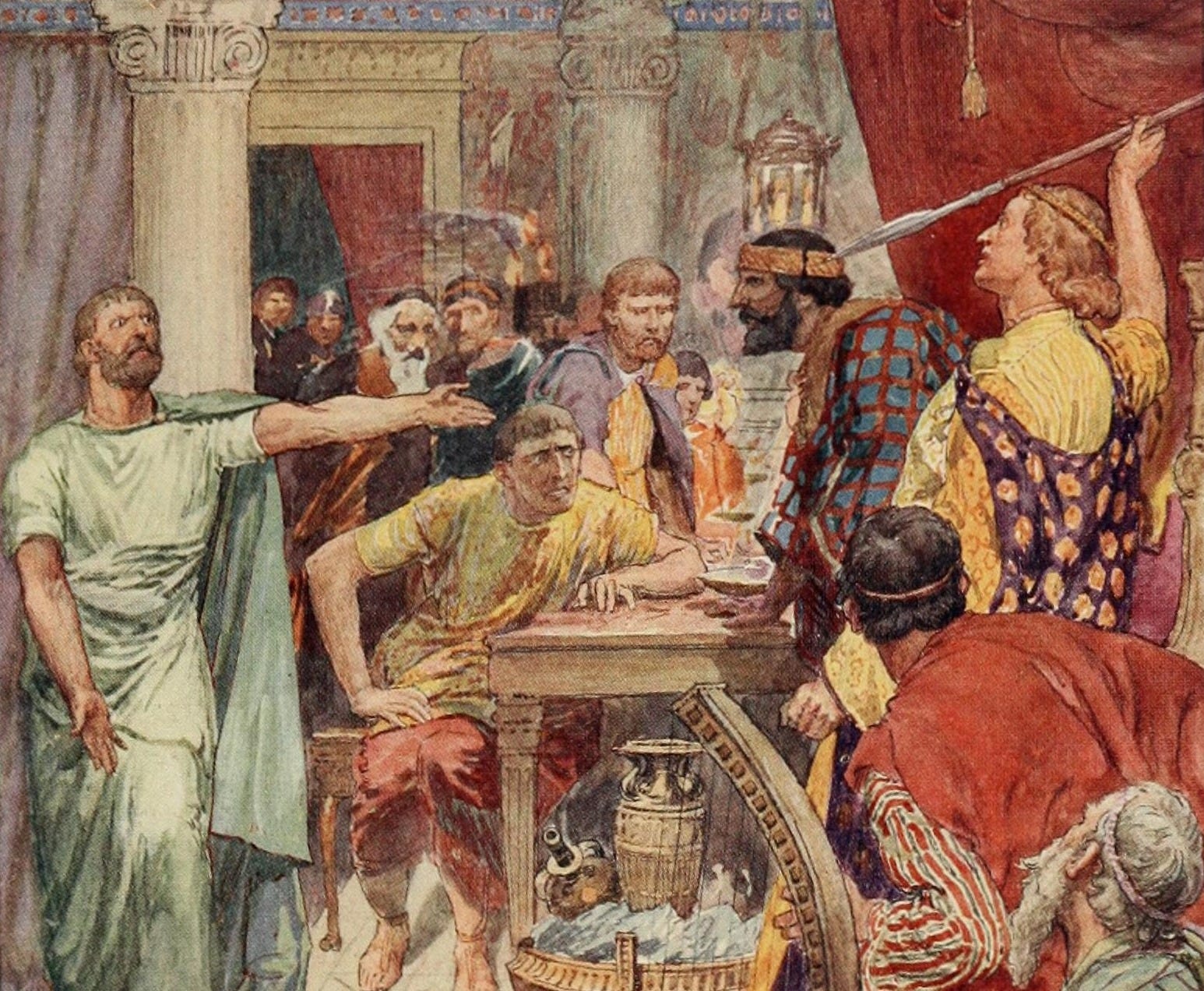
Real life is tough, complicated, and messy. The philosophies we have in our minds don’t always work out when applied to real life. But geographies show us what works. A quote by the British statesman Benjamin Disraeli sums this up perfectly, He said:
“Read…nothing but biography, for that is life without theory.”
Some Recommendations
Ok so I’ve given some reasons I think you should dive into biographies, so time for some recommendations.
A couple I’ve enjoyed recently are written by historian Philiip Freeman. They are: Julius Caesar, and Alexander the Great. These are both concise and readable while still hitting all the high points of the lives of these two great men of antiquity. Each one has actually served as the basis for my recent articles on Caesar and Alexander.
For a Napoleon biography, I recommend Napoleon: A Life by Andrew Roberts. It’s an extremely in-depth study of the French emperor’s life, and describes his major military battles as well as the complicated political environment of his ascent. Definitely not a light read at over 700 pages though, so know what you’re getting into before you start it.
Another biography I found great insight in is The Two Lives of Charlemagne, a collection of two contemporary accounts of his life. One by a court steward, the other by a monk who collected stories from those close to the king. Charlemagne sometimes gets forgotten about when discussing great men of history, but he certainly deserves the recognition.
Now to give a broader perspective on the lives of great historical figures, I always like to shout out Plutarch’s Lives of the Noble Grecians and Romans, which highlights the character traits of a number of figures from antiquity. You can choose which Greek or Romans you’d like to learn about, and each section is short so you can get through a lot of them quickly.
Finally, when we’re talking about great biographies, we can’t pass up the greatest of all time — and that’s the Four Gospels of the Bible — Matthew, Mark, Luke, and John — which describe the life of Christ, who is the ultimate template to follow. In my mind the Bible in general always belongs in a different category than other literature, but since the Gospels fall under the category of biography I had to include them. Christ is the ultimate Great Man after all and lived a perfect life.
I would appreciate any further recommendations, so drop your favorites in the comments.