

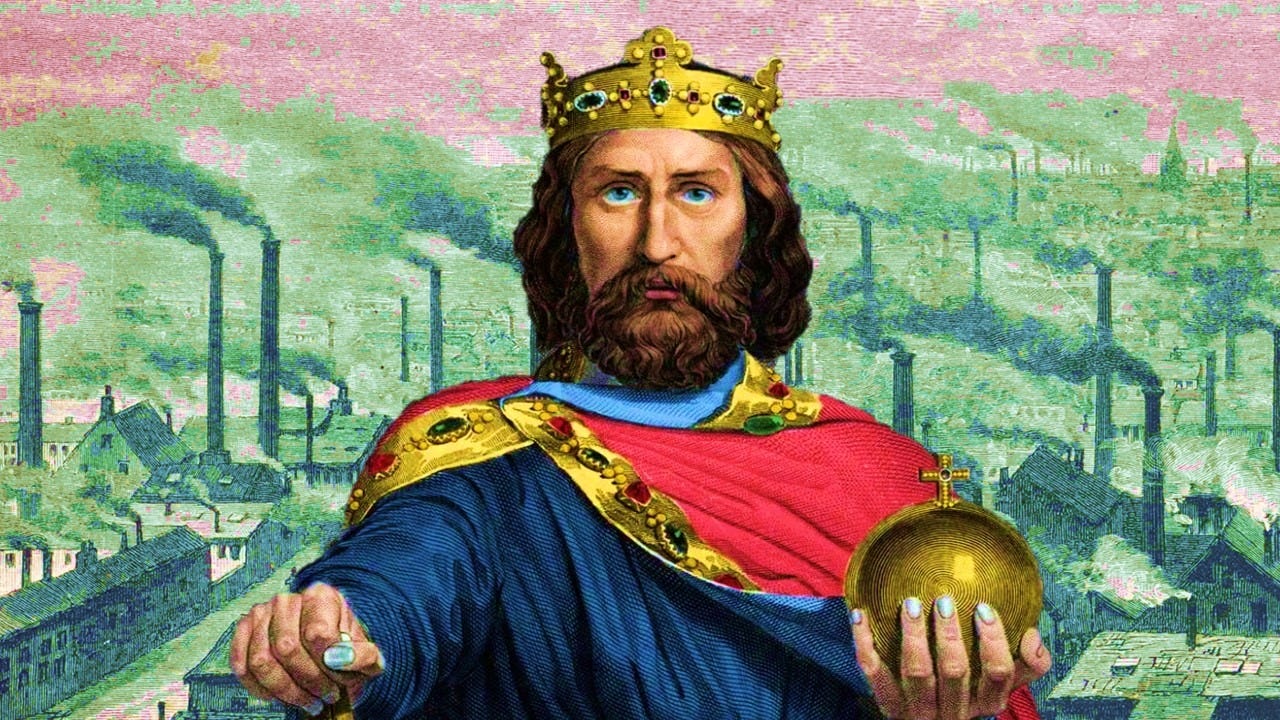
In our modern culture, the word “progress” is viewed as an inherent good. Anything done for the sake of progress is automatically assumed to be beneficial for humanity. It’s often the excuse to plunge head first into untrammeled territory.
Artifiical Intelligence, for example, is a field where we’ve abandoned caution in the anodyne name of progress. Many AI researchers are not guided by a well-developed philosophical or cultural tradition, but rather the vague platitude of “changing the world” — of progress for progress’ sake. For some people, that seems to be a good enough reason as any.
But what if we’re viewing true progress all wrong? What if, in order to advance as a civilization, we need to be looking backwards just as much as we are towards the next best thing?
Throughout history, some societies have actually been revitalized and pushed forward only because they drew inspiration and expertise from tradition. They didn’t outright reject what was old, but built upon previous foundations and used them as the basis for new development — for progress.
From the early medieval period to the founding of America, true Western progress has always been informed by a healthy respect — and even awe — of the past. So I’d like to share three periods of history where we advanced by drawing inspiration from our ancestors — and it’ll help us understand today why we need to be thinking about tradition whenever we try something new.
Reminder: You can support us in forming minds and rebuilding the West by unlocking our members-only content:
✔️ Full premium articles every Tuesday
✔️ The entire archive: Western history, literature, and culture
✔️ The Great Books lists (Hundreds of titles that influenced Western thought)
Join to start reading and support the mission today 👇
Carolingian Renaissance
The first period of history I’d like to discuss is one that is often overlooked, sandwiched between the fall of Rome and the medieval period, but it was a great leap forward in cultural and organizational development for the Western world. In many ways, it was when the West finally gained its identity.
This is the period known as the Carolingian Renaissance — when Charlemagne gave birth to the first post-Roman Empire in the West. To understand how Charlemagne revitalized his empire by looking to the past, we first need to understand the landscape of the empire at the time…
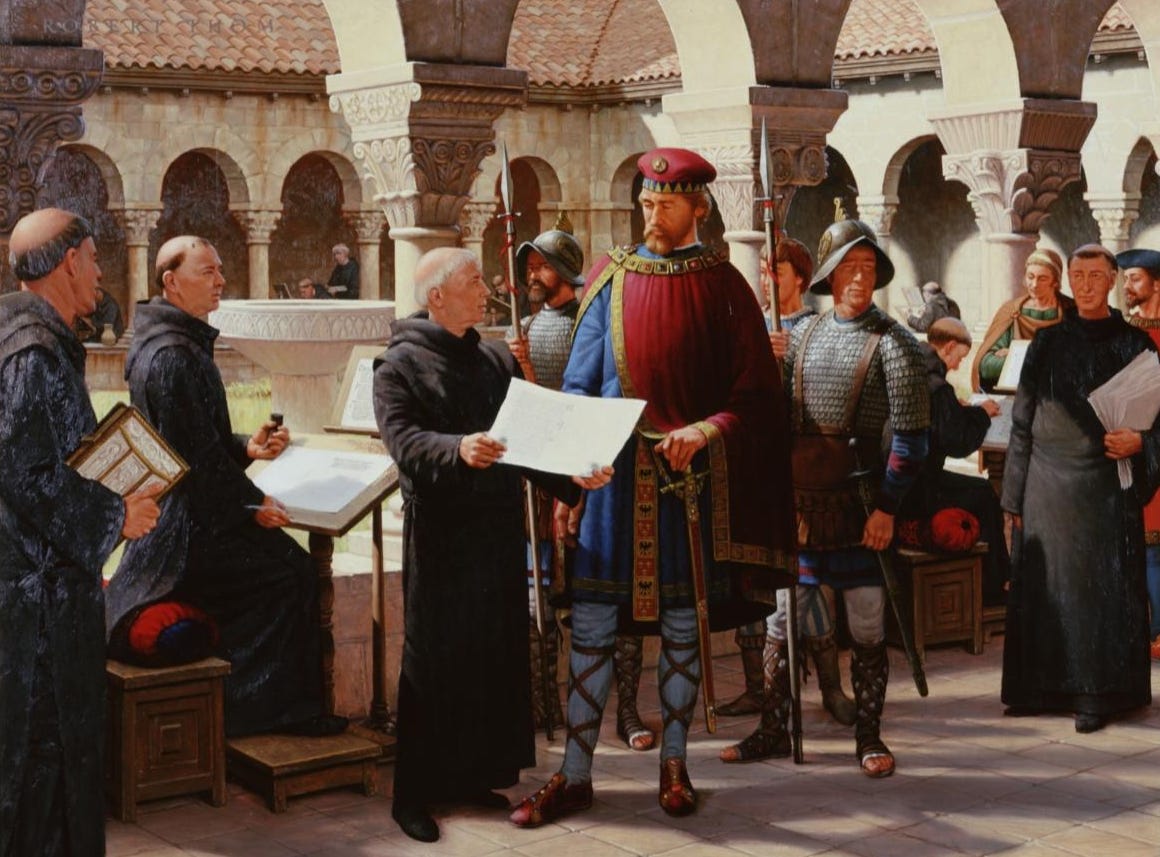
In the late 8th and early 9th century, Charlemagne ruled vast lands from Northern Spain to the North Sea. He was a skilled administrator, but his newfound empire had problems. Though the empire was flourishing economically, the centuries since Rome’s fall took a toll on the cultural development of the West.
In particular, Latin literacy was falling, a blow to the administrative and scholarly classes since Latin was essential for empire-wide communication. Because of this, an uneducated clergy had difficulty interpreting and preaching on the Vulgate Bible, the universal biblical translation of the time.
And on an aesthetic level, there were no cohesive architectural or artistic styles that marked Charlemagne’s lands as a bonafide empire — empires need grand building projects and beautiful art, after all.
In short, the Frankish Kingdom wasn’t the beacon of culture that Charlemagne wanted it to be.
Charlemagne thus devised a plan to create a “cultural rebirth” and he did so by looking to ages past — to the high cultures of Greece and Rome — as models. Specifically, Charlemagne hoped to revive the Western Roman Empire, which he held as the ideal model of a Christian Empire. His coronation as the “Emperor of the Romans” showed his admiration for the ancient culture.
One of the main ways he hoped to return to the golden age of Rome was by promoting latin as the language of the intellectual class. By making latin widely understood again, ancient texts could be revisited and an educational revival would follow. It seems like an inconsequential move, but this shift in language jumpstarted a civilizational rebirth…
As antique manuscripts and religious texts were made more accessible, literature and law flourished, and newly established schools became effective centers of education as new editions of classic works were produced.
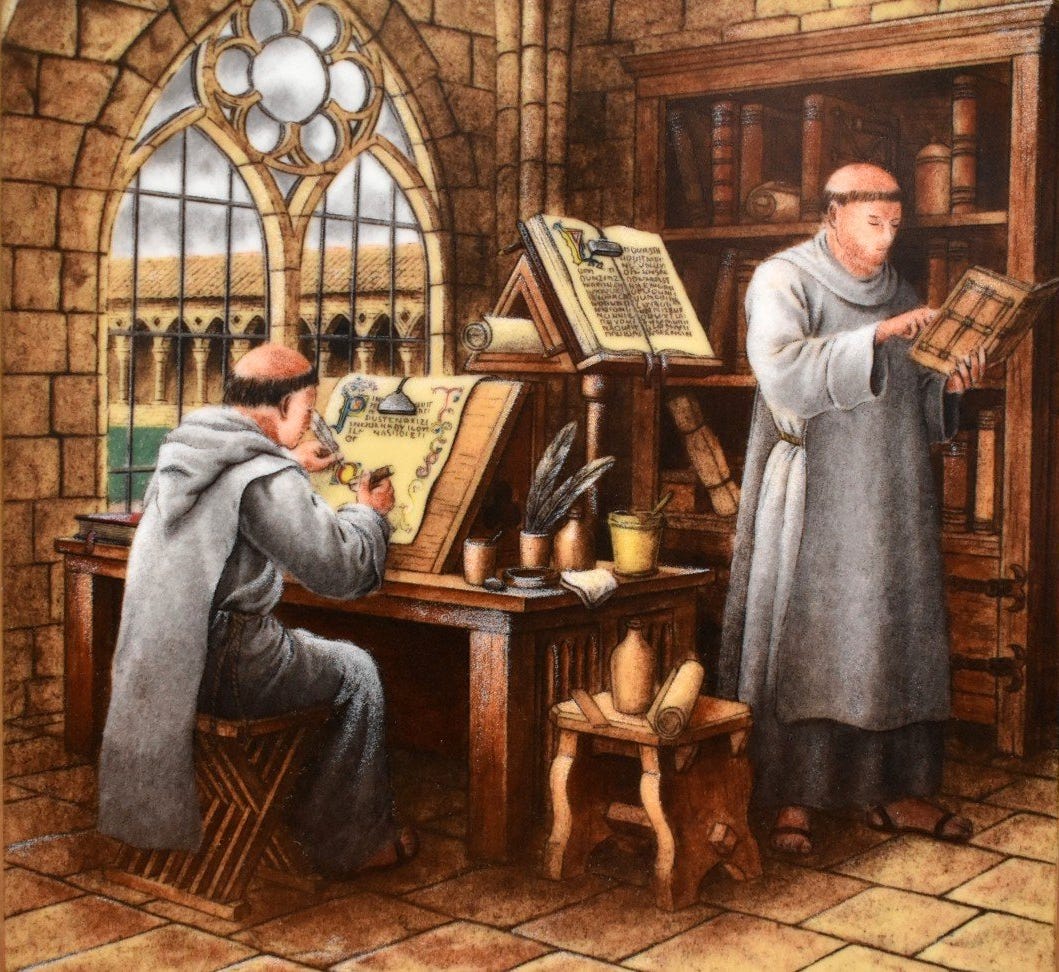
One of the ancient manuscripts that emerged was Vitruvius’ treatise on architecture, called The Ten Books on Architecture, which contained information about how the Romans built their massive structures. This provided the Carolingians with a template for lost stone-building techniques, and large stone structures were built in northern Europe for the first time since Rome’s occupation.
Between 768 and 855, an impressive 27 new cathedrals, 417 monastic buildings and 100 royal residences were built. And these Carolingian cathedrals and palaces still stand today as tributes to Vituvius’ influence.
Charlemagne created a bridge to the ancient past — the latin language — resulting in rediscoveries in literature, philosophy, and architecture, shaping Western culture in a new direction. Looking backwards actually progressed the Carolingian Empire.
I often question whether our modern teaching methods are creating similar bridges to the past, or are they actually putting up barriers? What rediscoveries could we make today if we insisted on studying the ancient works and figures with the idea of civilizational rebirth in mind?
Italian Renaissance
Interestingly enough, the ancient Roman architect Vitruvius was also a key figure in another rebirth that came a few centuries later, as artists and engineers looked back to the classical world for inspiration once again. This was the Italian Renaissance.
Artists like Michelangelo, Brunelleschi, and da Vinci were all inspired by the classical world, and in particular, the architect Vitruvius.The 16th-century architect Andrea Palladio even considered the ancient roman his “master and guide.”
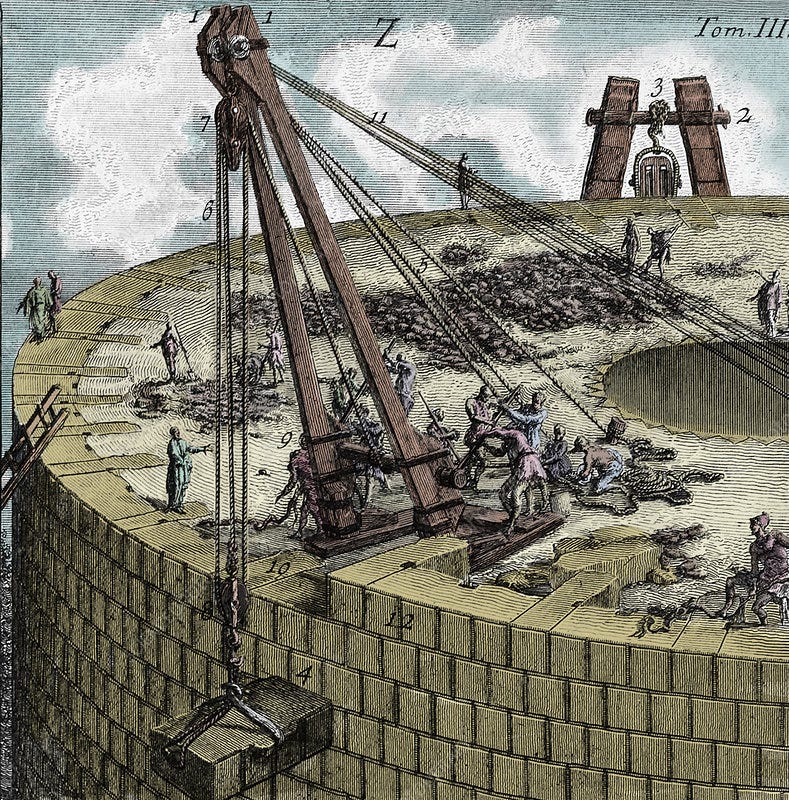
In 1416 Vitruvius’ Ten Books of Architecture was repopularized by Florentine scholar Poggio Bracciolini after he republished it. The work soon prompted a rebirth of classical architecture, art, science, and engineering.
Brunelleschi, for example, was inspired to invent a new type of hoist to lift large stones for the dome of the cathedral in Florence. Da Vinci, deeply inspired by classical writings on math and science, dedicated one of his most famous works to Vitruvius. His drawing, aptly titled “the Vitruvian Man,” is based on the principles of body proportions developed by Vitruvius.
More consequentially, though, Palladio — whom many would consider the greatest architect of all time — drew inspiration from Vitruvius He was motivated to write his own treatise on the subject, The Four Books of Architecture, which pulled from and built upon Vitruvius’ methods. Palladio’s work is considered a seminal work in architectural history, offering a comprehensive guide to classical design principles, including the five classical orders which were first developed by Vitruvius.
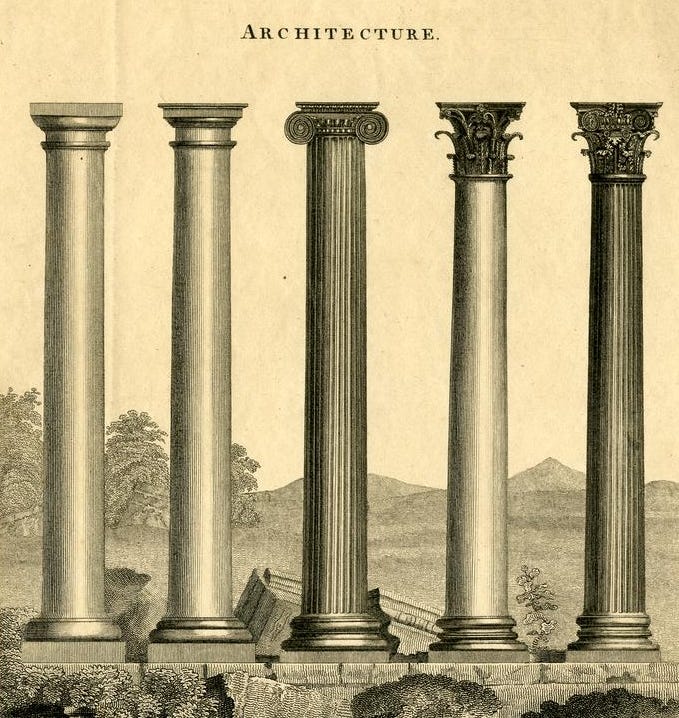
His work is still studied in architectural programs today, a legacy that can be traced back to Vitruvius and the Renaissance’s obsession with the classical world. Thus Renaissance, Baroque, and Neoclassical architectural styles all have roots in Vitruvius’ work.
But most of all, the rediscovery of Vitruvius’ works and the cultural rebirth they helped fuel underscores an important lesson:
