

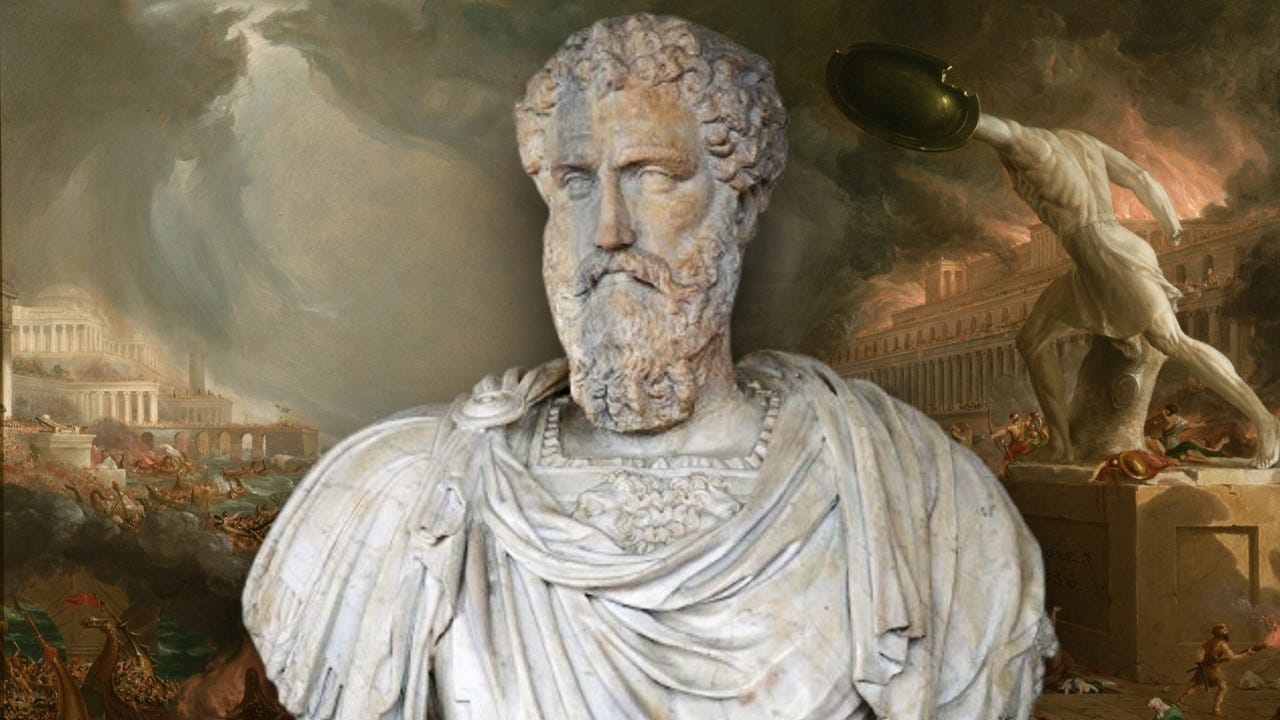
Saving an empire is difficult — and deadly.
In rare moments throughout history, a truly benevolent leader rises to power at the helm of a corrupt machine. Most of the time, the leader is transformed for the worse by the corruption around them as Lord Acton so famously wrote:
“Power tends to corrupt, and absolute power corrupts absolutely. Great men are almost always bad men.”
But occasionally, someone rises to power and stands tall amid the swamp.
Emperor Pertinax was one such enigma in Roman history. With fearless idealism, he acted against the whims of the Roman establishment — and the machine turned against him…
Reminder: You can support us by unlocking our members-only content:
✔️ Full-length articles every Tuesday and Friday
✔️ The entire archive of content: Western history, literature, and philosophy
✔️ Members-only features like community posts and chat
Join to start reading and support the mission today 👇
Rebound from Vice
Few Roman emperors were more despised than Commodus, the son of the revered philosopher-king Marcus Aurelius. Where Marcus wrote stoic meditations about wisdom and self-discipline, Commodus lived as a caricature of imperial excess.
His vanity was legendary: he renamed the months of the calendar after himself, renamed Rome “Colonia Commodiana,” and even styled himself as the reincarnation of Hercules, appearing in the arena as a gladiator to slaughter wounded animals and terrified men in mock combat. This divine delusion and cruelty alienated both the Senate and the people.
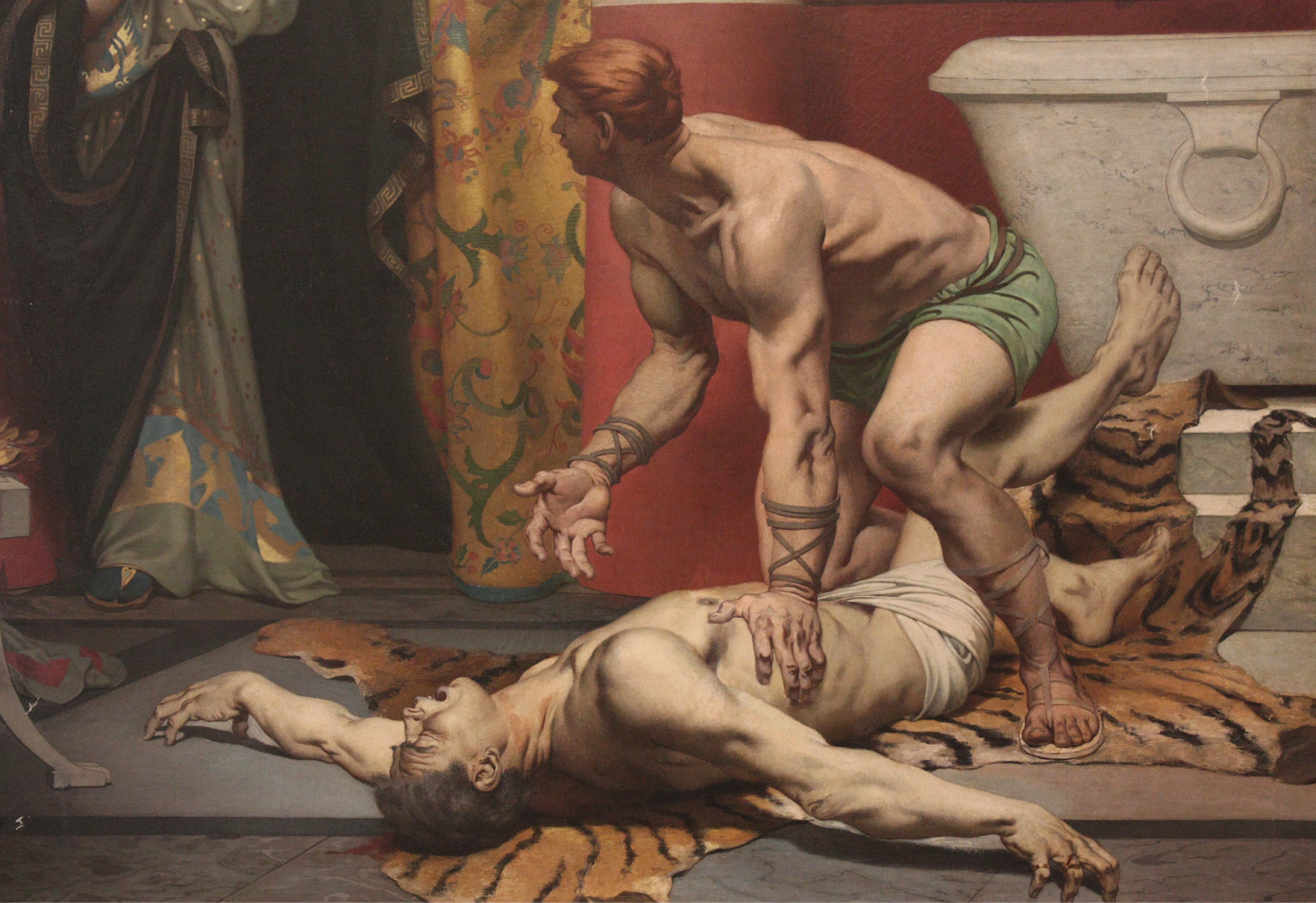
Rome, bloated and fracturing, needed a correction. The long humiliated Senate finally reached a breaking point. On New Year’s Eve of 192 AD, Commodus was strangled in his bathtub by the wrestler Narcissus under the direction of Commodus’ inner circle. He was posthumously declared a public enemy. Rome exhaled.
Into the vacuum stepped Publius Helvius Pertinax, a man of humble origins, born the son of a freedman in the Italian countryside. His rise through the Roman ranks was a classic tale of merit: first a schoolteacher, then an officer in the army, governor of provinces, and eventually prefect of Rome. At the age of 66, Pertinax ascended to the throne, chosen by the Senate to restore dignity and order to an empire on the edge of chaos.
Pertinax was everything Commodus was not. He was modest, disciplined, and virtuous to a fault. His ascension seemed to signal the dawn of a new age of responsible governance. Historians like Edward Gibbon and Cassius Dio portrayed him as a reformer — an echo of Marcus Aurelius — who sought to revive the stoic virtues that once guided Rome. Gibbon wrote of Pertinax:
“To heal, as far as it was possible, the wounds inflicted by the hand of tyranny was the pleasing, but melancholy, task of Pertinax.”
It was, however, a task bound to end in tragedy.
The Cost of Moral Courage
Pertinax immediately set to work unraveling the moral rot of Commodus’ rule. He slashed court expenses, reined in corruption, auctioned off the lavish possessions of the late emperor, and restored the currency’s silver basis to boost economic stability. He reversed unpopular taxes and promoted the idea that the prosperity of the empire lay not in extortion, but in economic productivity.
More than economic reform, Pertinax also attempted to restore military discipline, especially among the Praetorian Guard, the emperor’s personal bodyguards who had grown arrogant, soft, and politically dangerous.
The guards had come to expect enormous donativa (bribes or gifts) upon the accession of a new emperor. Pertinax, unwilling to perpetuate corruption, gave them only a modest appeasement.
This was his first fatal error….
