

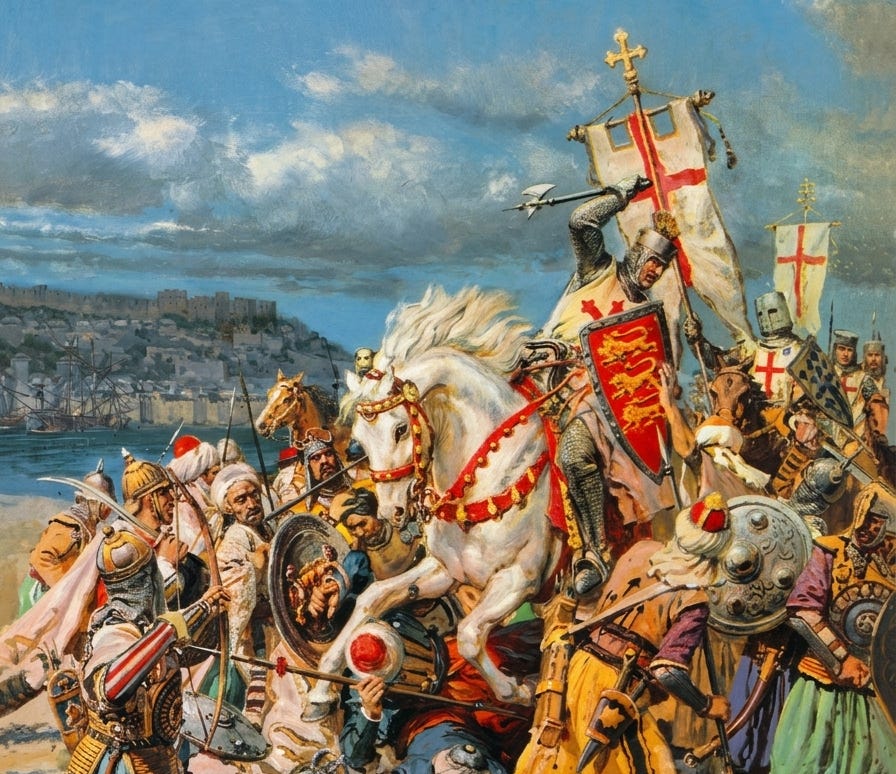
While on the Third Crusade, Richard the Lionheart didn’t command from a tent — he was at the front of his army with a weapon in hand. And at Agincourt, Henry V literally stood over the body of his wounded brother, fending off French knights with a sword.
Now, imagine a modern president or world leader doing that today.
It feels entirely absurd. Because today, leadership often means sitting in an air-conditioned room, making calls and doing press conferences, divorced from the consequences of your decisions. But back then, leadership meant having absolute skin in the game – your own life often depended on the decisions you made.
Though we’re far removed from the medieval era, there are some lessons on leadership that medieval lords can still teach us. I’m not advocating that the president should go grab a gun and fight in the trenches, but the medieval expectations of leadership contain a lot of valuable insights for us today.
So If you want to become a truly elite leader, you need to stop copying modern politicians and CEOs. You need to start thinking like a medieval feudal lord. Here are 5 timeless, medieval leadership strategies that modern society forgot about — and how to apply them today.
Lead From the Front
The first strategy that we can learn from the medieval leadership style is to lead from the front. In the Middle Ages, the idea of leadership was deeply tied to martial duty — the responsibility to lead an army and risk one’s life in battle to inspire one’s men.
In fact, the willingness to fight was basically a prerequisite to have any leadership opportunity at all due to Feudal duties and obligations. So what were these duties and obligations?
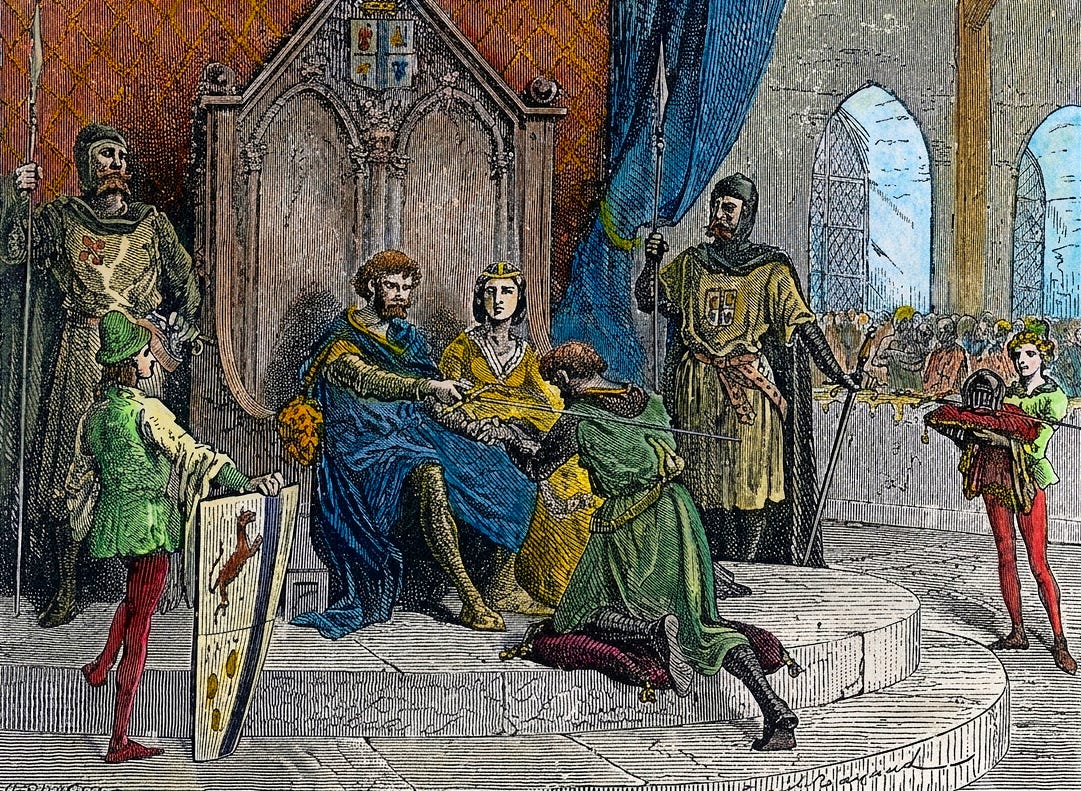
Just as a brief background, Feudal society was structured around the relationship between a lord and a vassal. A lord was a noble who owned land; while a vassal was someone the lord granted possession of land in exchange for service to the lord. Vassals would get land and protection, while the lord would get a vassal he could call upon for military service — this was the “feudal relationship.”
The key here is that lords owed their vassals protection — when armies were sallied for defense, the lord was obligated to lead the armies into battle. Of course he called on his vassals to help him fight, but he was expected to be the one organizing and leading it in person.
We see this play out in famous battles throughout the period. Many kings personally fought in battles, emboldening their men and shaping the course of history.
William the conqueror led his army in many campaigns, most notably the battle of Hastings in 1066 to contest the English throne. After a shaky start, William rallied troops and eventually crushed his foe, Harold Godwinson, winning England for the Normans and becoming a national hero still remembered today. .
Likewise, another national hero, Robert the Bruce of Scotland, is well-remembered for his bravery during the war against England’s Edward I. As an outlaw king, Robert fought a guerrilla warfare campaign against the English invaders. But his greatest achievement was the Battle of Bannockburn in 1314, where Robertd defeated the English forces to win Scottish independence.
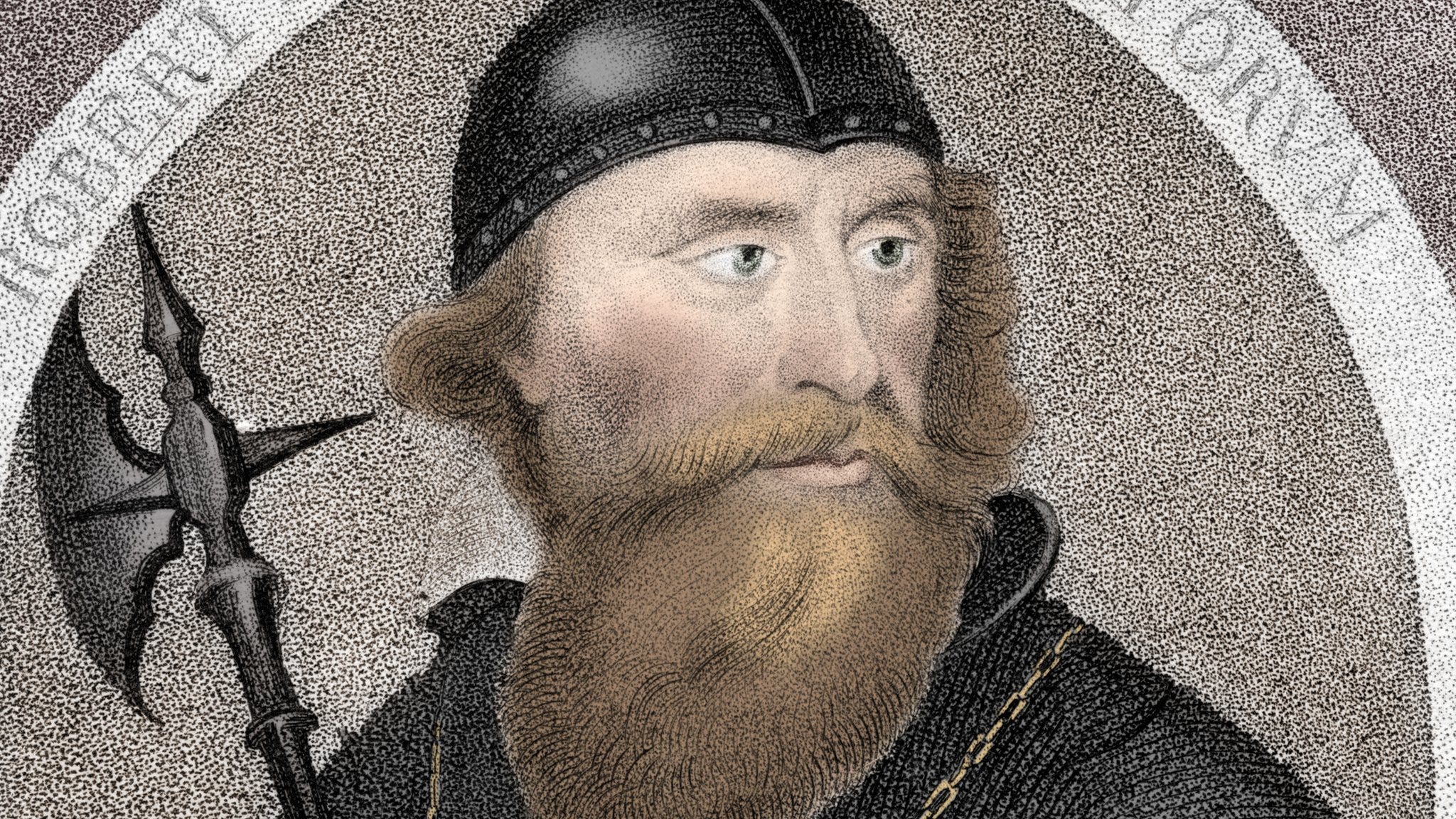
His personal bravery became legendary, as Robert is recorded to have slammed his battle axe into the skull of an English knight, setting the tone for the battle and giving his men a boost in morale. Robert’s bravery in battle and willingness to lead his men from the front has solidified him as the classic warrior-king archetype.
An important fact that the medievals understood is that, in order to get “buy in” from followers, a leader must display some willingness to tackle problems head on rather than pass these difficulties on to their subordinates. No one would willingly charge into battle if they knew that their lord was going to run at the first sight of danger, expecting his men to hold their ground.
Today, leading from the front most likely won’t involve pitched combat, but we can still learn something from this feudal mindset. True leadership is shown when a leader is highly visible, not just when there are wins, but when things go wrong — when battle and confrontation arise. To lead from the front, a leader owns the challenge personally. The leader charges into the fray first and makes the team’s problem his problem.
Generational Mindset
Another important leadership strategy that the medievals mastered is long term thinking. This was a direct result of the aristocratic systems of governance that prevailed during the Middle Ages, and it forced leaders to think generationally rather than in terms of short election cycles.
Rulers knew that their children and grandchildren would inherit their positions of power, so it was important to leave them a stable fief and also train them to be effective future leaders. Lords thus heavily invested in the education of their successors from a young age.
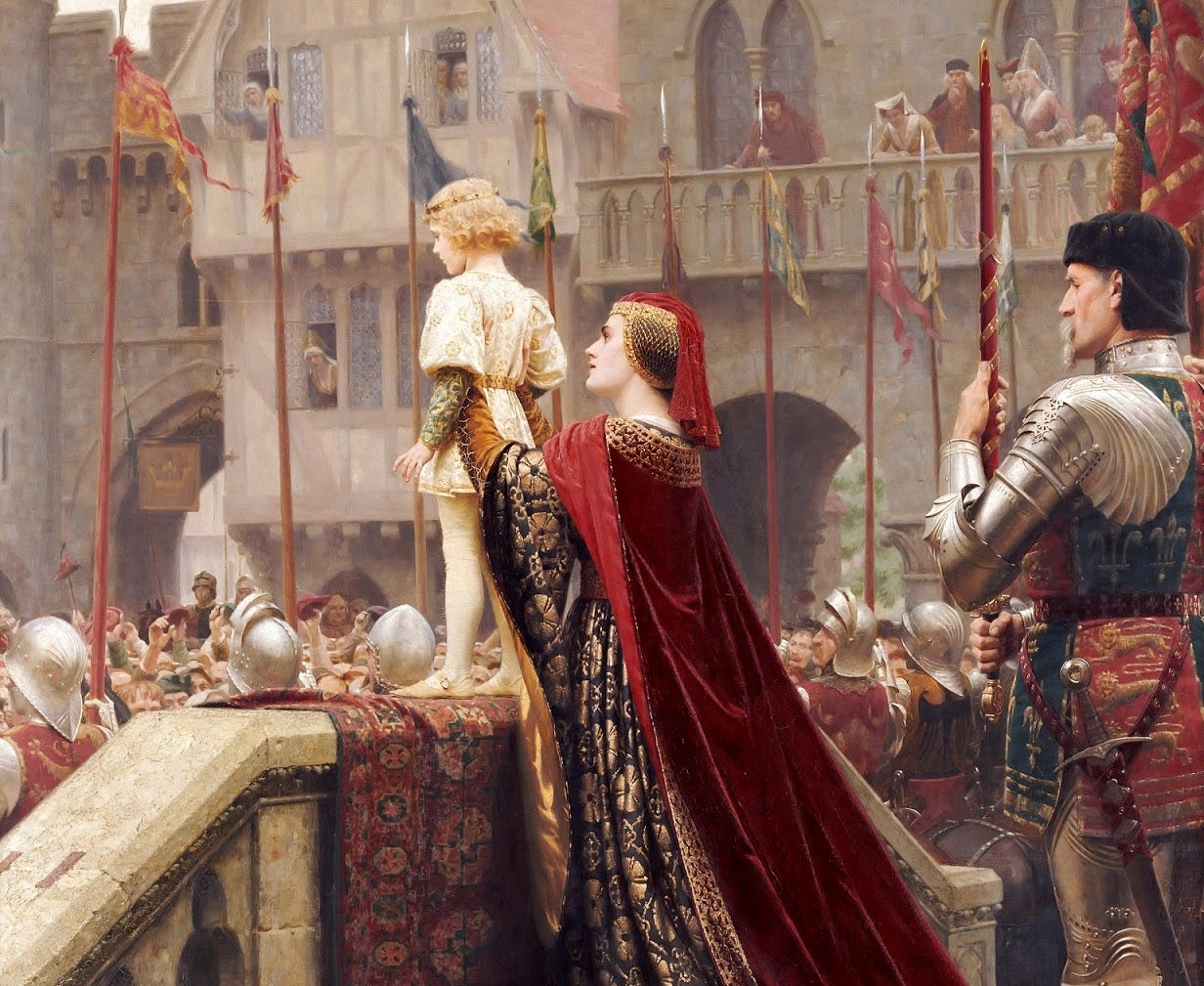
Often this meant fostering — sending sons or daughters off to allied courts to learn courtly manners, horsemanship, and martial skills from their hosts. This solidified feudal allegiances and provided essential political networks for the young nobles.In this way, rulers ensured that the next generation was already prepared to take the lead when the time came to pass the torch.
Another way medieval nobles ensured the long term success of their family was by setting up strategic alliances via marriage. Perhaps no medieval dynasty was as skilled at securing marriage alliances as the Habsburgs….
Dating back the 11th century , the Habsburgs thrived for 1000 years, dominating European politics and shaping history, living by the famous maxim:
“Let others wage wars, but you, happy Austria, marry”.
The Habsburgs frequently arranged for their young archdukes and archduchesses to be married off as children to members of other dynasties to increase their lands. In the 15th century, Emperor Maximilian I secured a hugely consequential series of marriages that increased his lands from a regional power into a global empire.
He married the daughter of Charles the Bold, Mary of Burgundy, himself, gaining parts of modern day Belgium, the Netherlands, and Luxembourg. And the marriages he arranged for his son and grandson acquired his dynasty the lands of Spain, Bohemia, and Hungary.
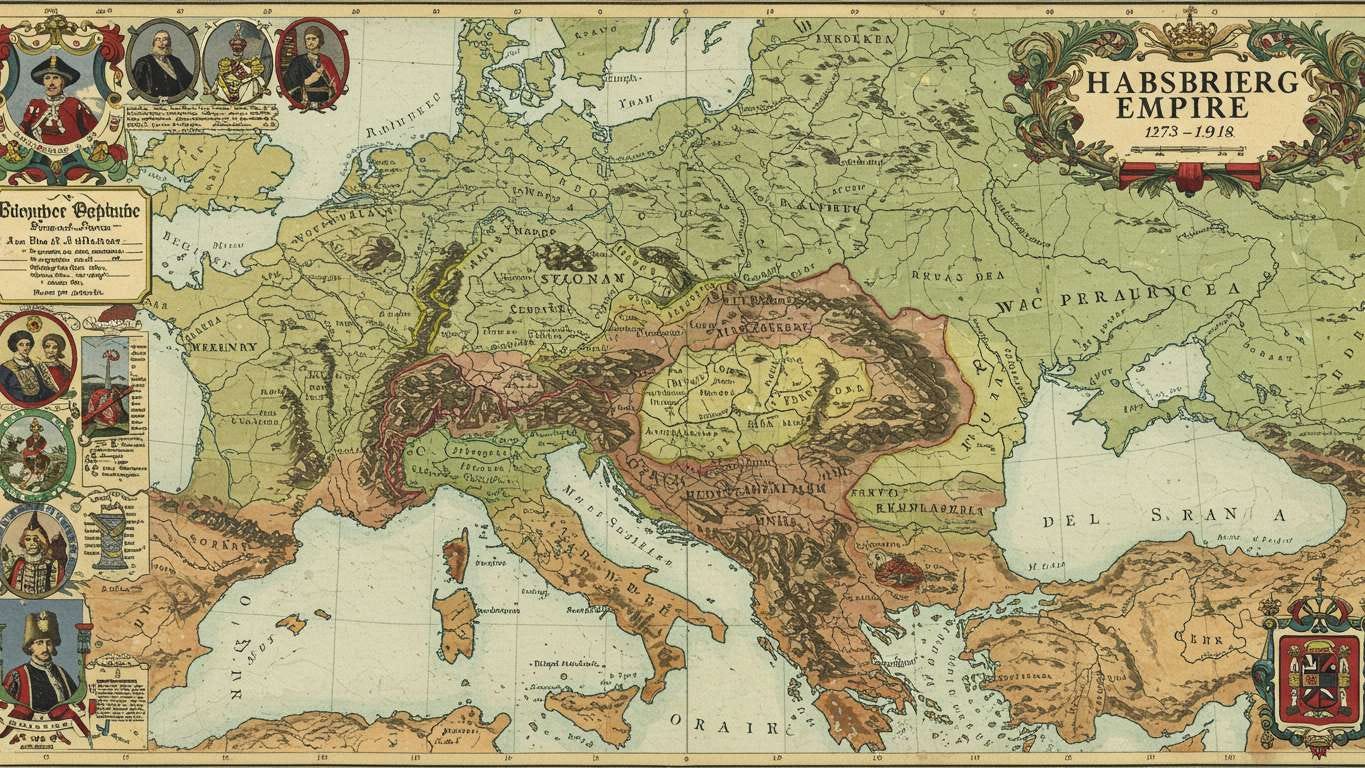
This long term strategic thinking was essential for dynasties to stay in power. Those that failed to think beyond their own immediate plans are now forgotten to history, but the Habsurgs and other families with a similar mindset still have power in European politics today.
In modern times, we organize our society around quarterly profits or weekend plans, often failing to develop long term strategies for our families and organizations. But thinking generationally — dynastically — is what any great head of household or leader needs to do in order to keep what they’ve built running for more than just a short time.
We don’t have the aristocratic system like in the Middle Ages, but we can still prepare our children to be caretakers of our homesteads or family business. And if we haven’t yet built anything, we can simply focus on not getting lost in the cyclical trends and short term highs of the modern world. Focus on the lasting: skillsets, relationships, and projects that will bear fruit in the future. Start building something worth passing down.
Moral Obligation
A third medieval approach to leadership is that the elite have a moral duty toward the lower classes. In medieval times, positions of power were understood as moral obligations. Nobles knew their subjects and the peasantry looked to them as physical representations of order, justice, and Christian virtue. Concepts like chivalry and noblesse oblige (the idea that the rich had an obligation to the poor) served as reminders to the upper class of their duties.
Perhaps the most influential king to take on this role was King Louis IX of France. He believed his position as king was a sacred duty that bound him to provide a moral example for his subjects. He is well known for his personal penance and works of charity: regularly washing the feet of the poor, feeding beggars at his own table, and building hospitals. He also dressed in plain, humble clothing rather than rich fabrics to model humility.
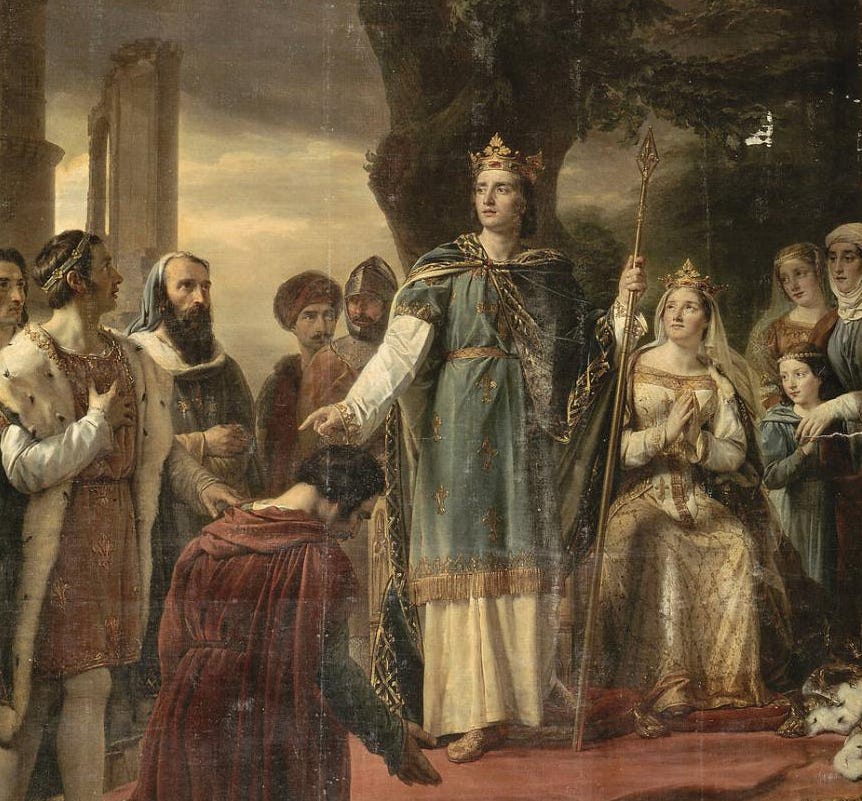
One of his most prominent acts of public justice was holding court under a large oak tree at Vincennes. Here he heard grievances directly from subjects of all walks of life — lord and peasant alike — ensuring that justice was not confined to just the rich but to the humblest subjects too.
Beyond individual rulers, medieval society used the code of chivalry to instill in their leaders this moral responsibility. Ramon Llull’s popular Book of the Order of Chivalry alongwith Geoffroi de Charny’s Book of Chivalry laid out expectations for nobles to live upright and moral lives.
For example, Charny gave practical advice to nobles on how to grow in virtue. He writes:
