

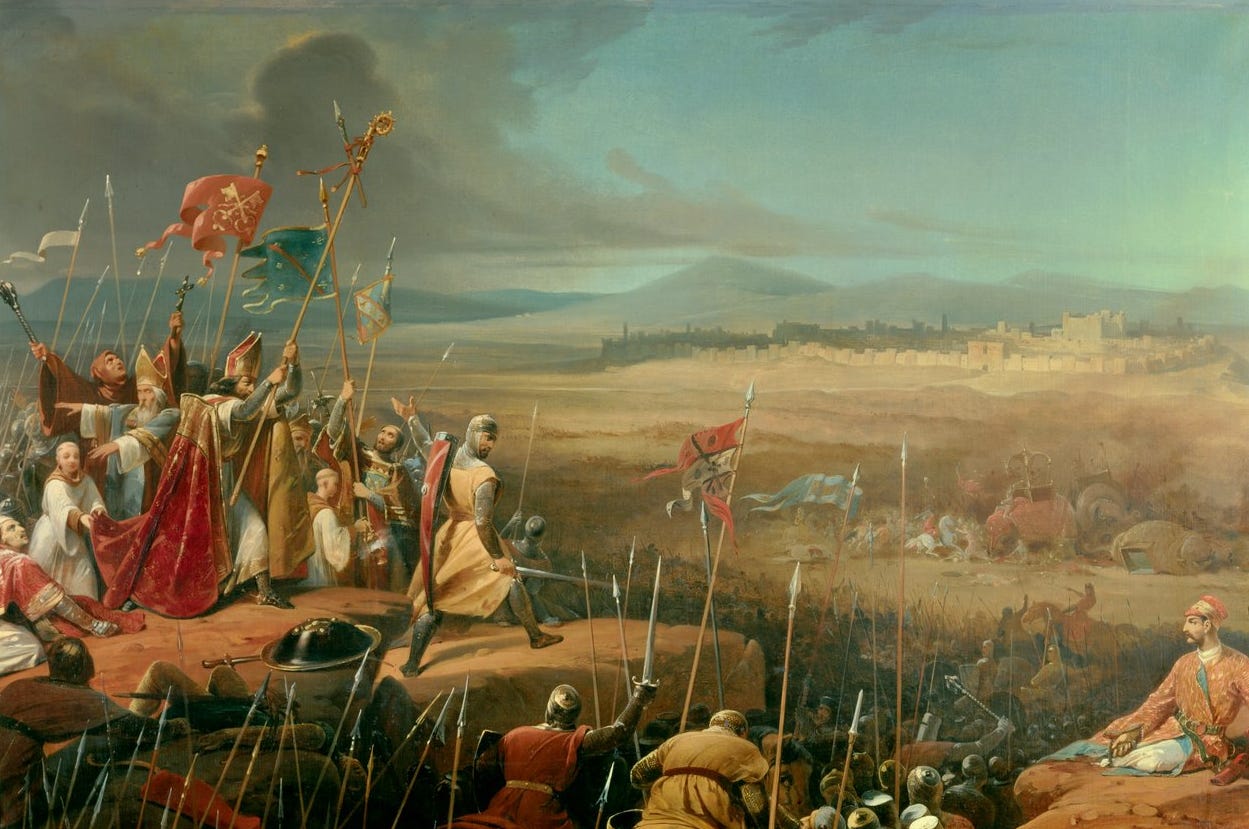
Christianity built Western Civilization.
Or, at least, Christianity unified it. Before the Church, in fact, there was no unified Western identity at all – just a collection of warring chieftains, lords, and petty kings who obtained power via force. A lord in France, for example, felt no connection to another halfway across the continent in Hungary or Poland.
But the Church found a way to rally all of Europe behind a common cause, and create Christendom, a grand union of Christians across the continent. The key was to harness — rather than stifle — the power of its internal factions and use it for the Church’s goals.
So how did this unification happen? Here’s the story of how Christendom came to be…
Reminder: You can support us in forming minds and rebuilding the West by unlocking our members-only content:
✔️ Full premium articles every Tuesday + Free content Thursdays
✔️ The entire archive of content: Western history, literature, and culture
✔️ The Great Books lists (Hundreds of titles that influenced Western thought)
Join to start reading and support the mission today 👇
A Dual Tension Between Church and Tribe
Historian Christopher Dawson makes the case in Religion and the Rise of Western Culture that after the fall of Rome, Europe was under a dualistic tension: a barbarian power structure stood in contrast to a Christian ethos. On one side rested the secular authority of local lords and kings, who largely maintained control through aggressive means. On the other lay the cultural influence of the Church, who remained powerful in spite of the collapse of nearly all other Roman institutions. This dichotomy between secular and religious authority lies at the root of the West’s origins…
Dawson called the West a “missionary culture” because it was only via the Church that the transmission of higher cultural elements occurred. He writes:
“…it was only in so far as the different peoples of the West were incorporated in the spiritual community of Christendom that they acquired a common culture.”
Dawson contrasts this development with Eastern civilizations like China and India, whose cultures developed internally over centuries with little outside influence. Their religion and culture grew together like roots in the same soil.
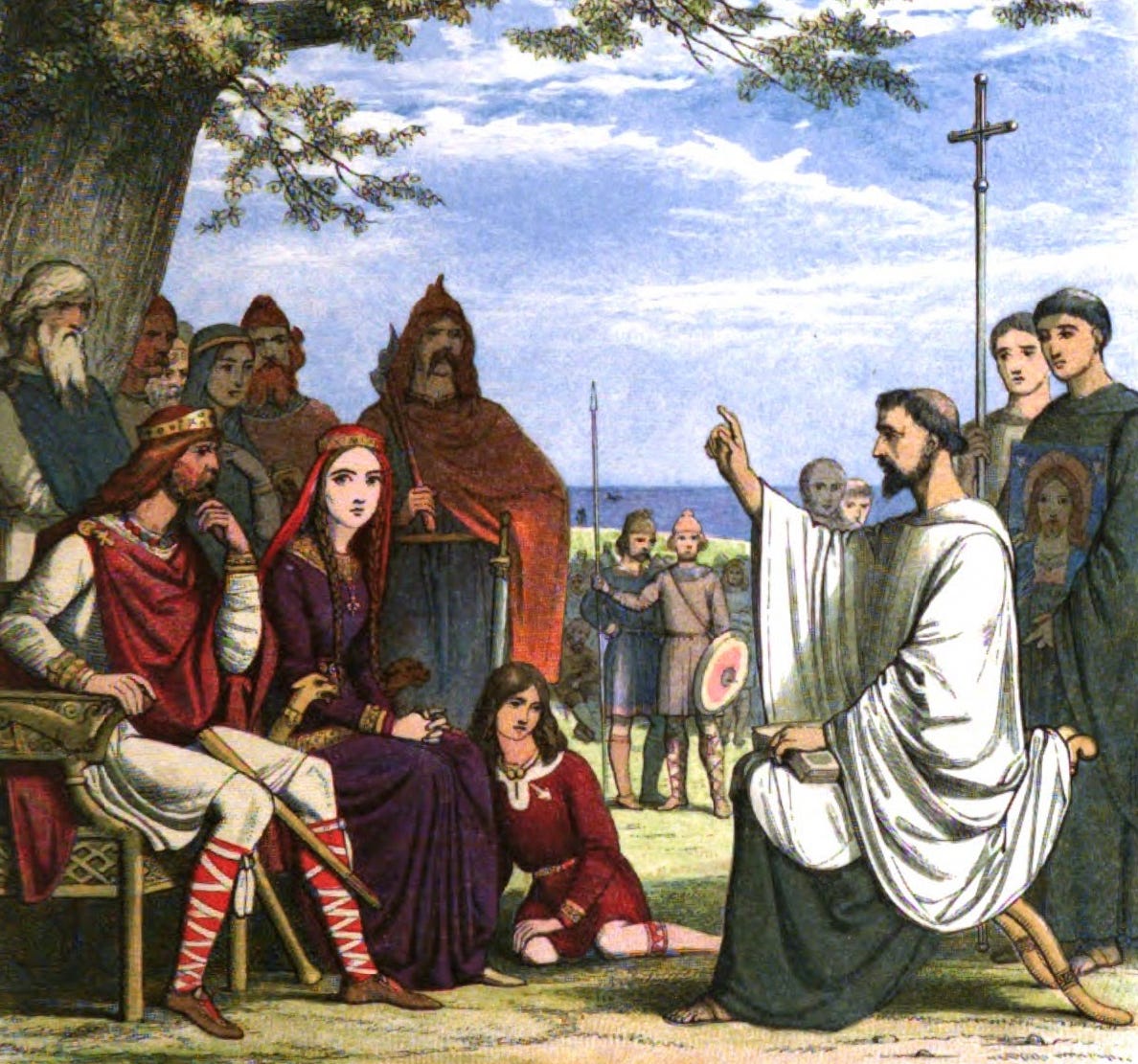
But Western civilization was a clash from the start: missionaries like the saints Boniface, Patrick, and Gregory brought a new culture — and a new authority — into the existing power structures of the Northern barbarian kingdoms. Though nearly all of Western Europe converted to Christianity, the Church’s influence did not create a utopia, but rather an uneasy tension…
Kings and lords still maintained their power via force while serving vital functions: levying taxes, ensuring security, and administering justice. But it was in the Christian Church where most turned for cultural direction. Dawson writes:
“The new barbarian kingdoms had taken over the military and political functions of the Empire…but everything else belonged to the Church — moral authority, learning and culture, the prestige of the Roman name and the care of the people.”
While kings held military and administrative power, bishops had the institutional backing of the Church. Often bishops held just as much — if not more — authority as the kings.
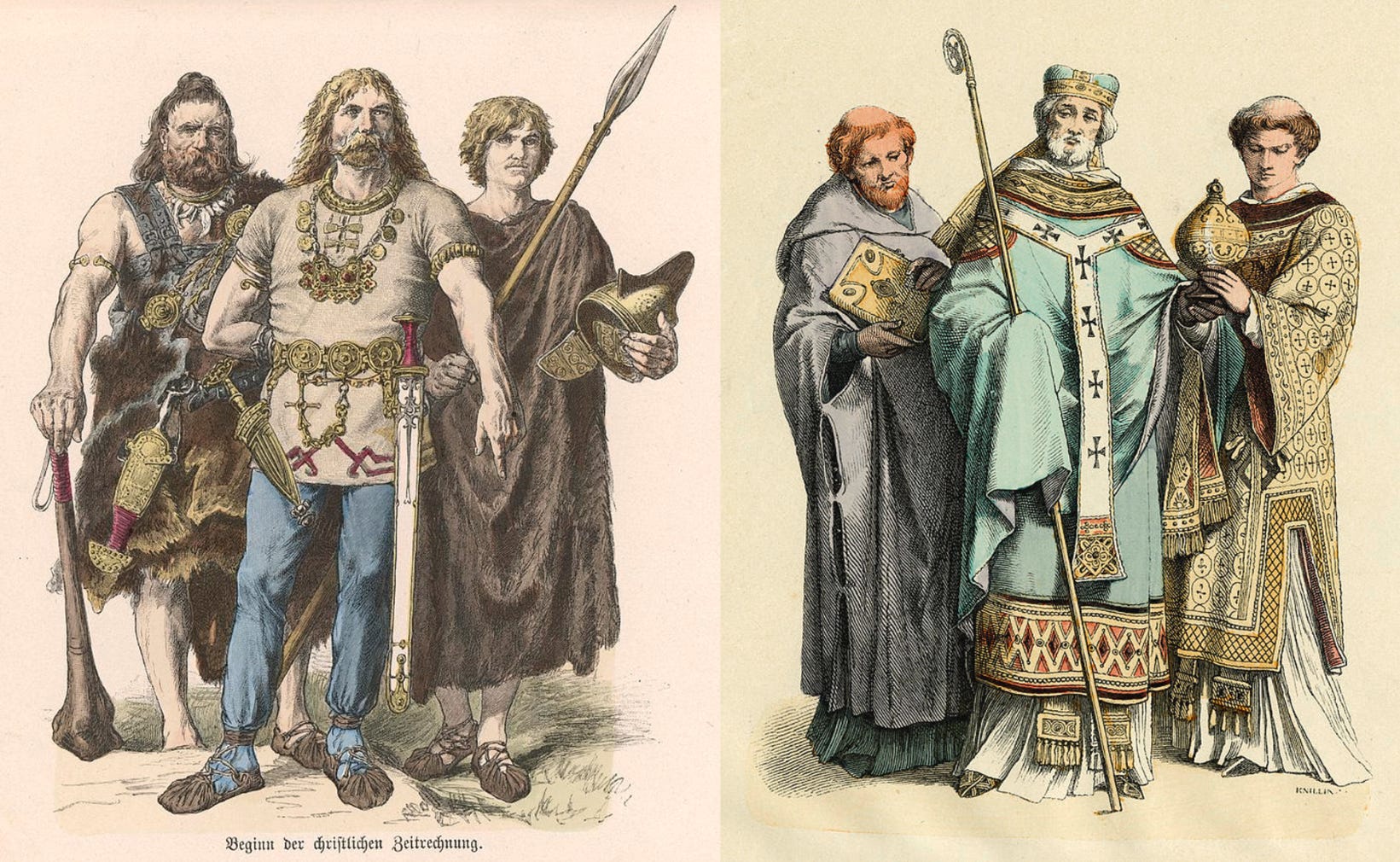
And this tension was not merely a practical reality, but a theological vision of the world accepted by medieval Christians. For example St. Augustine, a theologian who influenced the medieval mind perhaps more than any other, argued in his work “City of God” that the world was always at tension between two opposing forces: the City of Man and the City of God.
All of history was a war between God and Satan. As the “prince of this world,” according to the Bible, Satan would continue to influence the world until Christ’s return. In the meantime, Christians accepted that earthly authority would never be completely just, hence the allowance of a non-ecclesial power alongside the Church.
Despite this dualistic understanding of secular and religious power, there were many who sought to unify them. In the late 8th and early 9th centuries, one man tried to create a unified Church and State…a Christian empire.
The Hope of a Christian Empire
Charlemagne, famously crowned emperor by the pope in 800 AD, attempted to create a more unified system that encompassed both secular and religious authority. Throughout his reign he implemented a series of reforms that blurred the lines between ecclesial and political power.
His reforms focused on strengthening the Church’s hierarchical structure, improving clerical education, standardizing liturgical practices, and rooting out paganism. Eventually, Charlemagne’s powers covered ground that only the Church had occupied previously such as disciplining clerics, appointing bishops and abbots, and defining orthodox doctrine.
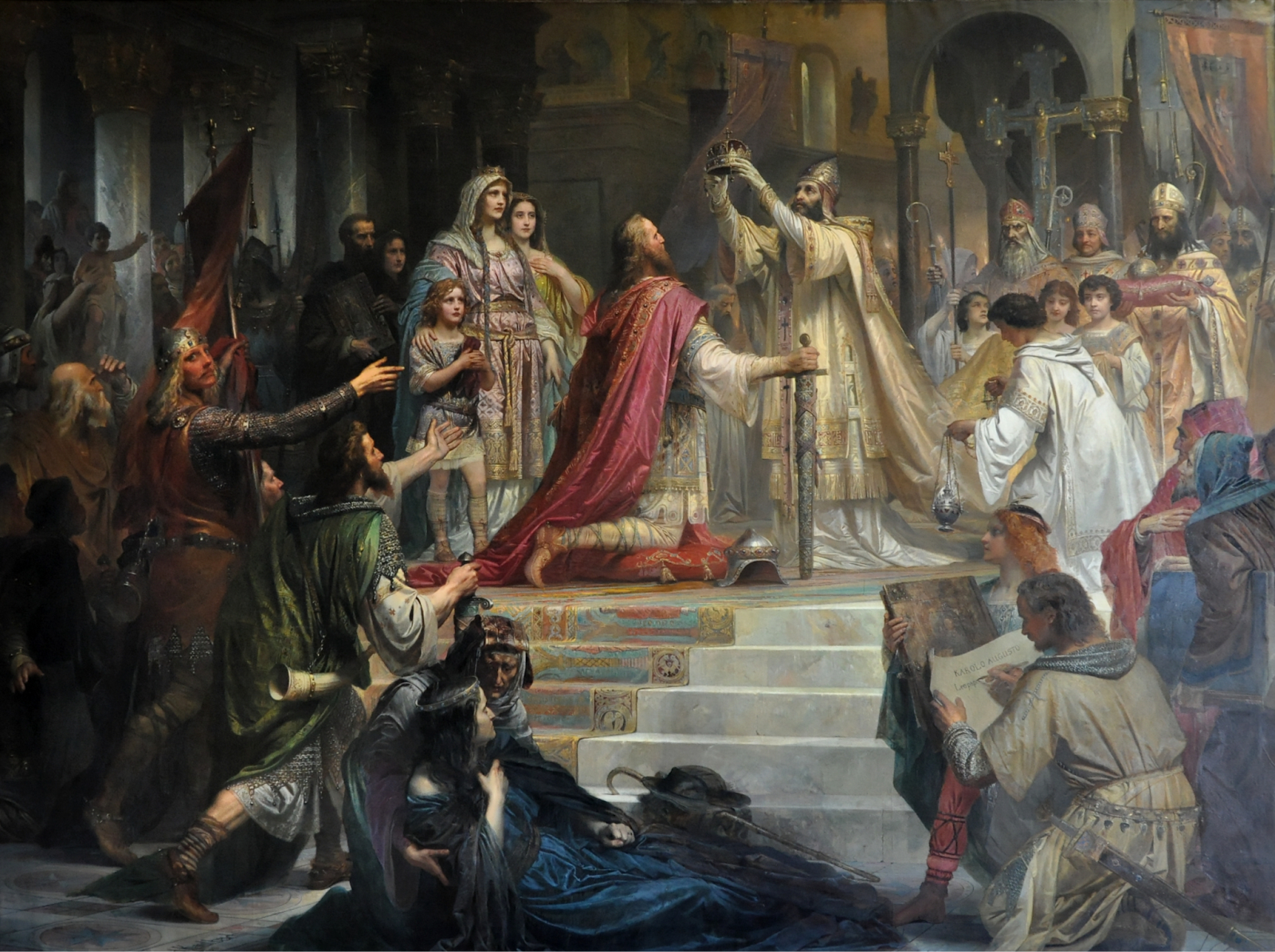
What’s more, he did it all with support from the papacy. Some even referred to Charlemagne’s realm as the “new Israel,” recalling the Biblical kingdom where little distinction between religious and civil law existed. Charlemagne’s dreams of creating a Christian Europe unified under common religion seemed within reach…
But this unity did not endure.
