

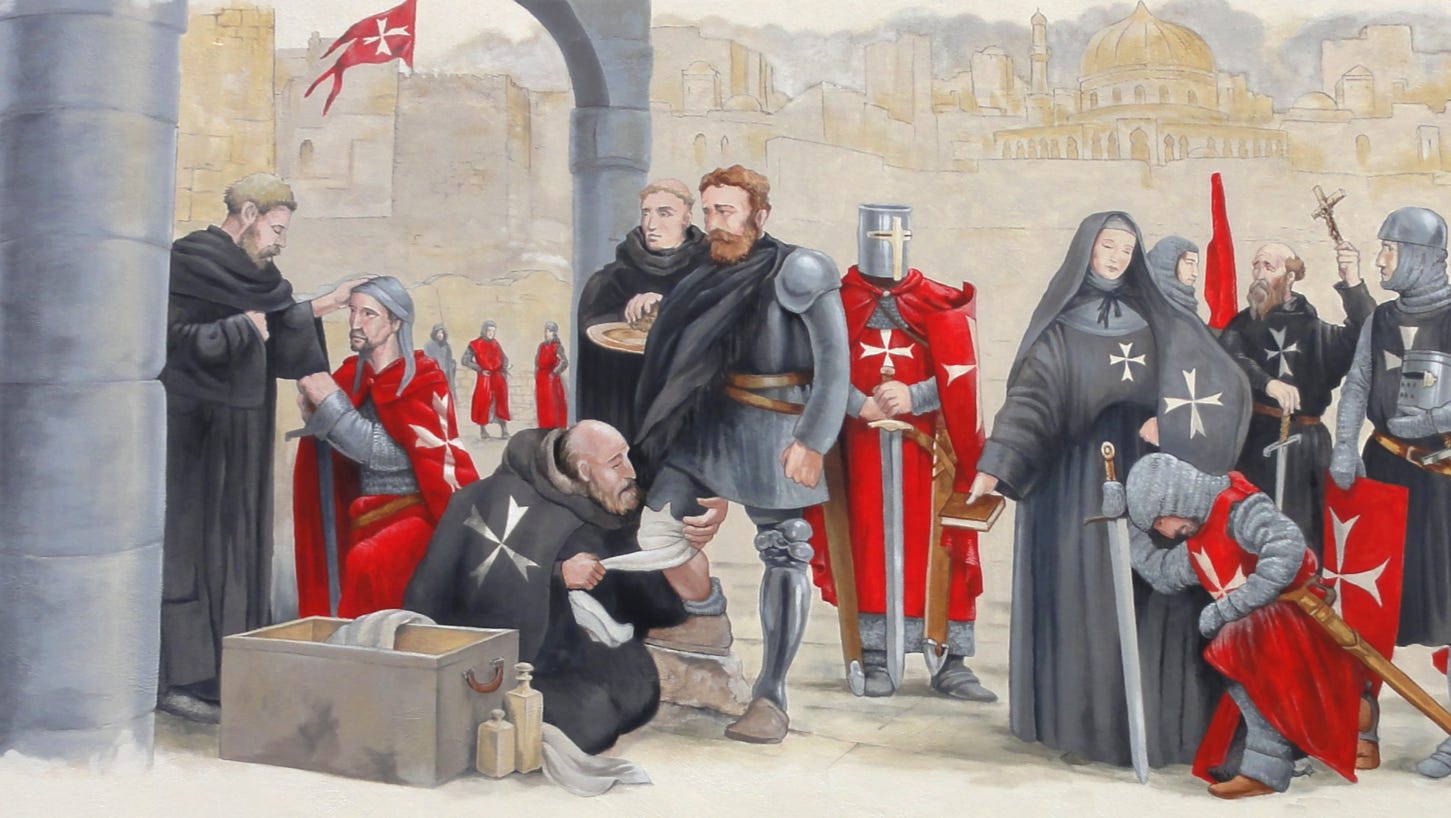
Why are men today still obsessed with the Crusades?
It’s not only a fascination with medieval weapons and armor. Those are cool, but I think the interest actually goes a lot deeper than that.
Modern society is suffering from a massive spiritual anxiety — one that’s rooted in a complete disconnect between what we say we believe and how we actually live. We’re living double lives, and it’s eating away at our conscience.
Look at how the modern world treats faith. It tells you that your deepest beliefs are subjective; they’re private emotions or the occasional Sunday ritual, but rarely do they demand real concrete action. You’re taught that as long as you’re “nice,” avoid certain vices, and don’t cause trouble, you’re a good person. But this passive approach to fatih is the source of our existential crisis.
Anxiety is caused by a gap between our potential and our reality — when we know what we could be, but then live a life that demands almost nothing of us. We know deep down that true belief requires something more than mere feelings.
And that’s why the medieval world, and especially the era of the Crusades, holds the antidote.
Whatever modern historians debate about the Crusades — whether they were justified or not — the psychology of the medieval crusader represents the ultimate antithesis to modern spiritual passivity. To the crusader, living out one’s faith meant sacrifice and action.
Unlike the modern West, they didn’t divide their world into “spiritual life” and “real life.” When Pope Urban II called for the First Crusade, he told secular and religious leaders alike to take their resources and skillsets and use them for a holy mission. It was an entire civilization directed toward a common spiritual goal, uniting the internal fight of the soul with the external duty of the physical world.
So if you feel anxious or unfulfilled, it’s because you were never meant to compartmentalize your spiritual life from every other aspect of your life. You were meant to be a part of something bigger. So here’s how the medieval world cured existential dread, and why adopting a crusader mindset might be the key to solving the modern West’s spiritual anxiety…
Reminder: You can support us in forming minds and rebuilding the West by unlocking our members-only content:
✔️ Full premium articles every Tuesday
✔️ The entire archive: Western history, literature, and culture
✔️ The Great Books lists (Hundreds of titles that influenced Western thought)
Join to start reading and support the mission today 👇
Faith Requires Sacrifice
The first thing to understand about medieval society is that they believed faith and sacrifice were inseparable. This is clear when you look at the rise of the monastics, who lived lives of poverty while preaching the Gospel for all to hear in the hopes of living like Christ did. Monastic orders like the Franciscans and Dominicans relied on the charity of others for their survival, and rejected wealth and luxury.
It’s important to note, though, that this wasn’t a passive mindset. Monastics rejected worldly goods in order to make room for evangelization, and to strengthen their relationship with God. It was not a denial of life, but a prioritization of what they believed to be most important. A sacrifice of their desires for a higher purpose.
This mentality spanned all rungs of medieval life, even the nobility and warrior classes. When the First Crusade was called by Pope Urban II in 1095, nobles and knights quickly realized that to embark upon such a long, perilous journey meant giving up much of their wealth and land.
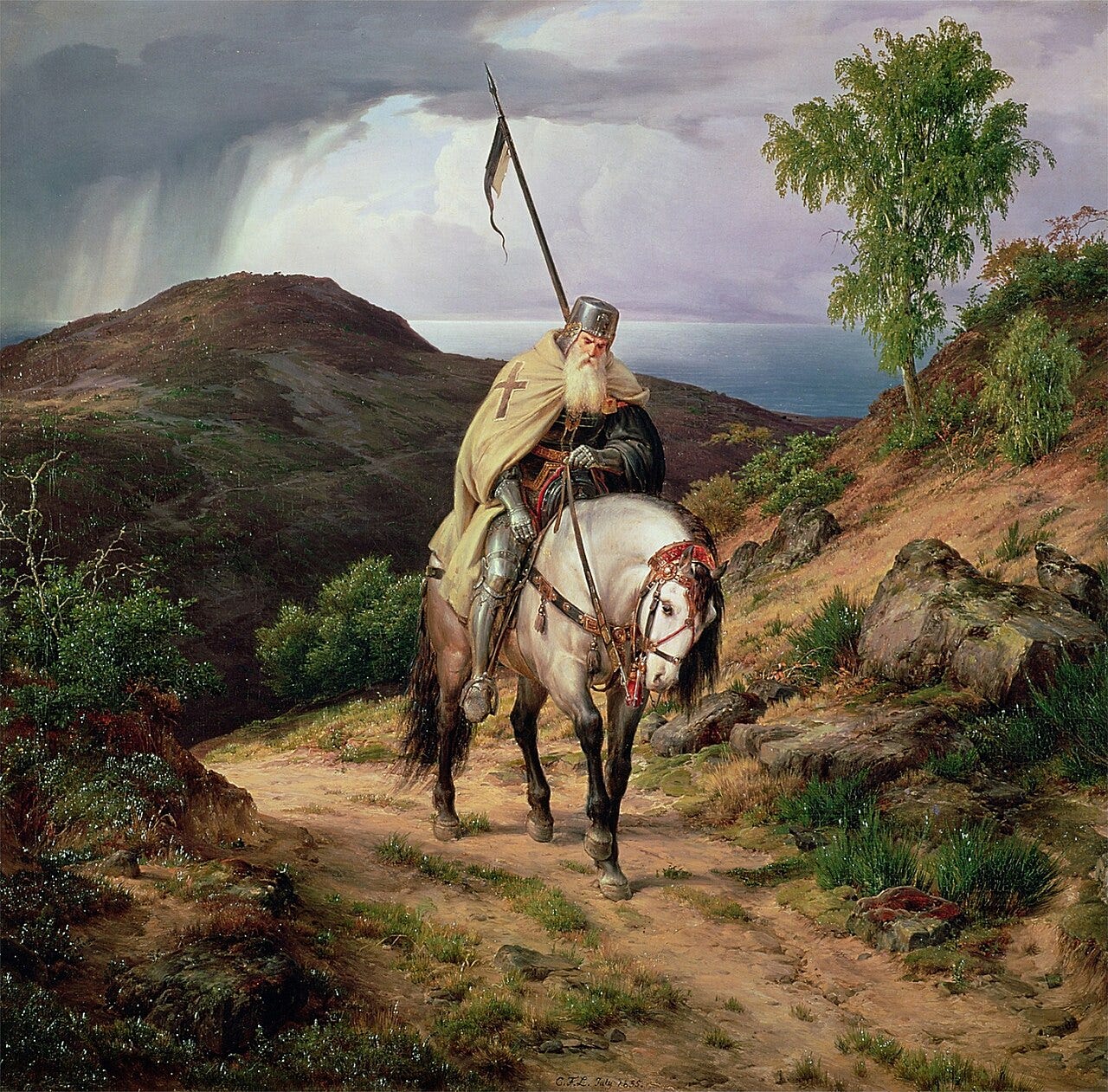
Though modern historians have sometimes characterized the Crusades as a plundering raid disguised as a holy war, the reality is that for many crusaders, the expedition was extremely costly and dangerous. Historian Jonathan Riley-Smith explains in his work, The First Crusaders, that crusading was a very expensive endeavor. A knight who wished to equip himself and his retinue for the mission needed to raise around four times his yearly income.
To afford this considerable expense, would-be-crusaders often mortgaged their lands or took loans for the needed cash. This placed a considerable financial burden on their families and heirs. Far from profitable, crusading was a massive financial risk.
Not to mention the extreme physical risk, too. During the First Crusade, the vast majority of crusaders never actually made it to Jerusalem. 70,000 soldiers began the journey; only around 15,000 ever saw the completion of it — that’s about a 20% success rate. Some of these men were left garrisoned in other cities, but much of the loss came from disease, starvation, and battle casualties.
Despite the financial and physical risks, though, many were willing to embark upon the quest because they believed that this earthly sacrifice would reap spiritual rewards. The temporary suffering was beneficial for the soul. It was an act of penance. Riley-Smith writes:
“To go on crusade was an act of penance, a painful and dangerous journey undertaken for the love of God and neighbour and for the salvation of one’s soul.”
When Duty Calls, We Fold
This relationship between sacrifice and true belief is something we in the modern West struggle with today. We often claim we believe something, but when duty calls, we fold. It’s a source of spiritual anxiety for our culture because it reveals our faith might not actually be as firm as we want to believe.
This is evident when you look at the simple concept of going to Church every Sunday. It’s an easy thing to do that most Christians would agree is necessary for a healthy faith, but if you look at the number of people who claim to be faithful vs. those who actually attend church every Sunday, there’s a stark difference.
A recent poll showed that although over 60% of the US identifies as Christian, only about 30% attend Church weekly. If an internal faith doesn’t show itself with even the simplest acts, is it really much of a faith at all?
When the Crusaders were called upon to defend Christendom — to drain themselves financially, march thousands of miles from home, and likely get injured or killed in a far-off land — they did so willingly, and in massive numbers. The same with the monastics. They believed they needed to give up worldly goods, live like Christ, and preach the Gospel. A life of hardship and sacrifice. Thousands of young men did exactly this throughout the medieval period.
For us today, we need to understand that sometimes faith requires putting your body, wealth, and future on the line. Putting your money where your mouth is. Sacrificing for your beliefs. The medievals practiced this on a civilizational level in the monastic movements and the crusades — an entire society willing to mobilize and sacrifice for their faith.
Now this willingness to put everything on the line was downstream from another core belief the medievals held, an understanding that absolutely everything had eternal consequences….
