

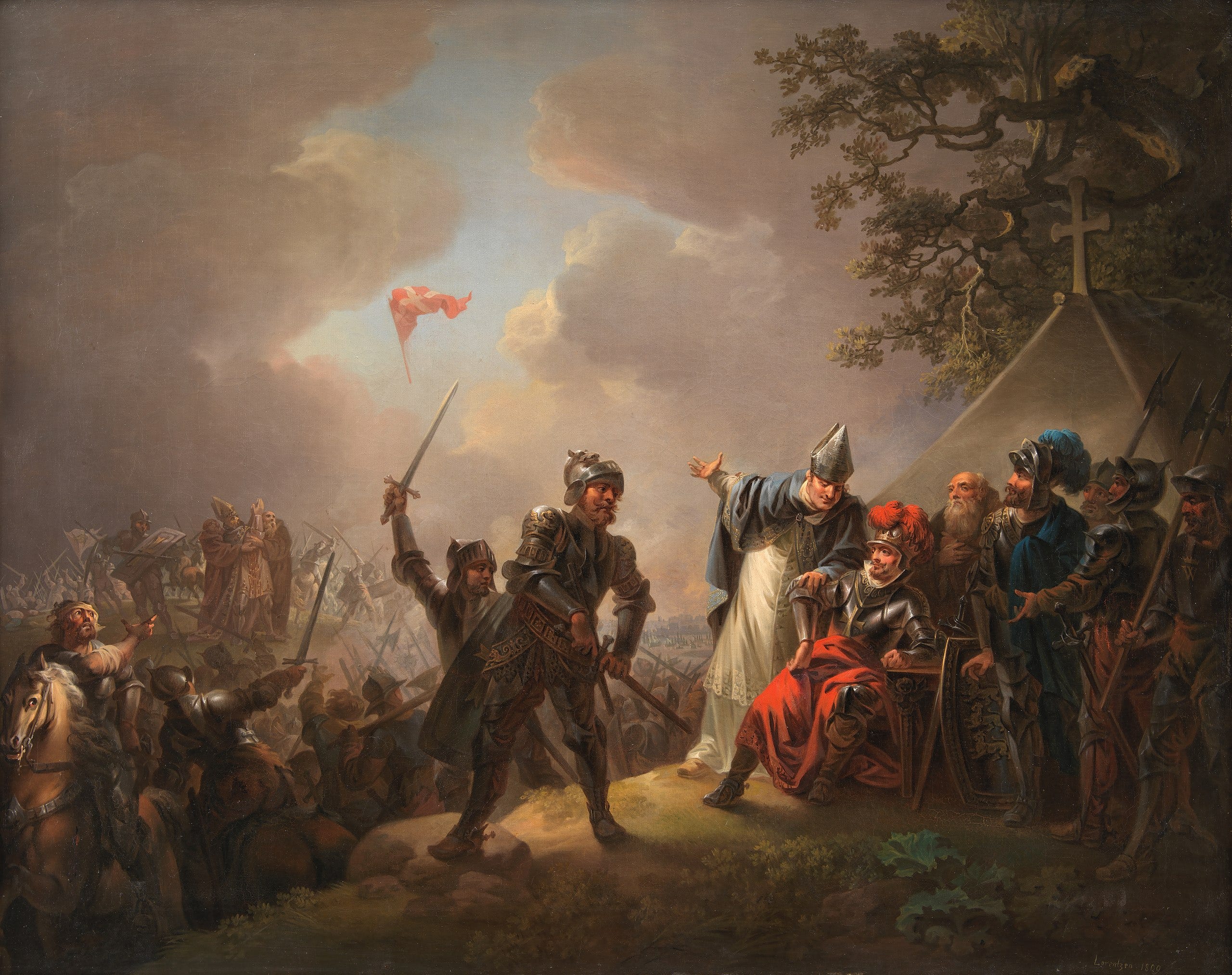
When hearing the word crusade, the mind leaps to the blazing sun of the Middle East — knights clashing with Saracens outside Jerusalem, the desert heat shimmering on chainmail.
But one of the longest-running and most territorially enduring crusades didn’t happen under the desert sun at all. It took place in the icy forests and wind-swept coasts of northern Europe. And, at the heart of it stood one of history’s most recognizable orders: the Teutonic Knights.
This is the story of Europe’s forgotten crusade: the Northern Crusades.
Reminder: You can support us by unlocking our members-only content:
✔️ Full articles every Tuesday
✔️ The entire archive of content: Western history, literature, and culture
✔️ The Great Books lists (Hundreds of titles that influenced Western thought)
Join to start reading and support the mission today 👇
The Broader Crusading Idea
When Pope Urban II first called for a crusade in 1095, the goal was simple in theory: reclaim the Holy Land for Christendom.
But over the next century, the concept of a “crusade” began to change. Papal blessings, indulgences, and the idea of fighting for the faith were soon applied to other enemies of the Church — not only Muslims in the East, but also Moors in Spain, and, eventually, pagans and heretics much closer to home.
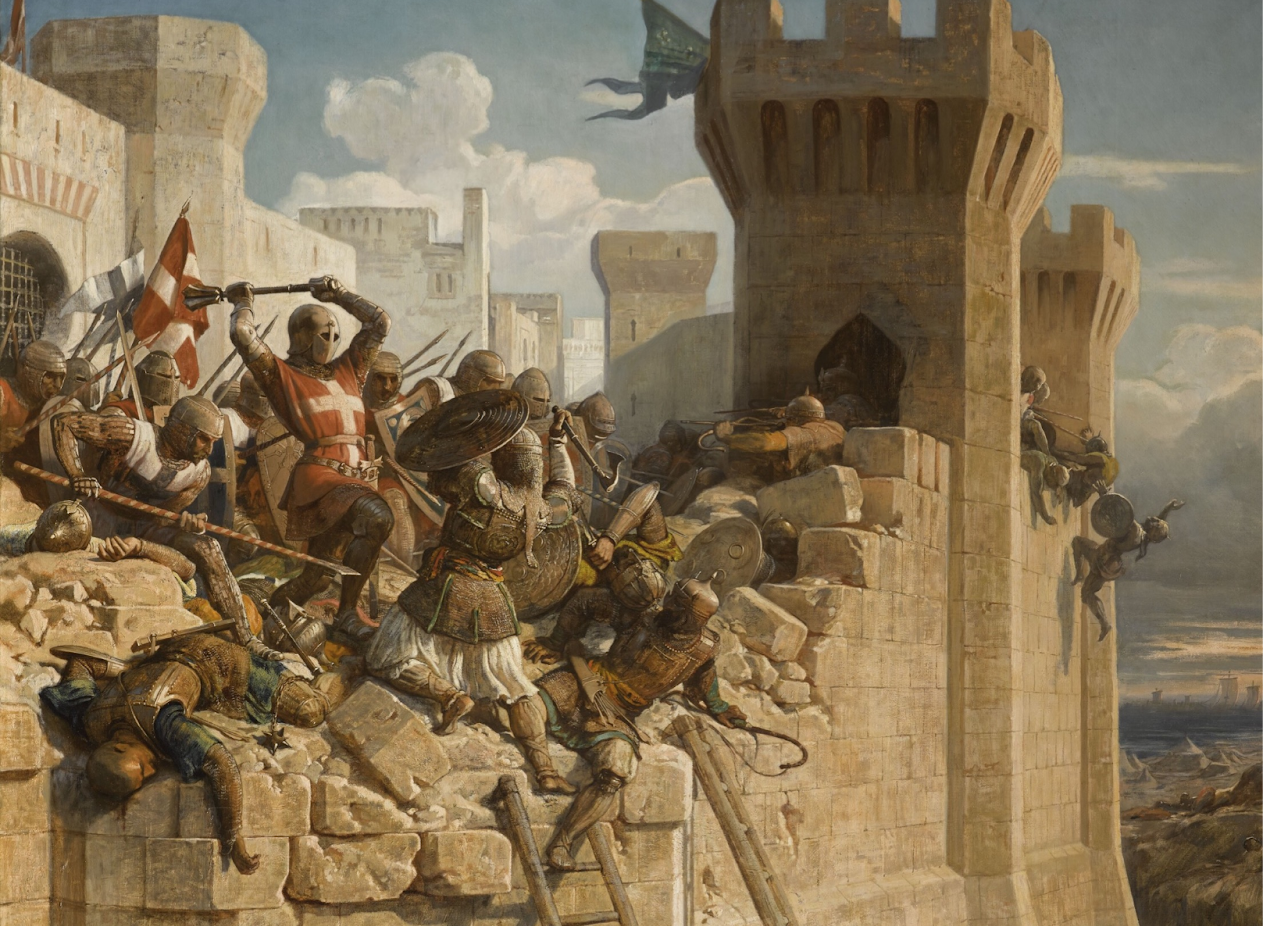
By the early 12th century, much of pagan Europe had been converted to Christianity. But one stretch remained stubbornly outside the Christian world: the lands around the Baltic Sea — areas like Prussia, Lithuania, Livonia, and Estonia.
These lands were home to fiercely independent tribes with their own gods, rituals, and warrior traditions. And here, the papacy saw an opportunity: send knights not across the Mediterranean, but into the forests and marshes of the North.
In the 12th century, Popes Eugenius III, Alexander III, and Celestine III issued papal bulls endorsing the Northern Crusades to promote Christianity and fight its enemies among the Baltic, Finnic, and West Slavic peoples. Christian monarchs across Europe responded by sending forces to begin the work of conversion, but it was the mighty Teutonic Order who dominated the show.
The Teutonic Call to the Baltic
But the Teutonic Order began far from the Baltic, around 1190, during the siege of Acre in the Holy Land.
Originally, they were a small German hospital fraternity, tending to sick and wounded pilgrims. Over time, they evolved into a fully militarized order, much like the Templars and Hospitallers — religious warriors bound by vows of poverty, chastity, and obedience, fighting in the name of Christ.
For decades, the Teutonic Knights fought in the Levant, but as Muslim forces recaptured crusader strongholds and the Holy Land campaign faltered, the Order looked for a new mission. And they found it in an unexpected invitation from Europe’s eastern frontier.
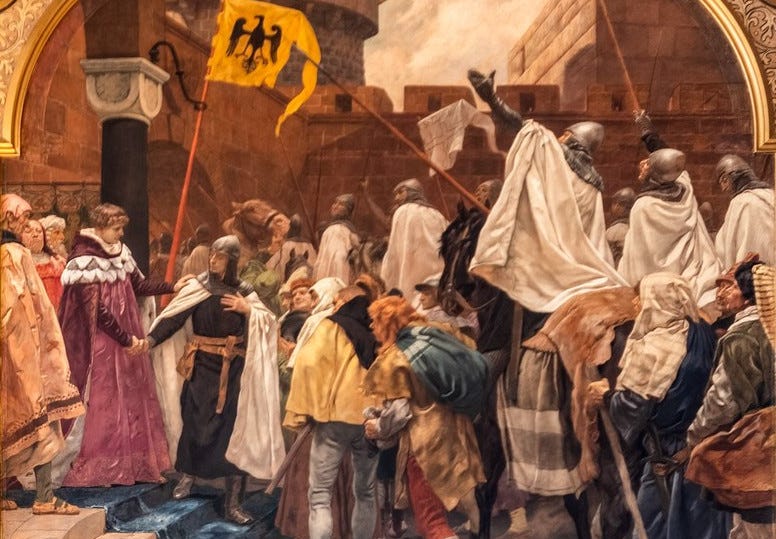
In 1226, Duke Konrad of Masovia, a Polish ruler plagued by constant raids from the pagan Prussian tribes, made a proposal to the Teutonic Order: Help him defend and Christianize these lands, and in return, the Order would be granted territory to rule.
This arrangement was formalized by the Golden Bull of Rimini, issued by Emperor Frederick II, which gave the Knights both papal approval and imperial backing for their campaign.
And so, the Teutonic Knights rode north, trading the dust of the Levant for the snow of the Vistula.
Conquest and Conversion
From their first footholds in Prussia, the Knights waged a relentless series of campaigns against the native tribes.
These were not swift wars. Prussians and Lithuanians knew their own land well— its rivers, swamps, and dense forests — and they fought with skill and tenacity to defend it.
But the Order had something the pagans did not: a steady influx of crusaders from across Europe, siege engineers, and a knack for building stone fortresses that could anchor their control.
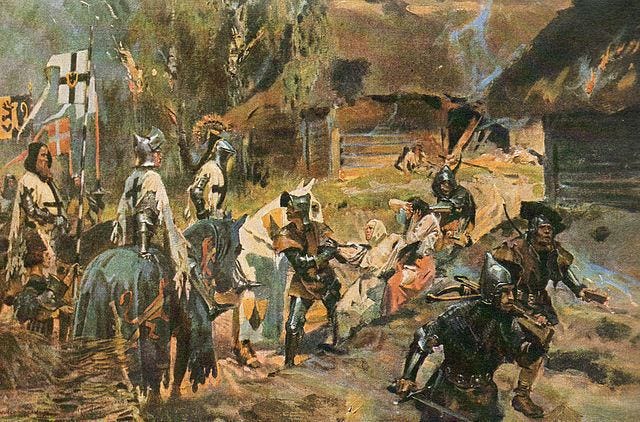
The knights followed a pattern of advancing into hostile territory, building fortifications on rivers and trade routes, and launching a series of raids to subdue surrounding tribes. The knights then offered baptism — sometimes willingly accepted but also sometimes imposed, before integrating the lands into the growing monastic state.
It was a crusade every bit as brutal as the wars in the Holy Land. Villages were burned, populations displaced, and pagan temples destroyed. At the same time, churches rose, towns were founded, and the region became tied into the wider network of European trade.
However, the Baltic Crusades were fundamentally different from those in the Middle East…
