

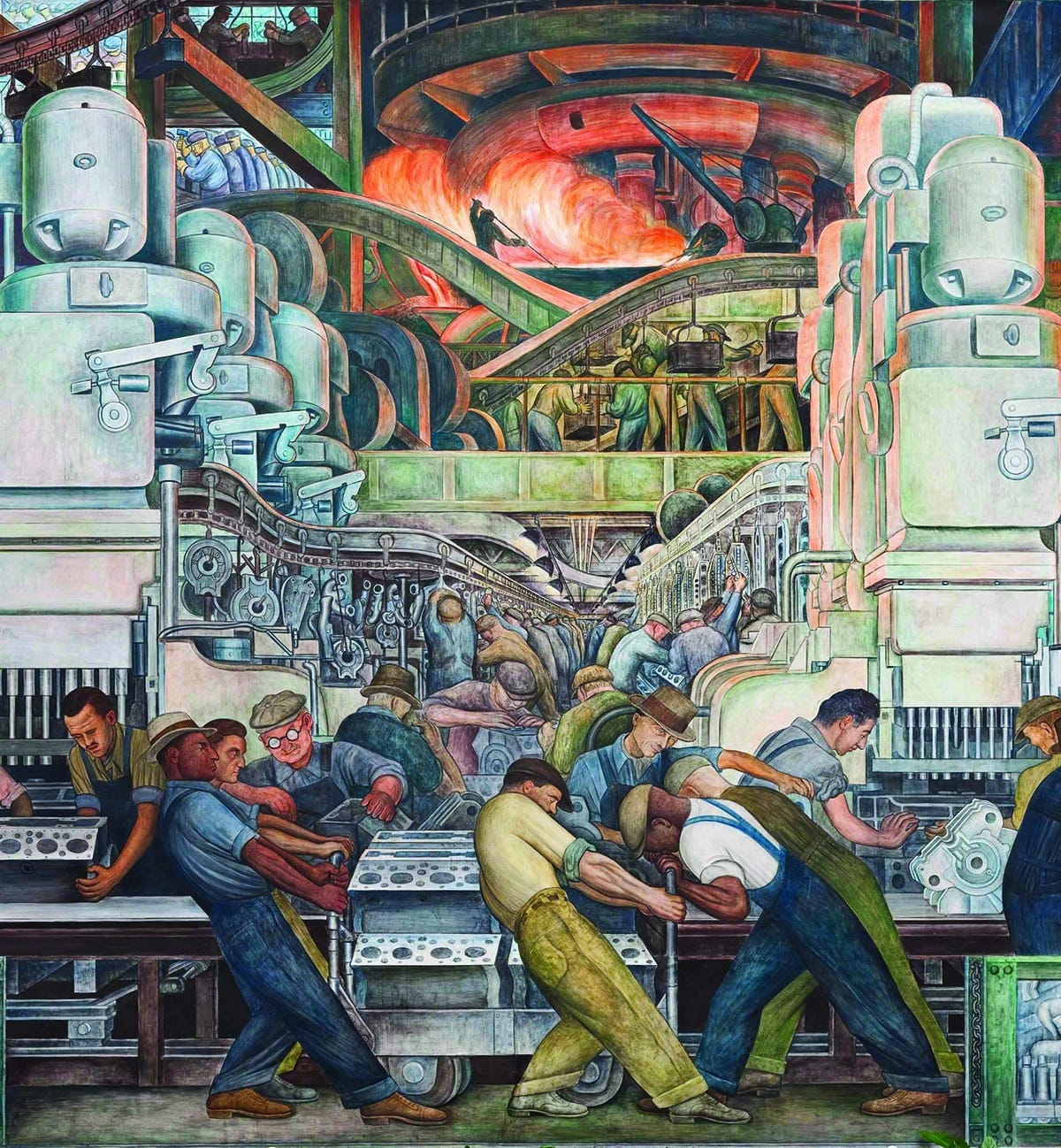
Few go to their deathbeds wishing they had worked more, yet we live in a society that sometimes seems to worship work.
While you might not realize it, you likely work more than a Medieval English peasant, who worked around 150 days and spent the rest celebrating feast days, restful Sundays and seasonal leisure. Most fully employed Americans work more than 200 days per year, more than most Western Europeans and significantly more than our medieval predecessors.
Somewhere along the way, work became the most important thing in modern life. Somewhere along the way, we joined a cult — a cult of productivity.
And our membership in this cult is costing us more than we realize, personally and civilizationally. The problem is especially time sensitive with AI and robotics arriving to transform work. Before we look at what our obsession with productivity is costing us, let’s first look at work and productivity across history.
Reminder: You can support us in forming minds and rebuilding the West by unlocking our members-only content:
✔️ Full premium articles every Tuesday
✔️ The entire archive: Western history, literature, and culture
✔️ The Great Books lists (Hundreds of titles that influenced Western thought)
Join to start reading and support the mission today 👇
How Productivity Became a Religion
For all of time, people have considered how to get more results for less work — it’s the basis of every machine and method invented, from the primitive wheel to the modern computer. The motivation was to get more product, money, and leisure for less time, cost, and work. This self-optimization is what builds economies of scale.
In the same year as America was born, Adam Smith highlighted the division of labor as one of the geniuses of industrial civilization. By his example, a pin factory which has one man drawing wire, another straightening it, another cutting it, and so on produces tens of thousands of pins per day. The factory that has each worker completing the full pin-making process alone outputs just a small fraction of this.
A century of industrialization after Smith would find a radically different world — one built not just by efficient division of labor but by steam power, too. The Industrial Revolution was in full swing.
Perhaps no one else summed up the direction of society so well as Frederick Winslow Taylor in his 1911 Principles of Scientific Management. Here, he attempted to describe the best methods of applying factory logic to human labor: with timed-work studies, standardization of tasks, and the overall attempt to optimize human labor as a unit. He wrote, quite prophetically:
“In the past man has been first. In the future the system must be first.”
Henry Ford’s 1913 Model T made the assembly line famous. By division of labor and his attention to optimizing every process as much as possible, Ford reduced the build-time for the world’s first mass produced automobile from 12.5 hours to just 93 minutes.
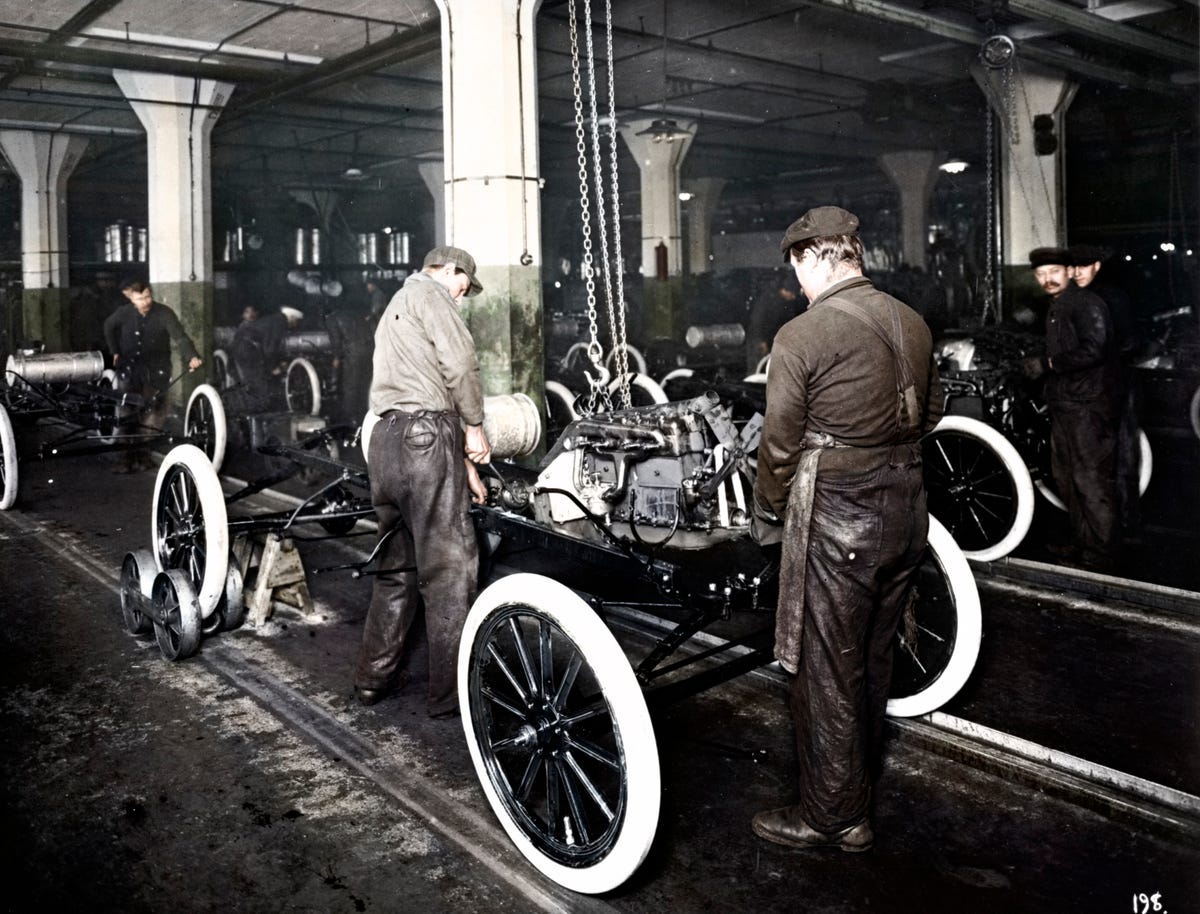
What the business world saw was scale: more products in less time meant more money. But we can’t forget the upside to efficiency, either. The consumer saw drastically cheaper prices, too. It seemed the entire world benefits from economies of scale, at least monetarily.
The industrialized vision was clear at this point: a civilizational mission toward ever greater productivity was set. A new god was erected by the Industrial Revolution. Efficiency was to be our highest aim. It would prove not only to make the elites rich, but seemingly all men rich in comparison. But it could do more than just that: efficiency could make the nation powerful and help it win wars, too.
And so, the Cults of Productivity and Efficiency were born, especially in America. But it came at a cost — one that I don’t think we’ve fully come to recognize even today. And it has been observed in America early in the days of the Industrial Revolution. Even in 1835, Alexis de Tocqueville observed that Americans in particular were a restless people, even in their leisure — seemingly obsessed with work and constant improvement. He saw a citizenry that was unable to simply be.
As an American, I can’t say that we’ve forgotten what leisure is; it seems America has never known leisure in the first place. We’ve always been a part of this cult of productivity whether we’ve known it or not. It’s part of the American DNA. Perhaps something about our foundation in a new world and a birth through revolution made us this way.
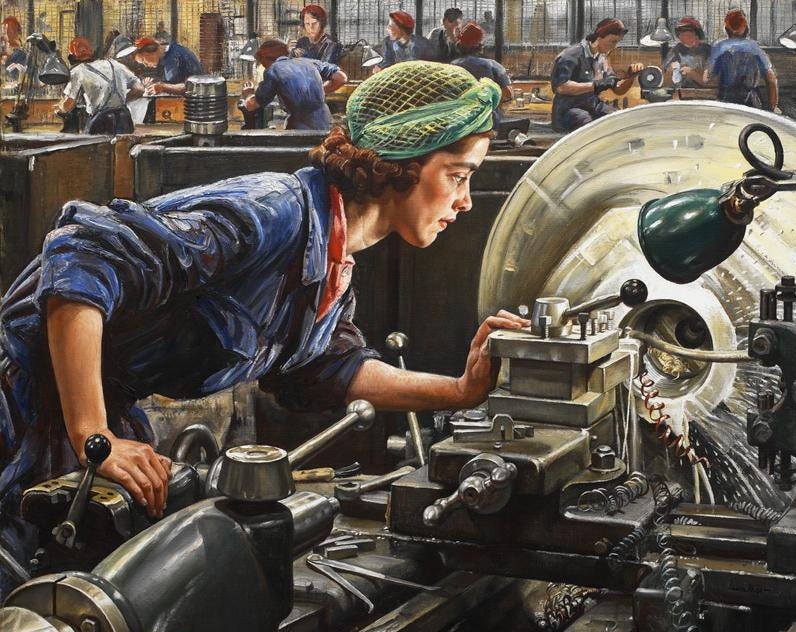
Or perhaps the Protestant work ethic has something to do with it. This emphasis on hard work in a religious light, despite its usefulness in founding a new nation, has maybe survived past its due. We keep working, working, working, but rarely stop to rest to consider what we’re working for.
Whatever the reason, I believe that our dive into this cult of productivity has only accelerated with time. So, perhaps it’s time for the first world, and America in particular, to learn what leisure is again — and why it’s critical to a healthy civilization…
