

Throughout history, the elite class has recognized its duty to build culture.
Roman elites were virtually expected to build public baths, stadia, and other visible signs of their good will toward the people. Medieval nobles funded churches. The Carnegies and Rockefellers built great museums, libraries, and music halls.
But who is building culture today?
We assume culture is an organic development. But instead of growing as a rule of nature, culture is really the result of deliberate action: painting, sculpting, writing, and all the creative means at our disposal.
But genius requires something that precludes its visual and literary outputs — namely money, through patrons and institutions. Money goes where its owners put it, and so the movers and shakers of culture throughout history are the wealthy classes of kings, nobles, and moguls.
We have a growing elite class that has all the means to be great patrons of culture. Tech leaders like Mush, Zuckerberg, and Altman seem, to the average person, to have infinite resources. Yet they also seem to have little interest in investing in culture. Where are the great public monuments and murals funded by the deep pockets of Silicon Valley?
I have two answers to that question. But to get there, we need to first look at one of the greatest patrons — or rather a family of patrons — the world has ever known…
Reminder: You can support us in forming minds and rebuilding the West by unlocking our members-only content:
✔️ Full premium articles every Tuesday
✔️ The entire archive: Western history, literature, and culture
✔️ The Great Books lists (Hundreds of titles that influenced Western thought)
Join to start reading and support the mission today 👇
The Mighty Medicis
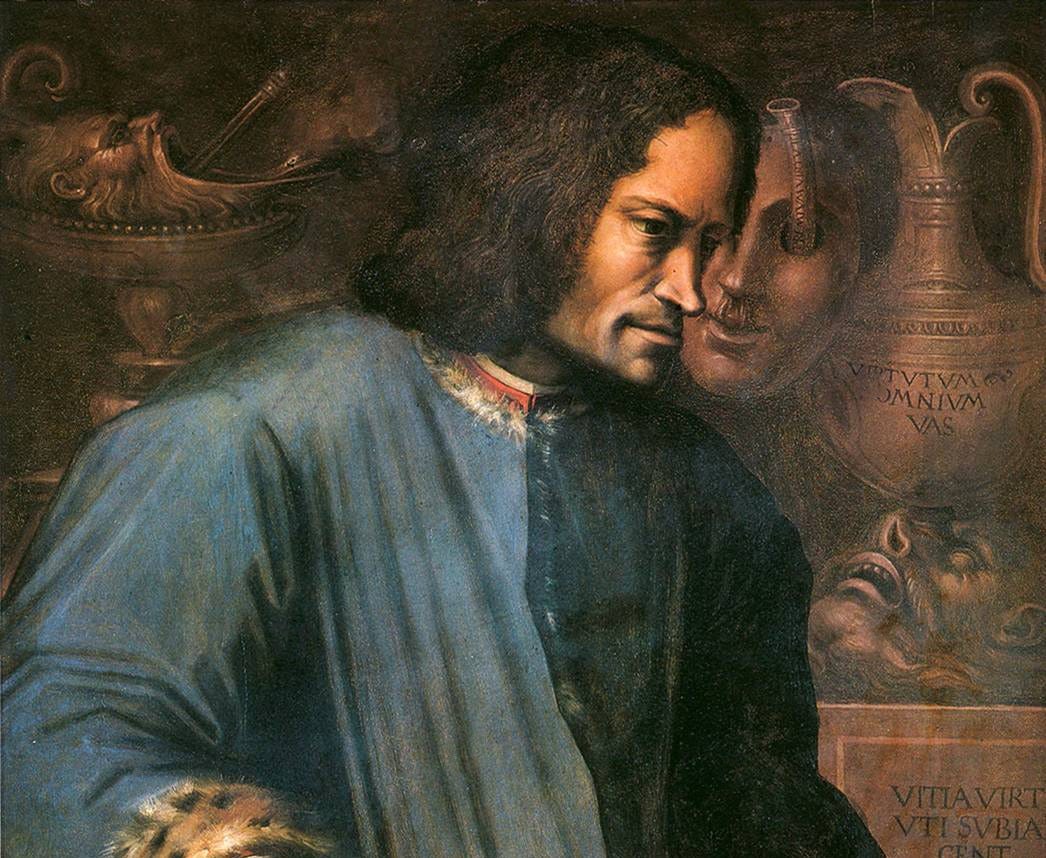
Although we typically lay praise for some of the world’s greatest art at the feet of Leonardo da Vinci, Michelangelo, and Raphael, genius alone doesn’t create culture, the face of a civilization. Behind Florence’s artistic explosion was a banking family that believed wealth could serve a better purpose than personal pursuits could express. The Medici family created the conditions for masterpieces to exist by putting money and resources behind some of the world’s most famous artists.
Lorenzo de Medici was born in the mid 15th century during a time when Florence was a wealthy merchant republic. This was a time and place where educated merchants, political competition, commercial ambition, and relative freedom created the conditions for amassing enormous private fortunes. The Medici family had engaged in banking ventures with these Italian merchants, princes, and even the Papacy. Thus, Lorenzo inherited great wealth and power over the Florentine region. He didn’t need a crown to wield influence, much like our tech leaders today. But crucially, Lorenzo saw his wealth as a vehicle rather than an end.
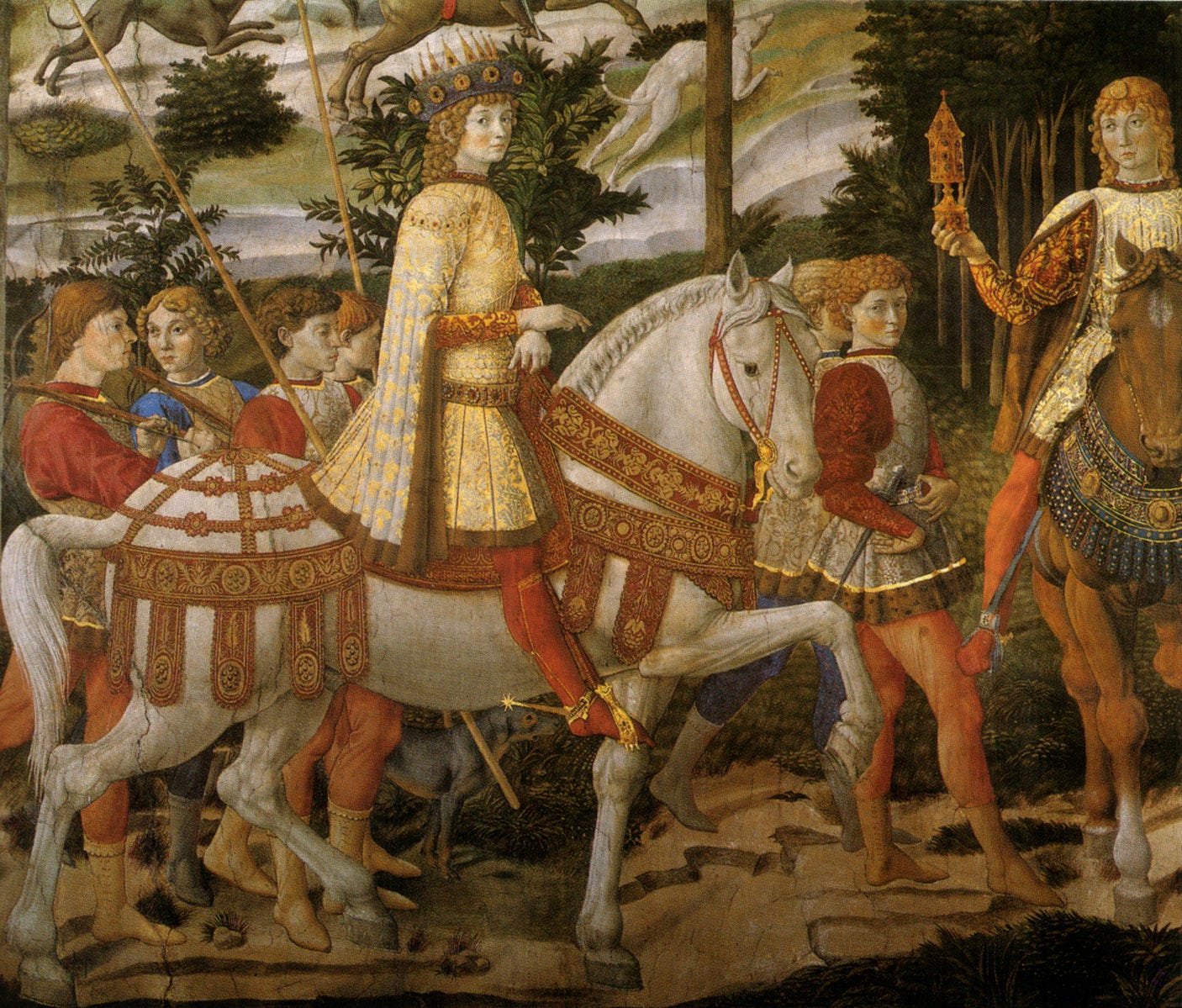
Lorenzo had a vision for Florence as the heir to Athens and Rome, not in terms of politics or military, but rather in terms of cultural significance. Lorenzo wanted Florence to be the center of artistic and intellectual vigor for Europe. But to do that, he needed a team.
His patronage invested directly and indirectly in many of the greatest artists to have ever lived: da Vinci, Botticelli, and Michelangelo, who lived in the Medici household as a teenager for a time. Lorenzo didn’t simply collect existing art like many other wealthy tend to do for their private collections; his vision was generative. He wanted new art, and he was willing to commission these great artists to paint Florence into the center of the artistic world. His interests didn’t stop at art, however.
Lorenzo also wanted to cultivate Florence’s intellectual depth. He funded scholars to translate and study the works of Plato, Plotinus, Greek literature, and Roman history to revive classical learning. The Medicis, like all great noble families, understood that looking back was critical to looking forward. I’d like to think Medici might just have become a patron of our channel for that very reason, too.
While most of today’s billionaires prefer to fund startups, Lorenzo funded civilization by supporting the region’s libraries, churches, academies, festivals, and public works. His mark on the city was virtually inescapable; whether rich or poor, you could find some benefit by his patronage of the city.
All of his cultural work brought him greater fame and respect than his wealth alone could. The Medicis were a magnet to politicians, foreign rulers, the intellectual and artisan classes, and collaborators because of his cooperation with society. Lorenzo understood art and intellectual activity to be a form of soft power, as civilizations compete culturally just as much as they do militarily — we saw that in spades in the Cold War.
So, why don’t we have another Lorenzo de Medici lurking in silicon valley today? Why don’t we have billionaires chomping at the bit to fund great statues, art, and public works?
The Digital Age
One reason patronage is largely dead is that culture is now largely driven through digital means. The vast majority of culture is now driven by social media and video streaming platforms. YouTube, X, Facebook, and Instagram are digital town squares where people engage in ideas and art more than they do offline.
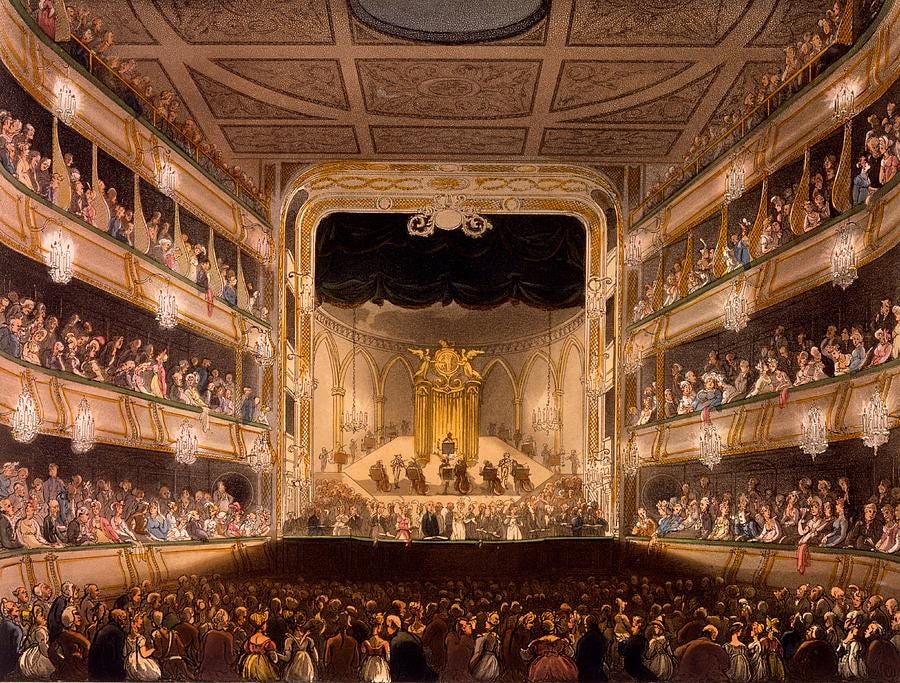
To engage in the culture today, you don’t need to go anywhere — to music halls, libraries, the theater, in-person debates, or to sporting events. You can see, hear, and engage with (to a degree) all these things from your couch. The cultural spaces have not only been decentralized but removed entirely from a physical space at all. These are digital spaces, and so culture is largely being made digitally, too.
That might be through writing (as we do on our Substack), through video (as we do on YouTube), or through simply posting memes on X and images on Instagram. Meme-culture is an entirely new phenomenon that has arisen through the medium of culture changing from physical to digital spaces. Gaming has its own subculture. Even each individual massive-multiplayer online game has its own subculture. People can be on entirely opposite ends of the earth and now engage, very cheaply, in these digital cultural spaces.
Through these digital spaces, culture is driven through a mix of organic and inorganic means, too. Much of it is still driven through the 20th century dominant culture-maker called Hollywood, but increasingly video games are driving another large segment of culture.
But the big wave is in the overall democratization of culture-making. Because everyone found the power to upload and market video through YouTube, and everyone could suddenly post their thoughts on social media, and everyone could post their writing on their own blogs, the power to create culture has been diluted from the hands of the few into the many. Individual creators and influencers have just as much brand-power as Hollywood celebrities and entire companies. Mr. Beast, with just a camera and a lot of time, went from a nobody to a media empire that has more influence on youth today than the comic-book publishers and toymakers that ruled previous decades.
So this leaves us with some understanding for the billionaires of today. Where would they put their money anyway? If nobody goes to the opera anymore, there’s not much incentive to build a grand hall for it. If people would rather scroll through memes on reddit, there’s not much point in funding a local artist to make an exquisite sculpture for the city park.
Maybe, we might think it’s a chicken-and-egg problem: if the elites of today would fund beautiful artistic projects in cities, maybe more people would roll off the couch to go see them. As much as I’d like to see that happen, I can’t help but think that the attractions of Europe are usually empty of locals for a reason. Familiarity breeds a certain indifference, unfortunately.
The digital spaces have, in a way, provided the self-funding model for culture-building anyway. YouTube and X have seemingly built business models that encourage creators to create by making your labor pay (even if modestly) for itself. So, in a convoluted way, Silicon Valley is funding the creation of culture — but it’s more like they’ve unleashed a perpetual motion machine on culture, rather than anything in the spirit of real patronage. The next great age will not come from better algorithms, but rather from knowing what algorithms are for. Real patronage takes a vision — and that’s the next problem we’re facing today…
