

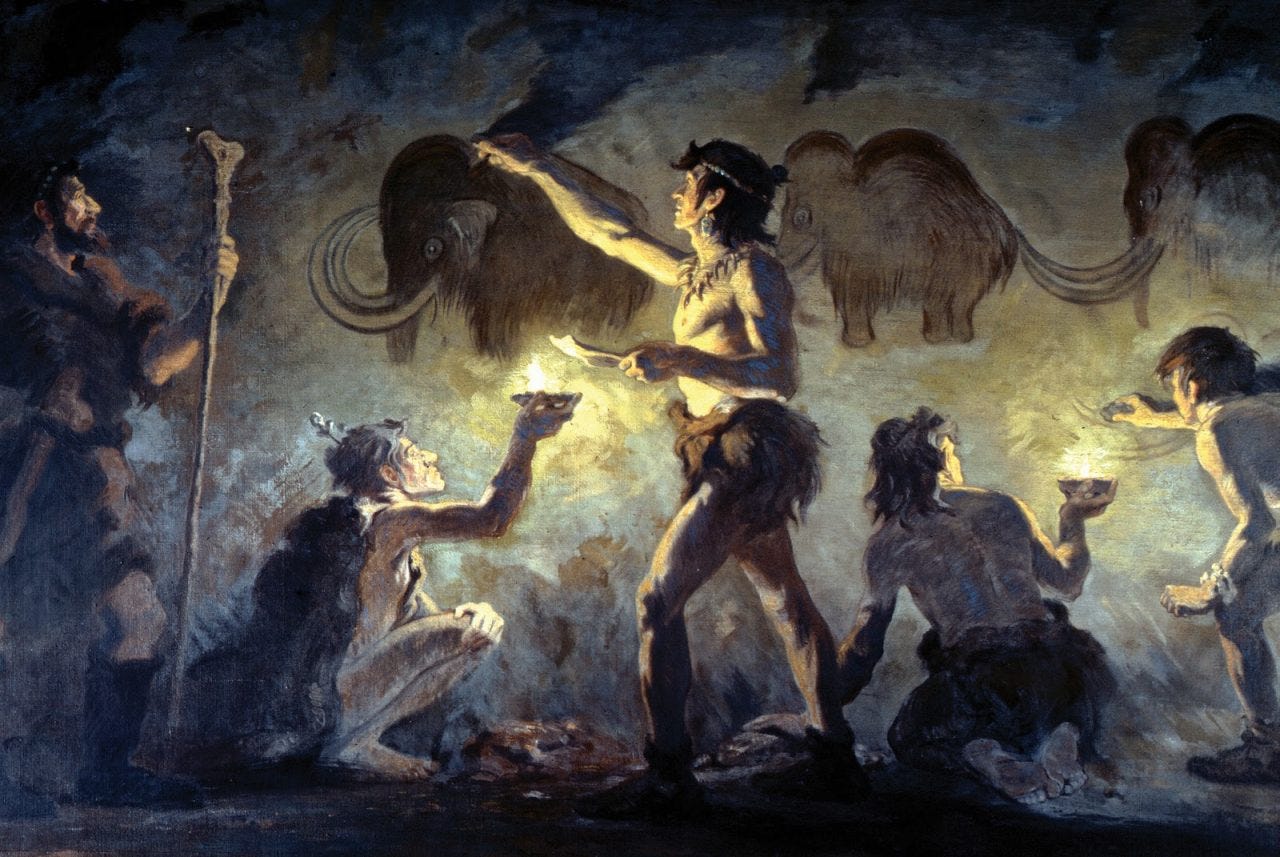
What we know about history is an illusion. We often speak about ancient peoples as “primitive” and “unsophisticated”, but these broad characterizations really only reveal our own simplicity.
Our “modernity bias” presupposes that we are the most intelligent generation to ever exist, and human intelligence is a declining metric as we peer backward in time. This leaves us with the assumption that cavemen were stupid, we are smart, and everyone in between was, well, in between.
But what serious historians know (and rarely tell us) is that history, anthropology, archaeology, and its sisters are inherently limited. They study the scattered writings, ruins, and tools that haven’t been given quite enough time to return to dust before being pulled into a museum
Hence, what we know of the past is not merely based on what existed, but instead of the much smaller category of what survived.
Our picture of the past, then, is not only incomplete, but naturally biased toward incompleteness — and that inherent incompleteness means that modern historians (and the public alike) will always underestimate the intelligence, capabilities, and complexities of past humanity.
Reminder: You can support us in forming minds and rebuilding the West by unlocking our members-only content:
✔️ Full premium articles every Tuesday + Free content Thursdays
✔️ The entire archive: Western history, literature, and culture
✔️ The Great Books lists (Hundreds of titles that influenced Western thought)
Join to start reading and support the mission today 👇
The Problem of Survivorship
Most human activity leaves no trace: conversations, daily habits, clothing, and local knowledge can fade away in merely a generation. Some artifacts may last many generations with careful storage, things like letters, paper, various heirlooms, wooden tools, and the like. But fewer items can last beyond a millennium: coins, weapons, armor, jewelry, etc. Of things that last several millennia, we are typically only left with what is large and therefore slow to return to dust: megalithic structures, buried cities, and deep engravings in stone.
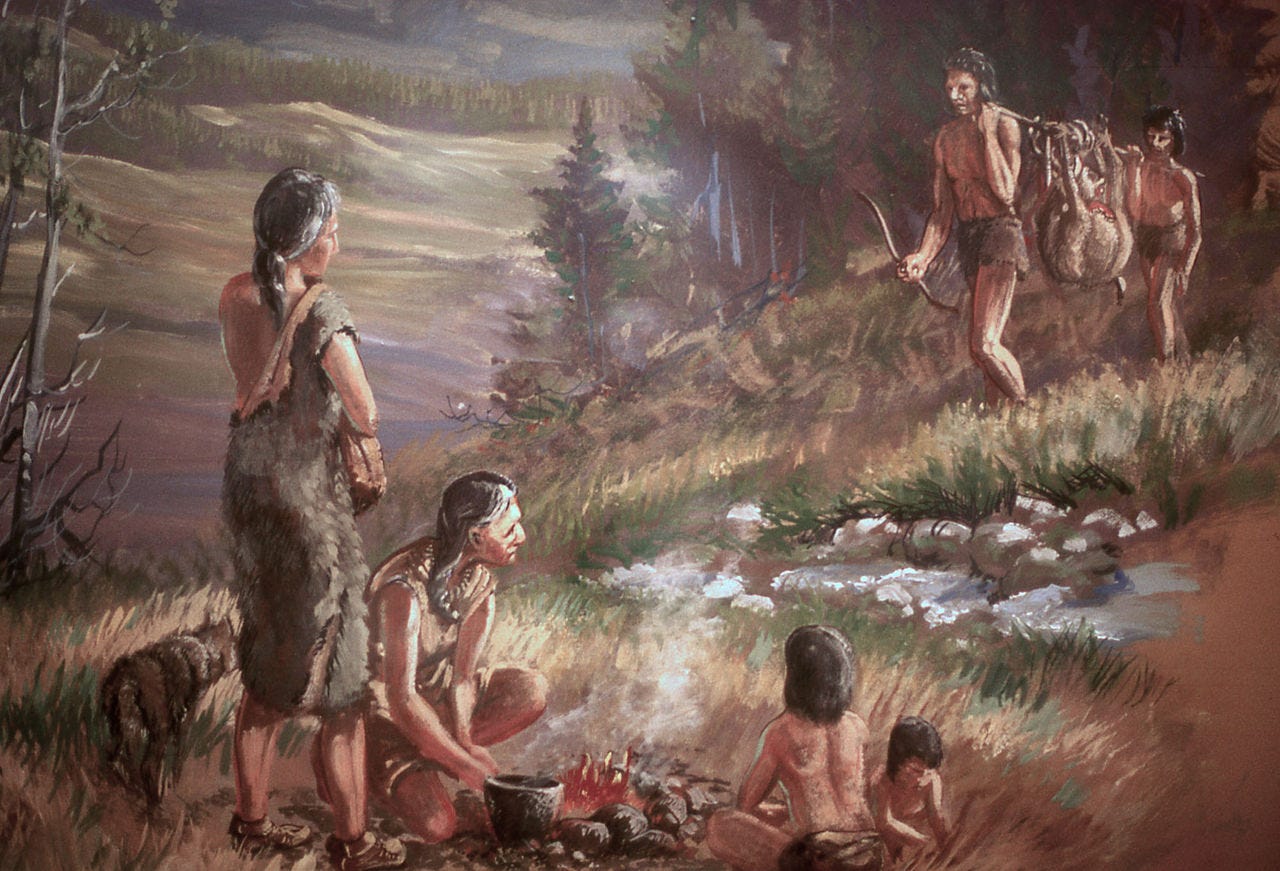
As we look back into recent history, what survives is largely accidental, perhaps simply those knickknacks left by a grandparent in a chest in the attic. But as we look back farther into history, we find relatively fewer artifacts as a result of mere accident and more as a result of past peoples to create permanence. While this is stating the obvious, the implication then is that our knowledge of peoples further back in history is proportionally overinfluenced by the grand structures (aimed at permanence) that have survived. It’s no surprise, then, that we tend to think of “primitive” peoples as dominated culturally by purely religious or superstitious belief and cartoonishly void of practical, political, and personal qualities.
As an example, when we think of the pyramids at Giza, we assume they were the central focus of Egyptian society, ignoring the probable idea that it was very likely only one (admittedly impressive) feature of an ancient city. We are very likely to see the pyramids as a holy and serious site, and very unlikely to see that the children of the surrounding town probably enjoyed bouncing balls off its faces. This particular fact is conjecture, of course, but it’s entirely more reasonable to assume past humans did human things than to assert past humans only did what we can know from the dirt.
The survivorship bias will always result in an inadequate picture of past human society; alone, survivorship bias will lead us to the conclusion that more ancient humans must be dumber humans. Entire domains of intelligence (practical skills, social complexity, moral reasoning) are largely invisible archaeologically. Drawing conclusions about the intelligence of past mankind from merely what is found in the dirt risks judging a civilization by its trash heap or a handful of ruins.
Misreading the Evidence
Archaeologists and historians often interpret artifacts as representative of a whole culture. G.K. Chesterton noted in The Everlasting Man that the historians of his day assigned deep religious significance to some crude cave drawings. But Chesterton scoffed at these assumptions that limited the sophistication of prehistoric man to these drawings, offering that the sketches could equally well have been the drawings of a prehistoric child. The danger here is that we project meaning (or lack of it) onto ambiguous evidence. When we look for meaning in prehistoric doodles, we might equally wonder what our grandchildren might think of us if the only thing they inherit is our drawings made in boredom.
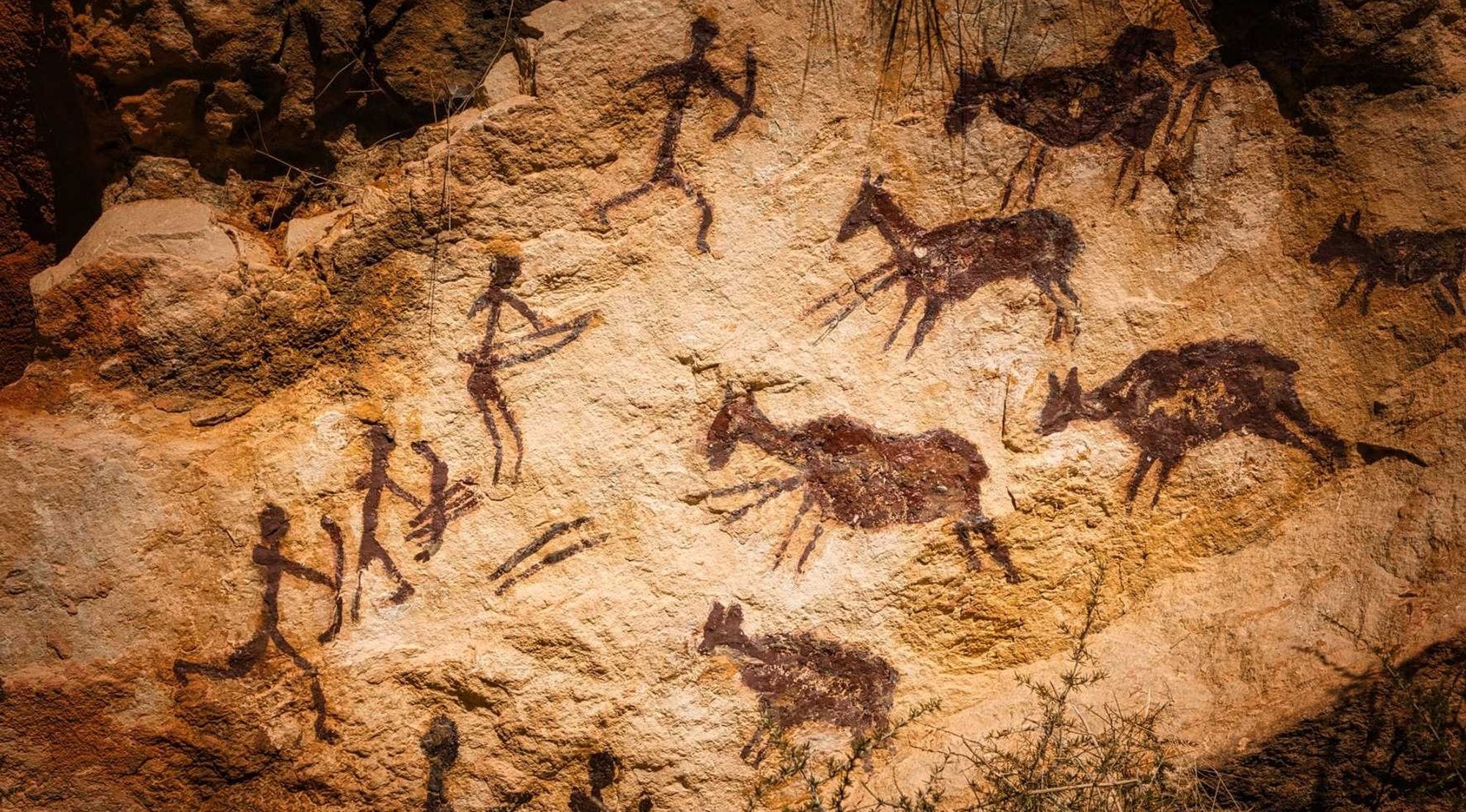
The sophistication of the caveman must surpass our understanding of them based on the limited drawings, tools, and other random artifacts we have discovered. What if the more sophisticated aspects of ancient societies simply didn’t survive?
Then, we also might realize that what cavemen had in their heads might not be represented by the physical evidence, even if all of it were well-preserved. The mind of the caveman was likely no lesser to ours. Perhaps we have merely been afforded the luxury to think about it, while they were using their minds constantly for survival. Few modern men would even survive the world of the cavemen (at least our understanding of it). Most today can’t make a fire without a lighter, forage the local flora, skin an animal, or construct even simple tools from purely natural products. But the caveman could — and probably could do much more that we can say.
