

What if each generation played a unique role in the cycle of social, political, and economic ascendence and decline? Further, what if each generation’s characteristics are predictable qualities developed in response to the eras in which they developed? That’s exactly what authors Neil Howe and William Strauss describe in their book The Fourth Turning (1997).
To Howe and Strauss, the Western world has operated on cycles of ~85 years, comprising four eras each lasting approximately 21 years. Each era has its own archetypal persona or mood, ushering in new social, political, economic climates in response to previous conditions. The ultimate climax of the cycle is the Crisis, which unfolds through a gradual weakening of social institutions by the hand of individualism.
Reminding yourself of all the chaos over the last decade, you’ve probably guessed correctly that we’re in the midst of a Crisis era right now — here’s how we got there.
Reminder: You can support us by unlocking our members-only content:
✔️ Full articles every Tuesday
✔️ The entire archive of content: Western history, literature, and culture
✔️ The Great Books lists (Hundreds of titles that influenced Western thought)
Join to start reading and support the mission today 👇
The Four Eras
The theorists behind The Fourth Turning defined a generation as all people born within a roughly 21-year span, or similarly about one phase of life: childhood (0-20), young adulthood (20-40), middle-aged years (40-60), and old age (60+). While some view U.S. history as a succession of centuries or political waves, Strauss and Howe view it from the standpoint of Anglo-American generations stretching back to 1433. Doing a little math with a 21-year generation, means we are now in the 29th generation since 1433, taking note of course that very few modern Americans’ lineages will actually make it to an “American” ancestor that far. Over those 29 generations, we should have seen now some 7 major crises during every fourth generation.
The particular alignment of the theory in early U.S. history is difficult to pin down, particularly because it is really British history, too. Beginning in the 1400s, the first major crisis (according to Neil/Howe) is the War of the Roses. Moving forward in history, the next crises are the Armada crisis (late 1500s) and Glorious Revolution (late 1600s). Another century forward brings an American audience to more familiar territory with the Revolutionary War (late 1700s). The rest are fairly easy to guess: the U.S. Civil War (1859) and World War II (1940s) — bringing us to a point of unease as we now appear due for another major crisis and war. There is at least enough evidence in the regular occurrence of crises in American history to warrant a deeper exploration: what brings us to the point of crisis roughly each century?
1. The High
The first stage emerging after a fresh crisis is The High. It’s during this time that citizens seek stability; the generations living, working, and possibly fighting during the past crisis know the depth to which society can decay and seek respite from chaos. People turn toward stronger institutions in government, law enforcement, and civil functions, but also typically in churches and communal organizations. Think of the post-WWII high: an American population relieved by the end of the second global war, but also invigorated by its victory returns with high trust in its governing powers and national identity. Strauss and Howe place this era as spanning from 1946 to 1963 in the current cycle. The cracks in this wave, however, are already understood: minority voices, out of step with the majority’s values in government and social organization, feel stifled by an overbearing political and social pressure.
2. The Awakening
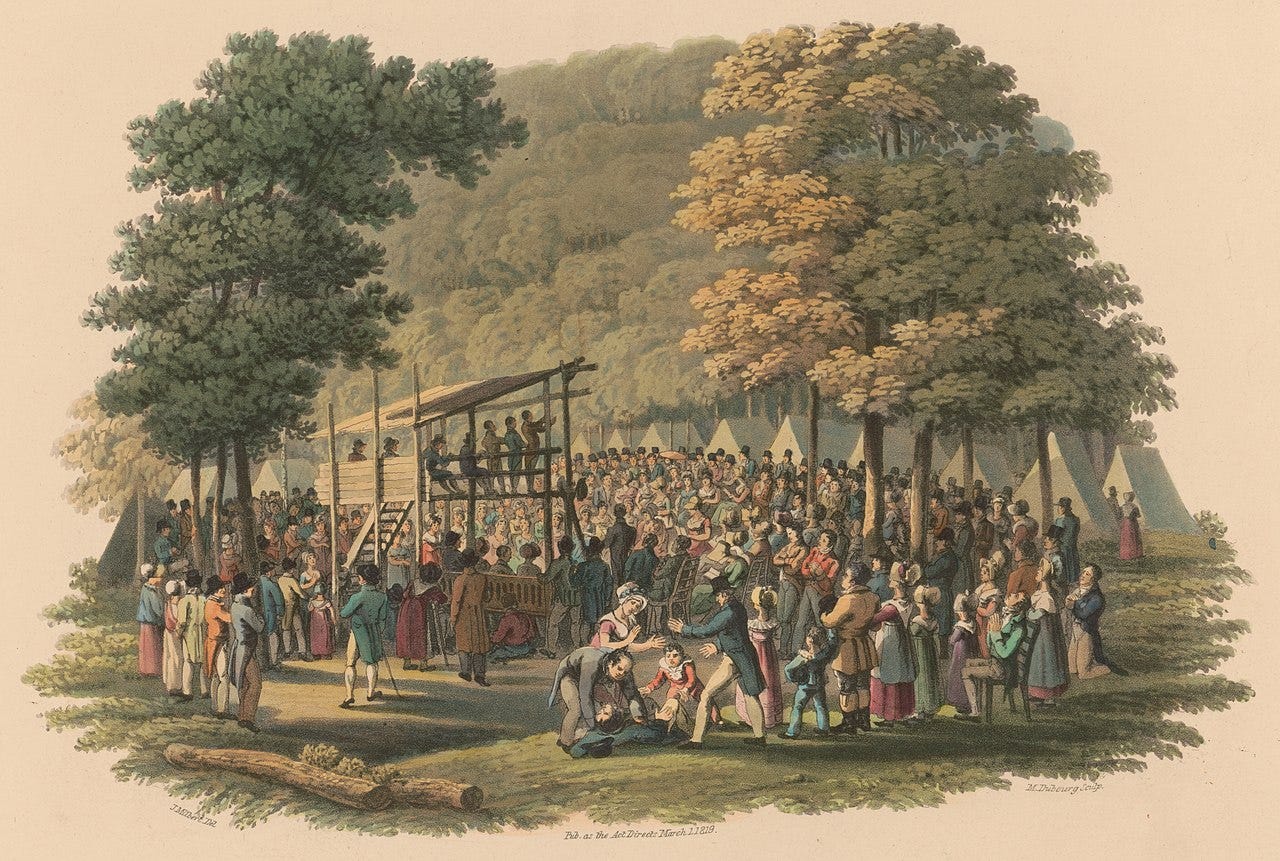
The second era is that of the “awakening” where personal autonomy begins to eclipse societal duty and its many expectations. Individual-minded movements, tired of social disciplines, attack the institutions in a bid to become more “true to themselves”. The institutions are believed to stifle individual creativity, spirituality, and bona fide culture. In our current wave, this is captured by the 1960s hippy-culture and runs up through the tax revolts of the early 1980s.
3. The Unraveling
In the third era, the Unraveling, we reach the polar opposite of the first era, the High. Here, institutions are at their weakest, while individualism reigns supreme. The unraveling comes when society, after tasting the fruits of their individual liberties, desires to fully disengage from societal restrictions and seek only their individual fulfillment. The Fourth Turning places this era as beginning in the 1980s and ending shortly after the turn of the millennium. Now, cracks in the social functions are observed: increasing crime, culture wars, and social dysfunction that will mature in the last stage: the Crisis.
4. The Crisis
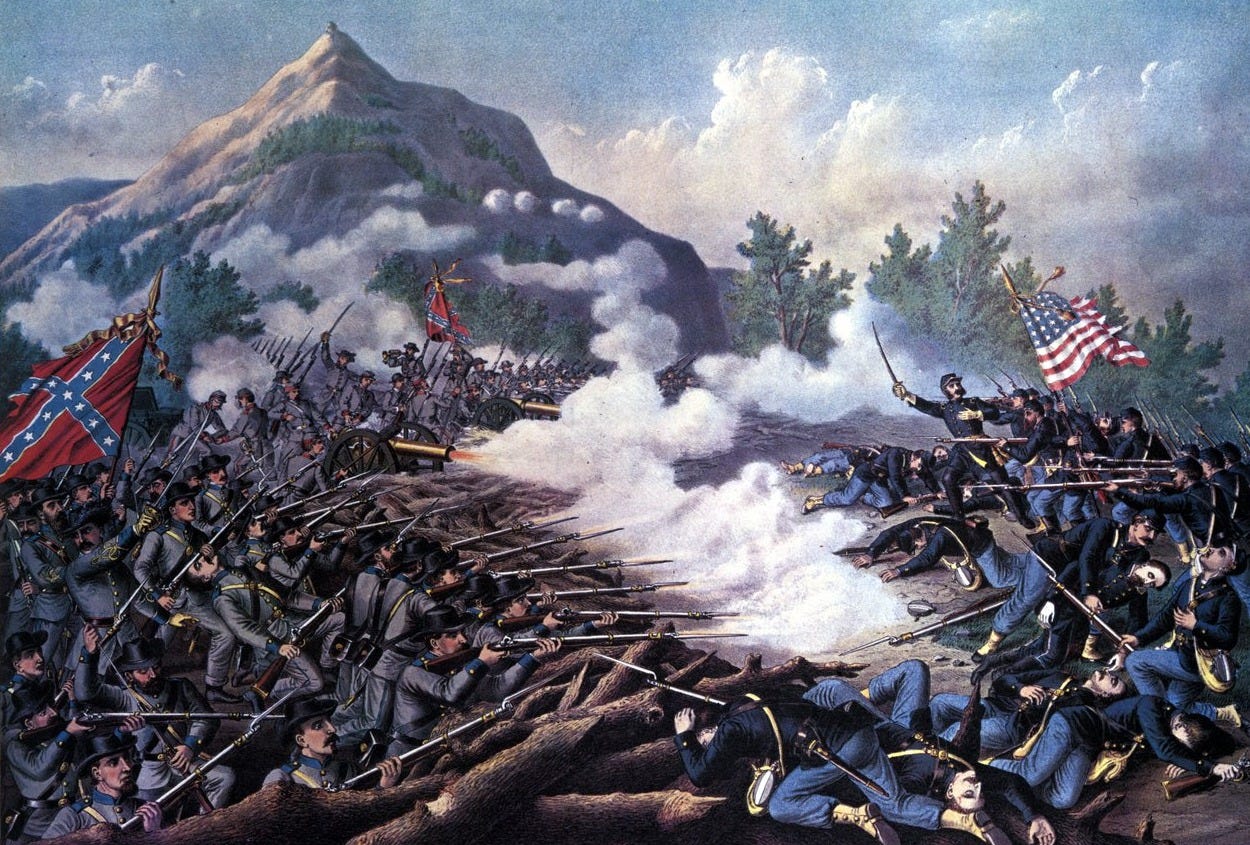
This is the fourth turning, the era of destructive action, commonly marked by wars, revolutions, and political turmoil. Institutions are remade to defend against external threats to the nation, and individualism is again at odds with national interest. The last crisis in the U.S. began with the economic crash of 1929 and ended with WWII. The authors place this era as beginning in 2008 and ending sometime in the early 2030s. We’ll return to this shortly, as this is where we are now. First, let’s take a look at the generational archetypes that bring about the four turnings…
